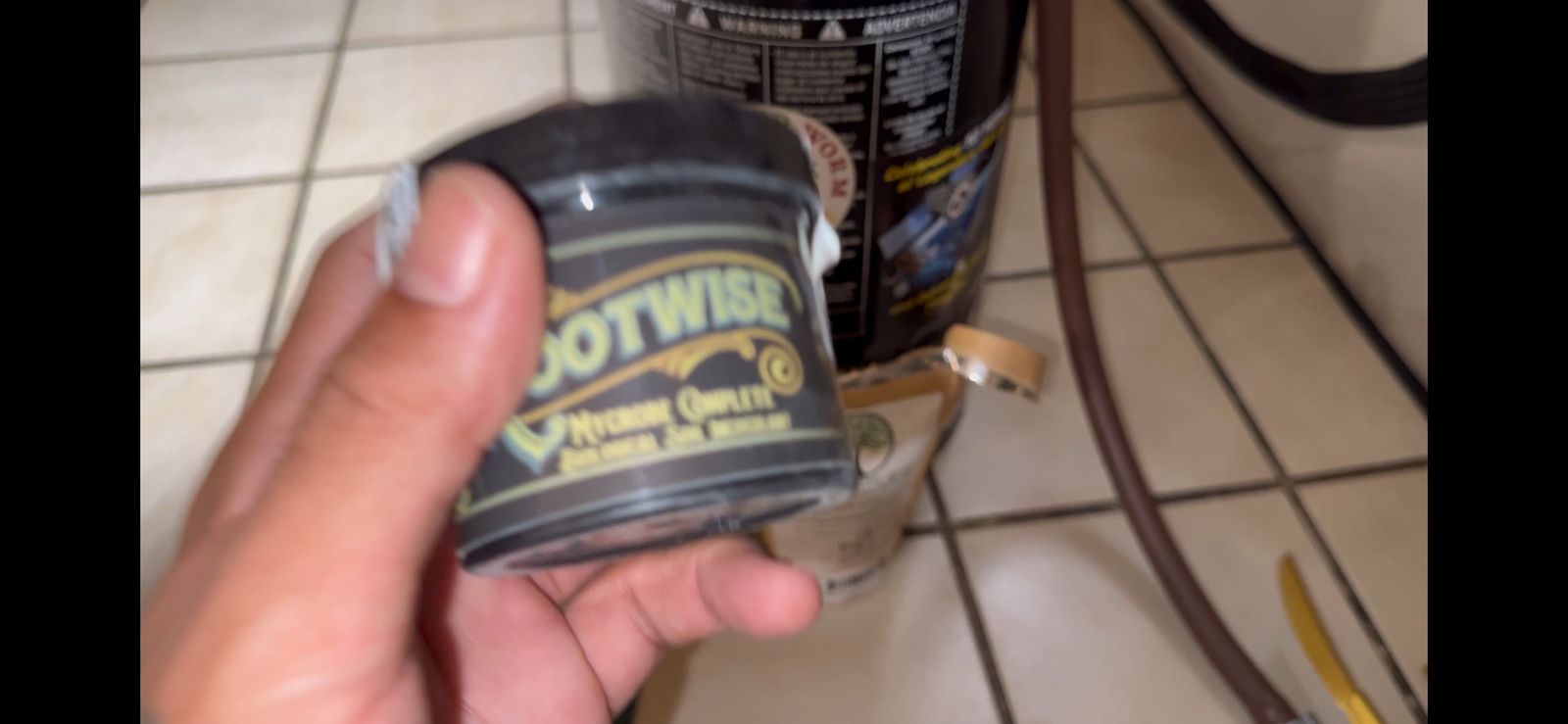
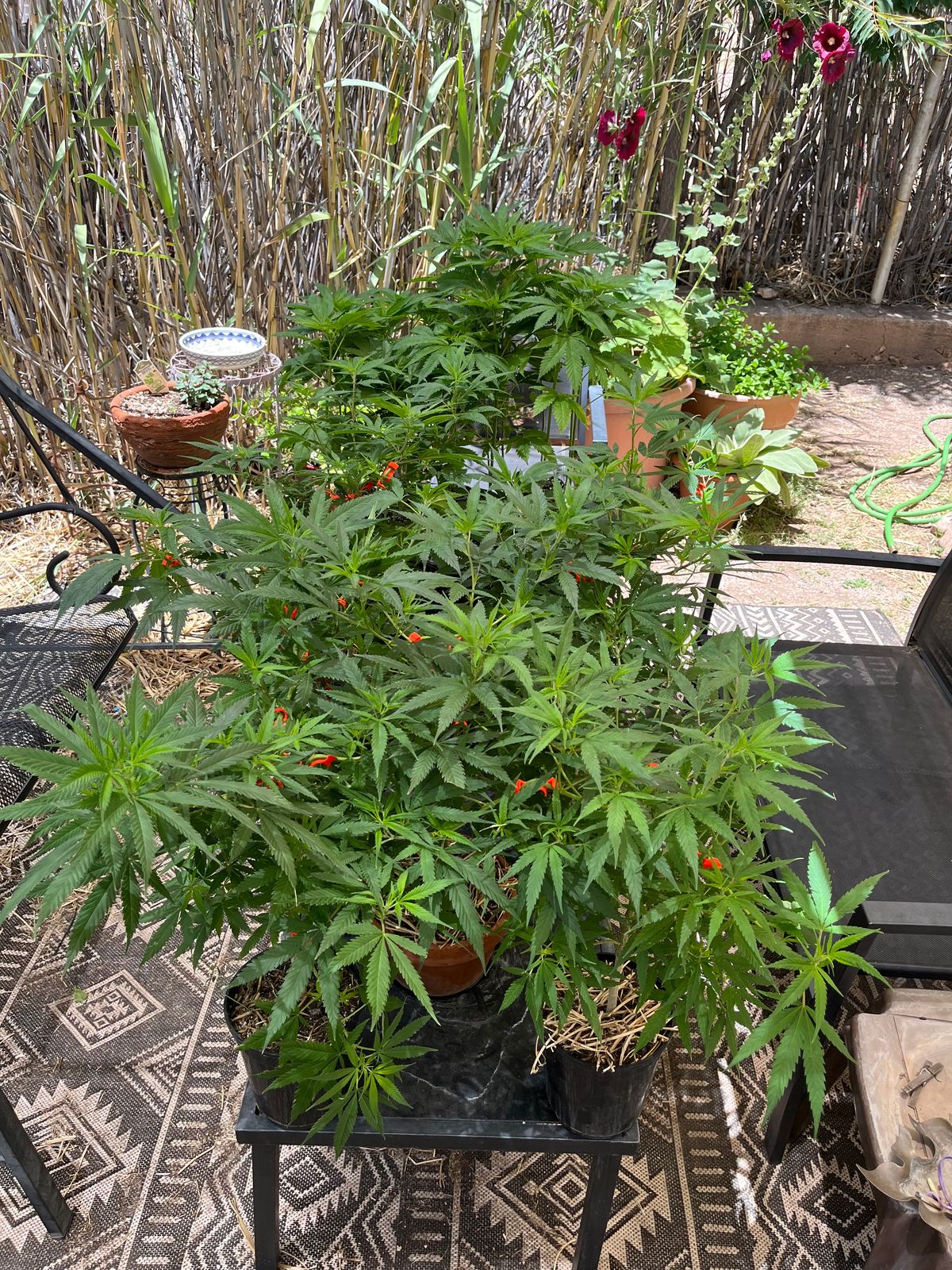
Reviewed by Brian
I recommend this product
5 Stars
Best products on the market
Loading...
Was this helpful?
Free shipping on any 2+ items - Excludes Bulk


Rootwise Bio-Phos - Biological Bloom Support - 2 oz is backordered and will ship as soon as it is back in stock.
BuildASoil is committed to sourcing the highest quality ingredients you can trust. over 10,000 Five Star Reviews and over a decade in business
Shipping is expensive, and it gets more expensive almost every year. We are not going to pretend otherwise. What we can tell you is that we work hard to find the most reliable and affordable way to get your order to you, and we pass along free shipping wherever it makes sense.
Free shipping on any order with two or more items. The one exception is bulk items, meaning the large or heavy products that have to move by freight or oversized parcel. If your cart qualifies, free shipping is applied automatically at checkout.
Most stores set free shipping at a dollar threshold. That works when you sell light things like clothing. We don't. We ship soil, amendments, and heavy real goods that are expensive and awkward to move, so a dollar minimum doesn't reflect what shipping actually costs us.
We are a small business with no outside financial backing, and we are not Amazon. We manufacture, pack, and ship everything in house so we can control quality, which means real people picking, boxing, taping, and labeling every order, and that means real jobs. When we ship a single item for free, the only way to cover it is to raise prices across the board, and we would rather not do that. Asking for two or more items on free orders lets us keep prices lower for everyone and keep shipping sustainable. We hate high shipping costs as much as you do, and this is the fairest way we have found to keep them down.
Every product page shows an estimated delivery window based on current fulfillment and carrier schedules, so you know what to expect before you buy.
Free on eligible orders with two or more items. We select the carrier and method.
Standard ground service.
Same standard transit, but we push it out the door the same day when we can.
Prioritized fulfillment with faster transit.
The fastest option we offer.
Bring your order confirmation and a valid ID.
For large or heavy orders.
For large or heavy orders, faster transit.
We ship with FedEx, UPS, and USPS, and we pick the carrier that gets your order to you reliably at the best cost. We cannot guarantee a specific carrier unless you arrange it with us ahead of time.
Orders to PO Boxes often cost more and usually do not qualify for free shipping. Use a physical address to avoid delays and added fees.
We ship to Alaska, Hawaii, Puerto Rico, Guam, the Northern Mariana Islands, and the US Virgin Islands. Free shipping generally does not apply to large or bulky items going to these destinations, though Hawaii and Alaska have more flexibility depending on carrier policy. Rates are quoted at checkout or on request.
We ship select items to Canada. Canadian customers need to choose "UPS Standard Shipping to Canada" at checkout so your order clears customs cleanly and you avoid surprise brokerage fees. Orders placed with other methods can be delayed or rejected at the border.
Some products ship directly from our vendor partners and show their own estimated ship dates on the product page. Questions about these go to support@buildasoil.com.
Freight orders arrive on pallets by box truck or semi. We assume you need liftgate service unless you tell us otherwise.
Inspect every freight shipment before you sign. Count the packages and check for damage. Signing the delivery receipt confirms the order arrived complete and undamaged, so note any problem on the receipt before you sign it.
Full truckload (FTL) orders are custom quoted after checkout based on your location, order volume, and how the truck will be unloaded.
We email tracking as soon as your order ships. If it does not arrive, check buildasoil.aftership.com with your order details, or email support@buildasoil.com.
This optional add-on at checkout covers your shipment against loss, theft, and damage, and we fast-track those claims for replacement or resolution. Even with protection, photos and documentation help us move carrier claims along faster.
Send all claims to support@buildasoil.com. We do not process claims by phone.
Include:
Hold onto the packaging and any damaged items until the claim is resolved, since carriers may require an inspection.
We help with every carrier claim we can. But once an order is in the carrier's hands, we cannot control delays, damage, or misdelivery, and the carrier makes the final call on claims.

Rootwise Bio-Phos - Biological Bloom Support - 2 oz is backordered and will ship as soon as it is back in stock.
Bio-Phos is the flower half of the Rootwise system. Sixteen species of beneficial bacteria, weighted hard toward the organisms that mobilize phosphorus. It does not add phosphorus to your soil. It unlocks the phosphorus your soil already has and cannot release on its own.
This is what you switch to when you flip. By then your mycorrhizal network is already built by Mycrobe Complete, and reapplying it does nothing. What the plant needs at that point is help with the single nutrient that gets locked up faster than any other, right when demand for it climbs the hardest.
2 tsp per 5 gallons of water to start. 1 tsp per 5 gallons for every application after that.
Water your plants first, then drench the root zone with about a cup of solution per plant.
About a week before you flip, alongside one last dose of Mycrobe Complete. That transition is the whole point.
Weekly through early flower, every 2 weeks after that, with a final application about 2 weeks before harvest.
2 oz or 4 oz covers one or two tents for years. 1 lb and up is farm and commercial scale.
The Rootwise Combo Pack bundles this with Mycrobe Complete and the enzymes at a discount.
That is two teaspoons doing all of that, not one bag. Five gallons is 80 cups, and a cup per plant is all it takes once the soil underneath is already watered. Bio-Phos runs at a lower rate than Mycrobe Complete, so a 2 oz bag holds around nineteen of those five gallon batches.
Pro tip, not a rule
These organisms ship dormant. If you mix your dose and let it sit for about 30 minutes before you water it in, you give them a head start on coming out of dormancy, and that may get you more out of the same amount of product.
Do not let it become a barrier though. I usually mix and go right away, and it works. If you have the half hour to spare, take it. If you do not, water anyway.
| Application | Rate | When |
|---|---|---|
| Simple drench, initial inoculation | 2 tsp per 5 gal | Your first dose, at the transition |
| Simple drench, follow-up | 1 tsp per 5 gal | Every application after that |
| Large garden and farm | 6 g per cu yd | Or per 1,000 sq ft of surface area |
| Greenhouse | 110 g per 10,000 sq ft | Per application |
| Row crops, native soil | 110 g per acre | Per application |
As with Mycrobe Complete, the follow-up dose is exactly half the initial dose. Your first application does the work of establishing the population. Everything after that is maintenance.
Bio-Phos uses less than Mycrobe Complete
Mycrobe Complete starts at 1 tablespoon per 5 gallons. Bio-Phos starts at 2 teaspoons, which is two thirds of that, and its follow-up rate is lower too. If you are used to scooping for Mycrobe Complete, do not carry that habit over. Measure this one on its own numbers.
| When | Rate | Frequency |
|---|---|---|
| About 1 week before the flip | 2 tsp per 5 gal | One transitional dose, with Mycrobe Complete and the enzymes |
| Early flower, first few weeks | 1 tsp per 5 gal | Weekly |
| Mid to late flower | 1 tsp per 5 gal | Every 2 weeks |
| About 2 weeks before harvest | 1 tsp per 5 gal | Final application |
For a typical ten week flower that works out to about seven applications total. The front of flower is loaded heavier on purpose, because that is when the plant is building the structures it will fill later and phosphorus demand climbs fastest.
A level teaspoon runs about 3 grams. That is the figure behind every gram number on this page. Diatomaceous earth is light and fluffy, so a packed scoop will read heavier than a loose one.
You do not really need it, though. The drench directions are written in teaspoons, so a measuring spoon is all this takes. The gram figures here are for people running scales and for the coverage math, and the farm rates are printed in grams to begin with.
You can, and it works. Just know the tradeoff going in. This is a concentrate, and a liquid drench puts it exactly where the roots are. Applying it dry scatters it around instead, so you burn through more product to get the same result. If you have the choice, drench it.
Top dressing. If you are top dressing at the flip anyway, you can sprinkle a dose into that layer and water it in. It works, it is just less efficient than mixing the same amount into water and pouring it into the root zone.
Same story as Mycrobe Complete, and it catches people the same way. When you read "2 teaspoons per 5 gallons," the instinct is to think you need 5 gallons of solution. You do not. You water your plants normally first. After that all you need is enough solution to carry the biology into the root zone, and that is about a cup per plant.
Every dose below is a first dose. After that, cut it in half and keep it there for the rest of the run. Spoon measures because that is what people have in a drawer, with grams underneath for anyone on a scale or working at farm rates.
These are rounded to the nearest spoon you actually own, so they land within about a quarter of the label rate either way. At these amounts that is pennies and it does no harm. The 5 gallon row is the label rate exactly.
| Your setup | Solution to mix | First dose |
|---|---|---|
| 4 plants | 1 quart | 1/8 tsp0.4 g |
| 8 plants | 2 quarts | 1/4 tsp0.75 g |
| 16 plants | 1 gallon | 1/2 tsp1.5 g |
| 32 plants | 2 gallons | 3/4 tsp2.25 g |
| 80 plants | 5 gallons | 2 tsp6 g |
Practical advice
At four plants you are below what a kitchen spoon set can even measure, so do not chase it. Just mix one gallon. A gallon is easy to measure, it treats up to 16 plants, and it costs you about a gram and a fifth on your first dose and six tenths of a gram on each one after. Use what you need and put the rest on your outdoor beds. Do not save mixed solution for next week.
If you are running a few plants and the math has you eyeballing a fraction of a gram, drop the precision and mix your dose into your full watering volume instead. You will use more product than you strictly need, and that is the entire downside. There is no risk to the plant and no risk to the soil.
We teach the targeted method first because at scale the waste is real money, and because root zone contact is what you are actually paying for. But a tent is not a farm. Do whichever version you will actually keep doing on schedule.
One application below means one gallon of solution at the follow-up rate, covering up to 16 plants. A flower cycle means a ten week flower run on the schedule above, which is about seven applications counting the transitional dose.
| Size | Grams | Gallon applications | Flower cycles |
|---|---|---|---|
| 2 oz | 57 g | ~95 | ~12 |
| 4 oz | 113 g | ~189 | ~24 |
| 8 oz | 227 g | ~378 | ~47 |
| 1 lb | 454 g | ~756 | ~94 |
| 5 lb bucket | 2,268 g | ~3,780 | ~472 |
Which size to get. One or two tents, the 2 oz gets you through roughly twelve full flower runs. That is many years of growing for most people. Because the rate is lower than Mycrobe Complete, a Bio-Phos bag lasts noticeably longer than the same size of the other one, so do not assume you need to match sizes across the two. If you would rather buy once and stop thinking about it, the 8 oz stores fine and there is no clock to race. The 1 lb and 5 lb are built for farms working off the cubic yard and per acre rates.
Phosphorus is the most stubborn nutrient in the whole system. It does not leach away like nitrogen does. It sits there, chemically bound to calcium in alkaline soil or to iron and aluminum in acidic soil, in forms a root cannot take up. Most soils are carrying far more phosphorus than the plant can reach.
So the reflex is to add more. That is the trap. Adding soluble phosphorus into a soil that locks phosphorus up means most of what you paid for locks up too, and you keep pushing higher to compensate.
Bio-Phos works the other end of that problem. The organisms in it produce organic acids and enzymes that pry phosphorus loose from those bonds and put it back into circulation. You are not feeding the plant. You are opening the account it already had.
Where this product came from
Kevin at Rootwise built the Rootwise system coming off outdoor seasons where he was pushing heavy phosphorus to chase yield and paying for it with Pythium pressure. In the seasons after he brought a full biological program in, he could feed noticeably less and still finish healthier plants.
Bio-Phos is the direct answer to that lesson. Instead of adding more phosphorus and dealing with what heavy feeding does to your root zone, you put in the biology that frees up what is already down there.
This widens your margin for success in the phase where mistakes cost the most. Flower is where a deficiency you catch late cannot really be fixed, and where heavy corrective feeding does the most damage. A functioning phosphorus cycle means fewer of those moments in the first place.
What to watch for. Less need to push a bloom booster to keep up. Plants that hold their color deeper into flower instead of fading early. Better performance out of the phosphorus you already amended in at mix time. And the thing growers mention to us unprompted, a fuller terpene profile once a biological program is running. These show up across a run, not in a few days.
Worth knowing
Bio-Phos was used by the 2022 North American record holder for largest pumpkin. Competitive pumpkin growing is about as extreme a test of phosphorus cycling and sustained nutrient demand as exists in horticulture.
| Component | Percent | What it is doing |
|---|---|---|
| Diatomaceous earth | 80% | The carrier, and a clean one. Not talc. Keeps the organisms dry, dormant, and evenly dispersed. |
| Live beneficial microbes | 10% | The 16 species listed below, at the CFU counts shown. |
| Humates | 8% | Food and habitat for the biology. Nearly triple what is in Mycrobe Complete. |
| Kelp extract | 2% | Trace minerals and plant compounds to support the handoff. |
The carrier is a choice, not filler
A real dose here is well under a gram, and the living fraction of that is far too small to measure or distribute on its own. The carrier is what makes a dose scoopable with a kitchen spoon, holds the organisms dormant on the shelf, and disperses them through your water instead of clumping in one corner of the bucket.
Which carrier matters more than how much. Plenty of products in this category use talc because it is cheap and it flows well. Talc is a mined mineral whose purity depends entirely on the deposit it came from, and it carries a long, well documented history of contamination problems. Diatomaceous earth costs more and it is clean. When you are putting something into the root zone of a plant you intend to consume, the inert ingredient deserves as much scrutiny as the active one.
This is where you can actually see the formulation strategy instead of taking somebody's word for it. Most of the bag sits at one count. A few species are dialed up hard, and those are the ones doing the phosphorus work.
Read that top row again
Bacillus megaterium is present at a thousand times the count of the base tier. That is not an accident and it is not rounding. B. megaterium is the best studied phosphate solubilizing bacterium there is, and loading it that heavily is the entire reason this product exists as something separate from Mycrobe Complete.
For comparison, the same organism appears in Mycrobe Complete at 1x10⁵. Same species, one hundred times the concentration here. When somebody tells you a product is "weighted toward phosphorus," this is what that is supposed to look like on a label.
Mycrobe Complete carries four species of endomycorrhizae. Bio-Phos carries none. Every organism in here is bacterial.
That is the clearest possible answer to the question we get most often, which is why you switch products instead of just running Mycrobe Complete straight through. By the time you flip, the mycorrhizal network is already built. Those fungi have colonized the roots and extended out into the soil, and that relationship carries through the rest of the cycle on its own. Reapplying them is spending money on work that is already done.
What changes at the flip is the chemistry, not the network. So the product changes with it.
Bio-Phos runs 8% humates against 3% in Mycrobe Complete, and it runs 80% carrier against 85%. Line the two labels up and you can see the trade: five points came out of the carrier and went straight into humates.
Humates are food and habitat for soil biology. Going into flower you are asking these organisms to work harder than at any other point in the run, so more of what feeds them goes into the bag with them.
Both bags are 10% live microbes. What changes is what fills that 10%.
Mycorrhizal propagules are enormous next to bacteria. A single spore can be hundreds of times the diameter of a bacterial cell, which by volume is a far bigger gap than that number suggests. So in Mycrobe Complete a real share of the microbe budget goes to those four Glomus species, even sitting at 1x10² per gram where the bacteria are at 1x10⁵.
Bio-Phos carries none of that. Same 10%, spent entirely on bacteria. That is a large part of why Bacillus megaterium can sit at 1x10⁷ in this bag and 1x10⁵ in the other one. Take the fungi out and the rest of the biology goes a lot further in the same amount of space.
Rootwise makes three products and they are not interchangeable. They also do not all run the whole time. Here is how we sequence them.
| Stage | Mycrobe Complete | Bio-Phos | Bio-Catalyst |
|---|---|---|---|
| Transplant | Every transplant. Clone dip at 1 tsp per gal. | Not yet | Yes |
| Root development and veg | Every 2 weeks | Not yet | Every 2 weeks |
| About 1 week before the flip | One last transitional dose | Yes, your first dose | Yes |
| Early flower first few weeks |
Done for the run | Weekly | Weekly |
| Mid to late flower | Done for the run | Every 2 weeks | Every 2 weeks |
| About 2 weeks before harvest | Done for the run | Final application | Final application |
Full guide
The complete stage-by-stage breakdown, including why the timing works the way it does and how to avoid wasting product, is in the Rootwise Deep Dive: How to Use It and When to Apply It in Living Soil.
| Product | Form | What it brings |
|---|---|---|
| Mycrobe Complete | Dry powder | The foundation. Twenty species including four endomycorrhizae that build the root network during veg. |
|
Bio-Phos You are here |
Dry powder | Sixteen bacteria weighted hard toward phosphorus mobilization. No mycorrhizae, because the network is already built. |
| Bio-Catalyst Enzyme Elixir | Liquid | Ten digestive enzymes produced by beneficial cultures, concentrated. Not an inoculant. |
Bio-Catalyst is not another microbe product. It is the enzyme output of these organisms, cultured and concentrated. Enzymes are what actually perform the work of prying nutrients loose. Bacteria are just the factory that makes them.
So applying the enzymes at the same time as the inoculant means the biology gets to work immediately instead of spending its first stretch building up an enzyme supply from scratch. That is why the enzyme runs through the entire cycle while the powders trade off at the flip. If you only add one thing to your Bio-Phos order, make it the Bio-Catalyst.
Do not stack inoculants
We never recommend buying several microbe products from different companies and mixing them together. It feels like more biology for your money and it is one of the most common mistakes we see.
What you are really doing is layering unknown ratios on top of a formulation somebody spent years balancing. You end up heavily overweighted on whichever species overlap between the products, with no way to know what community you just built. Bio-Phos is already balanced for the job it does. The only things it needs to pair with are the other two Rootwise products, which were formulated against it.
This is a dry powder holding dormant organisms, not a live liquid that turns on you in a season. Sealed, dry, and out of the sun, it holds up over the long haul. Buy the size that fits your grow without worrying about racing a clock.
Temperature
Store below 120°F. A closed shed in July will push past that. A closet, basement, or shaded garage shelf is fine.
Light and moisture
Keep away from both. Seal the bag after every use. Moisture in the bag starts waking organisms up with nothing for them to eat.
Mixed solution
Do not store it. Once it is in water the clock is running. Mix only what you will use that day.
Caution, straight off the label: store away from children and pets. Do not ingest.
Buy all three
All three products in matched sizes, from Small up to XXL, at a discount over buying them separately. If you already know you want the full veg-through-flower system, this is the cheaper way to get it.
See the Combo Pack and saveBecause the job changed. Mycrobe Complete carries four species of endomycorrhizae whose whole purpose is building a root network during veg. Once that network is established it keeps working on its own for the rest of the cycle, so reapplying those fungi is paying for work that is already done.
Bio-Phos contains no mycorrhizae at all. It is sixteen bacteria weighted toward phosphorus mobilization, which is the thing that actually gets harder as the plant moves into flower. Different problem, different biology.
No, and it is not trying to. Bio-Phos contains no meaningful phosphorus of its own. It is biology that makes the phosphorus already in your soil available.
What growers usually find is that a functioning phosphorus cycle means they need to push less bloom input to get the same result, which was the entire reason the product was developed. Keep amending your soil the way you normally would and let this make more of it reachable.
About a week before you flip to 12/12, not after. That transitional application goes in alongside one last dose of Mycrobe Complete and your enzymes.
The reason for going early is that phosphorus does not become available the instant you apply biology. The organisms need time to establish and start working, so you want that happening before demand climbs rather than while you are already behind.
No, and this one is on the label. Do not tank mix with chemicals or concentrated mineral salts. Salt concentrations that plants handle fine will dehydrate and kill microorganisms on contact. Apply your Rootwise dose as its own watering, separate from your feed. Use clean equipment too, since residue in a sprayer or reservoir from a previous chemical application will do the same thing.
Filtered is best practice, and if you have it, use it. But if you are mixing and applying right away, tap water is almost certainly fine.
Chlorine gets consumed on contact by organic matter, and there is plenty of that in your soil. Do not let your water source become the reason an application does not happen.
It will colonize, but the label is upfront about this and so are we. These rates are designed for soil systems. In hydro and inert media you will likely need to re-inoculate more frequently depending on your media and how much chemical input you are running. These organisms make their living unlocking nutrients bound up in soil, so in a medium with nothing bound up and a salt feed working against them, you get some benefit but not the full picture. This product earns its keep in living soil.
Yes, and it is a good pairing. Just add it at the end rather than the start. Brew your tea the way you normally would, then stir Bio-Phos in right before you apply.
The reason is the ratio. A brewer multiplies whatever happens to grow fastest in your particular setup, so anything you put in at the beginning comes out at a very different balance than it went in. The whole point of this bag is that Bacillus megaterium is loaded a thousand times heavier than the base tier. A full brew cycle rewrites that weighting entirely.
Tea first, inoculant last, then water it in.
Mostly you waste money. Beyond that, heavy doses of any single input can push things out of balance somewhere else in the system. There is no upside to overdoing it, and given how far a bag goes, there is no reason to. Consistent moderate doses on schedule beat a heavy hand every time.
Yes, and phosphorus mobilization is not crop specific the way mycorrhizal partnerships are. Every organism in this bag is bacterial, so there is no endo versus ecto question to worry about here. It works on anything growing in soil.
Outdoor growers and no-till beds without a clean veg and flower split should layer it in as things move toward flower and fruit set, then keep it on a regular schedule from there.
Still not sure which size or which product you need? Our whole staff grows, so reach out by chat, email, or phone and we will point you at the right thing even if it is the cheaper one.
Questions?
We are here to help and our entire staff knows how to grow. Just reach out via chat, email or even phone. We are passionate about growing and want you to succeed.
Payment methods
Your payment information is processed securely. We do not store credit card details nor have access to your credit card information.
Best products on the market
The best
Works Great.
Products are awesome.
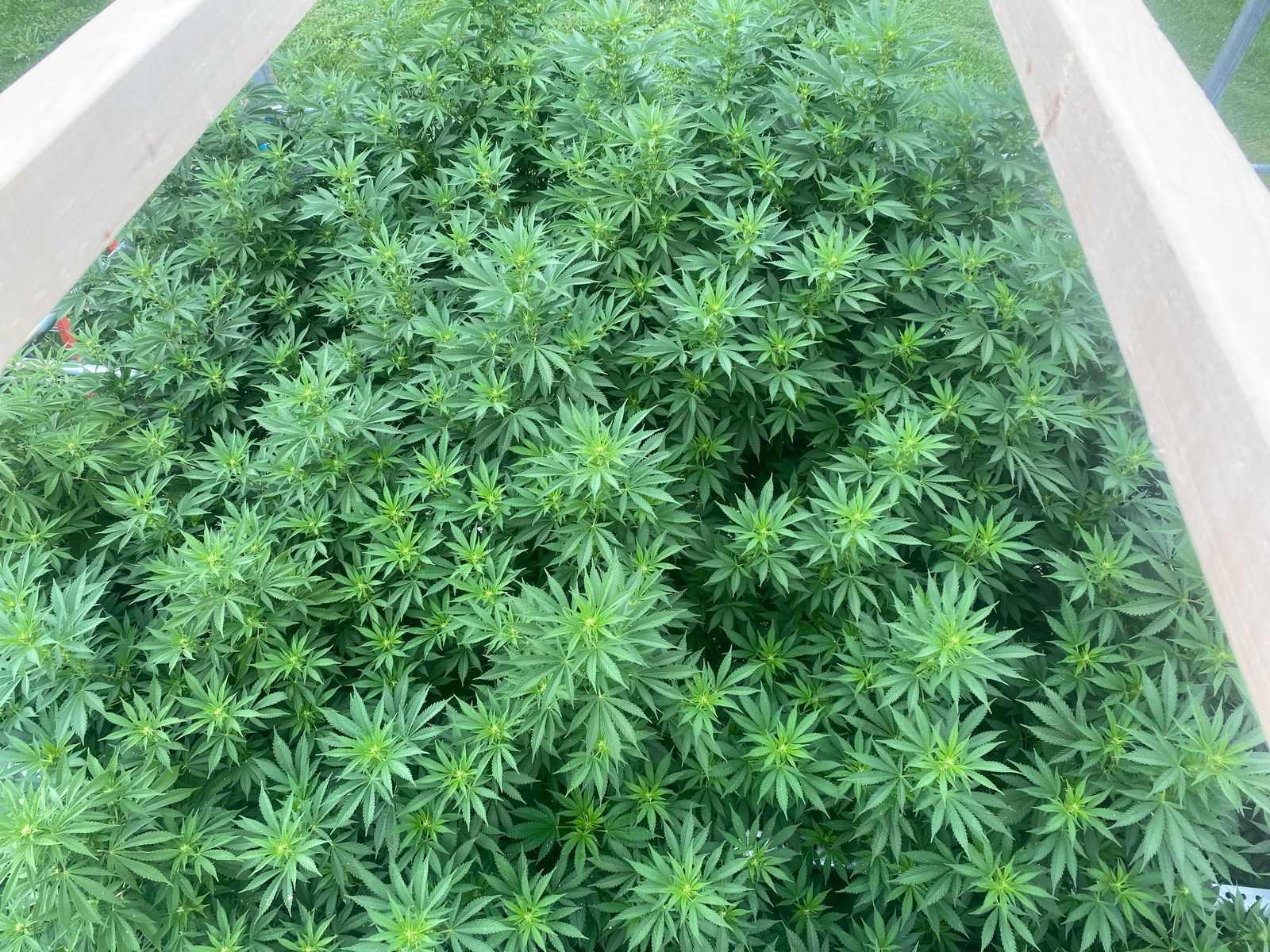
Waiting to use

Bio-Phos is the flower half of the Rootwise system. Sixteen species of beneficial bacteria, weighted hard toward the organisms that mobilize phosphorus. It does not add phosphorus to your soil. It unlocks the phosphorus your soil already has and cannot release on its own.
This is what you switch to when you flip. By then your mycorrhizal network is already built by Mycrobe Complete, and reapplying it does nothing. What the plant needs at that point is help with the single nutrient that gets locked up faster than any other, right when demand for it climbs the hardest.
2 tsp per 5 gallons of water to start. 1 tsp per 5 gallons for every application after that.
Water your plants first, then drench the root zone with about a cup of solution per plant.
About a week before you flip, alongside one last dose of Mycrobe Complete. That transition is the whole point.
Weekly through early flower, every 2 weeks after that, with a final application about 2 weeks before harvest.
2 oz or 4 oz covers one or two tents for years. 1 lb and up is farm and commercial scale.
The Rootwise Combo Pack bundles this with Mycrobe Complete and the enzymes at a discount.
That is two teaspoons doing all of that, not one bag. Five gallons is 80 cups, and a cup per plant is all it takes once the soil underneath is already watered. Bio-Phos runs at a lower rate than Mycrobe Complete, so a 2 oz bag holds around nineteen of those five gallon batches.
Pro tip, not a rule
These organisms ship dormant. If you mix your dose and let it sit for about 30 minutes before you water it in, you give them a head start on coming out of dormancy, and that may get you more out of the same amount of product.
Do not let it become a barrier though. I usually mix and go right away, and it works. If you have the half hour to spare, take it. If you do not, water anyway.
| Application | Rate | When |
|---|---|---|
| Simple drench, initial inoculation | 2 tsp per 5 gal | Your first dose, at the transition |
| Simple drench, follow-up | 1 tsp per 5 gal | Every application after that |
| Large garden and farm | 6 g per cu yd | Or per 1,000 sq ft of surface area |
| Greenhouse | 110 g per 10,000 sq ft | Per application |
| Row crops, native soil | 110 g per acre | Per application |
As with Mycrobe Complete, the follow-up dose is exactly half the initial dose. Your first application does the work of establishing the population. Everything after that is maintenance.
Bio-Phos uses less than Mycrobe Complete
Mycrobe Complete starts at 1 tablespoon per 5 gallons. Bio-Phos starts at 2 teaspoons, which is two thirds of that, and its follow-up rate is lower too. If you are used to scooping for Mycrobe Complete, do not carry that habit over. Measure this one on its own numbers.
| When | Rate | Frequency |
|---|---|---|
| About 1 week before the flip | 2 tsp per 5 gal | One transitional dose, with Mycrobe Complete and the enzymes |
| Early flower, first few weeks | 1 tsp per 5 gal | Weekly |
| Mid to late flower | 1 tsp per 5 gal | Every 2 weeks |
| About 2 weeks before harvest | 1 tsp per 5 gal | Final application |
For a typical ten week flower that works out to about seven applications total. The front of flower is loaded heavier on purpose, because that is when the plant is building the structures it will fill later and phosphorus demand climbs fastest.
A level teaspoon runs about 3 grams. That is the figure behind every gram number on this page. Diatomaceous earth is light and fluffy, so a packed scoop will read heavier than a loose one.
You do not really need it, though. The drench directions are written in teaspoons, so a measuring spoon is all this takes. The gram figures here are for people running scales and for the coverage math, and the farm rates are printed in grams to begin with.
You can, and it works. Just know the tradeoff going in. This is a concentrate, and a liquid drench puts it exactly where the roots are. Applying it dry scatters it around instead, so you burn through more product to get the same result. If you have the choice, drench it.
Top dressing. If you are top dressing at the flip anyway, you can sprinkle a dose into that layer and water it in. It works, it is just less efficient than mixing the same amount into water and pouring it into the root zone.
Same story as Mycrobe Complete, and it catches people the same way. When you read "2 teaspoons per 5 gallons," the instinct is to think you need 5 gallons of solution. You do not. You water your plants normally first. After that all you need is enough solution to carry the biology into the root zone, and that is about a cup per plant.
Every dose below is a first dose. After that, cut it in half and keep it there for the rest of the run. Spoon measures because that is what people have in a drawer, with grams underneath for anyone on a scale or working at farm rates.
These are rounded to the nearest spoon you actually own, so they land within about a quarter of the label rate either way. At these amounts that is pennies and it does no harm. The 5 gallon row is the label rate exactly.
| Your setup | Solution to mix | First dose |
|---|---|---|
| 4 plants | 1 quart | 1/8 tsp0.4 g |
| 8 plants | 2 quarts | 1/4 tsp0.75 g |
| 16 plants | 1 gallon | 1/2 tsp1.5 g |
| 32 plants | 2 gallons | 3/4 tsp2.25 g |
| 80 plants | 5 gallons | 2 tsp6 g |
Practical advice
At four plants you are below what a kitchen spoon set can even measure, so do not chase it. Just mix one gallon. A gallon is easy to measure, it treats up to 16 plants, and it costs you about a gram and a fifth on your first dose and six tenths of a gram on each one after. Use what you need and put the rest on your outdoor beds. Do not save mixed solution for next week.
If you are running a few plants and the math has you eyeballing a fraction of a gram, drop the precision and mix your dose into your full watering volume instead. You will use more product than you strictly need, and that is the entire downside. There is no risk to the plant and no risk to the soil.
We teach the targeted method first because at scale the waste is real money, and because root zone contact is what you are actually paying for. But a tent is not a farm. Do whichever version you will actually keep doing on schedule.
One application below means one gallon of solution at the follow-up rate, covering up to 16 plants. A flower cycle means a ten week flower run on the schedule above, which is about seven applications counting the transitional dose.
| Size | Grams | Gallon applications | Flower cycles |
|---|---|---|---|
| 2 oz | 57 g | ~95 | ~12 |
| 4 oz | 113 g | ~189 | ~24 |
| 8 oz | 227 g | ~378 | ~47 |
| 1 lb | 454 g | ~756 | ~94 |
| 5 lb bucket | 2,268 g | ~3,780 | ~472 |
Which size to get. One or two tents, the 2 oz gets you through roughly twelve full flower runs. That is many years of growing for most people. Because the rate is lower than Mycrobe Complete, a Bio-Phos bag lasts noticeably longer than the same size of the other one, so do not assume you need to match sizes across the two. If you would rather buy once and stop thinking about it, the 8 oz stores fine and there is no clock to race. The 1 lb and 5 lb are built for farms working off the cubic yard and per acre rates.
Phosphorus is the most stubborn nutrient in the whole system. It does not leach away like nitrogen does. It sits there, chemically bound to calcium in alkaline soil or to iron and aluminum in acidic soil, in forms a root cannot take up. Most soils are carrying far more phosphorus than the plant can reach.
So the reflex is to add more. That is the trap. Adding soluble phosphorus into a soil that locks phosphorus up means most of what you paid for locks up too, and you keep pushing higher to compensate.
Bio-Phos works the other end of that problem. The organisms in it produce organic acids and enzymes that pry phosphorus loose from those bonds and put it back into circulation. You are not feeding the plant. You are opening the account it already had.
Where this product came from
Kevin at Rootwise built the Rootwise system coming off outdoor seasons where he was pushing heavy phosphorus to chase yield and paying for it with Pythium pressure. In the seasons after he brought a full biological program in, he could feed noticeably less and still finish healthier plants.
Bio-Phos is the direct answer to that lesson. Instead of adding more phosphorus and dealing with what heavy feeding does to your root zone, you put in the biology that frees up what is already down there.
This widens your margin for success in the phase where mistakes cost the most. Flower is where a deficiency you catch late cannot really be fixed, and where heavy corrective feeding does the most damage. A functioning phosphorus cycle means fewer of those moments in the first place.
What to watch for. Less need to push a bloom booster to keep up. Plants that hold their color deeper into flower instead of fading early. Better performance out of the phosphorus you already amended in at mix time. And the thing growers mention to us unprompted, a fuller terpene profile once a biological program is running. These show up across a run, not in a few days.
Worth knowing
Bio-Phos was used by the 2022 North American record holder for largest pumpkin. Competitive pumpkin growing is about as extreme a test of phosphorus cycling and sustained nutrient demand as exists in horticulture.
| Component | Percent | What it is doing |
|---|---|---|
| Diatomaceous earth | 80% | The carrier, and a clean one. Not talc. Keeps the organisms dry, dormant, and evenly dispersed. |
| Live beneficial microbes | 10% | The 16 species listed below, at the CFU counts shown. |
| Humates | 8% | Food and habitat for the biology. Nearly triple what is in Mycrobe Complete. |
| Kelp extract | 2% | Trace minerals and plant compounds to support the handoff. |
The carrier is a choice, not filler
A real dose here is well under a gram, and the living fraction of that is far too small to measure or distribute on its own. The carrier is what makes a dose scoopable with a kitchen spoon, holds the organisms dormant on the shelf, and disperses them through your water instead of clumping in one corner of the bucket.
Which carrier matters more than how much. Plenty of products in this category use talc because it is cheap and it flows well. Talc is a mined mineral whose purity depends entirely on the deposit it came from, and it carries a long, well documented history of contamination problems. Diatomaceous earth costs more and it is clean. When you are putting something into the root zone of a plant you intend to consume, the inert ingredient deserves as much scrutiny as the active one.
This is where you can actually see the formulation strategy instead of taking somebody's word for it. Most of the bag sits at one count. A few species are dialed up hard, and those are the ones doing the phosphorus work.
Read that top row again
Bacillus megaterium is present at a thousand times the count of the base tier. That is not an accident and it is not rounding. B. megaterium is the best studied phosphate solubilizing bacterium there is, and loading it that heavily is the entire reason this product exists as something separate from Mycrobe Complete.
For comparison, the same organism appears in Mycrobe Complete at 1x10⁵. Same species, one hundred times the concentration here. When somebody tells you a product is "weighted toward phosphorus," this is what that is supposed to look like on a label.
Mycrobe Complete carries four species of endomycorrhizae. Bio-Phos carries none. Every organism in here is bacterial.
That is the clearest possible answer to the question we get most often, which is why you switch products instead of just running Mycrobe Complete straight through. By the time you flip, the mycorrhizal network is already built. Those fungi have colonized the roots and extended out into the soil, and that relationship carries through the rest of the cycle on its own. Reapplying them is spending money on work that is already done.
What changes at the flip is the chemistry, not the network. So the product changes with it.
Bio-Phos runs 8% humates against 3% in Mycrobe Complete, and it runs 80% carrier against 85%. Line the two labels up and you can see the trade: five points came out of the carrier and went straight into humates.
Humates are food and habitat for soil biology. Going into flower you are asking these organisms to work harder than at any other point in the run, so more of what feeds them goes into the bag with them.
Both bags are 10% live microbes. What changes is what fills that 10%.
Mycorrhizal propagules are enormous next to bacteria. A single spore can be hundreds of times the diameter of a bacterial cell, which by volume is a far bigger gap than that number suggests. So in Mycrobe Complete a real share of the microbe budget goes to those four Glomus species, even sitting at 1x10² per gram where the bacteria are at 1x10⁵.
Bio-Phos carries none of that. Same 10%, spent entirely on bacteria. That is a large part of why Bacillus megaterium can sit at 1x10⁷ in this bag and 1x10⁵ in the other one. Take the fungi out and the rest of the biology goes a lot further in the same amount of space.
Rootwise makes three products and they are not interchangeable. They also do not all run the whole time. Here is how we sequence them.
| Stage | Mycrobe Complete | Bio-Phos | Bio-Catalyst |
|---|---|---|---|
| Transplant | Every transplant. Clone dip at 1 tsp per gal. | Not yet | Yes |
| Root development and veg | Every 2 weeks | Not yet | Every 2 weeks |
| About 1 week before the flip | One last transitional dose | Yes, your first dose | Yes |
| Early flower first few weeks |
Done for the run | Weekly | Weekly |
| Mid to late flower | Done for the run | Every 2 weeks | Every 2 weeks |
| About 2 weeks before harvest | Done for the run | Final application | Final application |
Full guide
The complete stage-by-stage breakdown, including why the timing works the way it does and how to avoid wasting product, is in the Rootwise Deep Dive: How to Use It and When to Apply It in Living Soil.
| Product | Form | What it brings |
|---|---|---|
| Mycrobe Complete | Dry powder | The foundation. Twenty species including four endomycorrhizae that build the root network during veg. |
|
Bio-Phos You are here |
Dry powder | Sixteen bacteria weighted hard toward phosphorus mobilization. No mycorrhizae, because the network is already built. |
| Bio-Catalyst Enzyme Elixir | Liquid | Ten digestive enzymes produced by beneficial cultures, concentrated. Not an inoculant. |
Bio-Catalyst is not another microbe product. It is the enzyme output of these organisms, cultured and concentrated. Enzymes are what actually perform the work of prying nutrients loose. Bacteria are just the factory that makes them.
So applying the enzymes at the same time as the inoculant means the biology gets to work immediately instead of spending its first stretch building up an enzyme supply from scratch. That is why the enzyme runs through the entire cycle while the powders trade off at the flip. If you only add one thing to your Bio-Phos order, make it the Bio-Catalyst.
Do not stack inoculants
We never recommend buying several microbe products from different companies and mixing them together. It feels like more biology for your money and it is one of the most common mistakes we see.
What you are really doing is layering unknown ratios on top of a formulation somebody spent years balancing. You end up heavily overweighted on whichever species overlap between the products, with no way to know what community you just built. Bio-Phos is already balanced for the job it does. The only things it needs to pair with are the other two Rootwise products, which were formulated against it.
This is a dry powder holding dormant organisms, not a live liquid that turns on you in a season. Sealed, dry, and out of the sun, it holds up over the long haul. Buy the size that fits your grow without worrying about racing a clock.
Temperature
Store below 120°F. A closed shed in July will push past that. A closet, basement, or shaded garage shelf is fine.
Light and moisture
Keep away from both. Seal the bag after every use. Moisture in the bag starts waking organisms up with nothing for them to eat.
Mixed solution
Do not store it. Once it is in water the clock is running. Mix only what you will use that day.
Caution, straight off the label: store away from children and pets. Do not ingest.
Buy all three
All three products in matched sizes, from Small up to XXL, at a discount over buying them separately. If you already know you want the full veg-through-flower system, this is the cheaper way to get it.
See the Combo Pack and saveBecause the job changed. Mycrobe Complete carries four species of endomycorrhizae whose whole purpose is building a root network during veg. Once that network is established it keeps working on its own for the rest of the cycle, so reapplying those fungi is paying for work that is already done.
Bio-Phos contains no mycorrhizae at all. It is sixteen bacteria weighted toward phosphorus mobilization, which is the thing that actually gets harder as the plant moves into flower. Different problem, different biology.
No, and it is not trying to. Bio-Phos contains no meaningful phosphorus of its own. It is biology that makes the phosphorus already in your soil available.
What growers usually find is that a functioning phosphorus cycle means they need to push less bloom input to get the same result, which was the entire reason the product was developed. Keep amending your soil the way you normally would and let this make more of it reachable.
About a week before you flip to 12/12, not after. That transitional application goes in alongside one last dose of Mycrobe Complete and your enzymes.
The reason for going early is that phosphorus does not become available the instant you apply biology. The organisms need time to establish and start working, so you want that happening before demand climbs rather than while you are already behind.
No, and this one is on the label. Do not tank mix with chemicals or concentrated mineral salts. Salt concentrations that plants handle fine will dehydrate and kill microorganisms on contact. Apply your Rootwise dose as its own watering, separate from your feed. Use clean equipment too, since residue in a sprayer or reservoir from a previous chemical application will do the same thing.
Filtered is best practice, and if you have it, use it. But if you are mixing and applying right away, tap water is almost certainly fine.
Chlorine gets consumed on contact by organic matter, and there is plenty of that in your soil. Do not let your water source become the reason an application does not happen.
It will colonize, but the label is upfront about this and so are we. These rates are designed for soil systems. In hydro and inert media you will likely need to re-inoculate more frequently depending on your media and how much chemical input you are running. These organisms make their living unlocking nutrients bound up in soil, so in a medium with nothing bound up and a salt feed working against them, you get some benefit but not the full picture. This product earns its keep in living soil.
Yes, and it is a good pairing. Just add it at the end rather than the start. Brew your tea the way you normally would, then stir Bio-Phos in right before you apply.
The reason is the ratio. A brewer multiplies whatever happens to grow fastest in your particular setup, so anything you put in at the beginning comes out at a very different balance than it went in. The whole point of this bag is that Bacillus megaterium is loaded a thousand times heavier than the base tier. A full brew cycle rewrites that weighting entirely.
Tea first, inoculant last, then water it in.
Mostly you waste money. Beyond that, heavy doses of any single input can push things out of balance somewhere else in the system. There is no upside to overdoing it, and given how far a bag goes, there is no reason to. Consistent moderate doses on schedule beat a heavy hand every time.
Yes, and phosphorus mobilization is not crop specific the way mycorrhizal partnerships are. Every organism in this bag is bacterial, so there is no endo versus ecto question to worry about here. It works on anything growing in soil.
Outdoor growers and no-till beds without a clean veg and flower split should layer it in as things move toward flower and fruit set, then keep it on a regular schedule from there.
Still not sure which size or which product you need? Our whole staff grows, so reach out by chat, email, or phone and we will point you at the right thing even if it is the cheaper one.
Size