The BuildASoil Commercial Protocol
Clean testing and championship results, on repeat.
A simple, repeatable system for commercial living soil cultivation. Start with the cleanest base soil we make, feed the soil, run the biology that releases it, then feed the plant. The same process is running on over 1000 yards in real commercial production right now, with clean testing and nothing but praise.
The situation
Commercial is a different game.
Home growers get to chase the perfect plant. You have to hit the perfect plant, pass every test, and do it the same way every single cycle, at scale, on a schedule. That is three problems at once: keeping heavy metals low enough to pass in the strictest markets, keeping quality high enough to compete on the shelf, and keeping the whole thing consistent enough to build an SOP around.
Most programs make you choose. Go clean and give up performance, or chase performance and roll the dice on testing. The Commercial Protocol was built so you never have to choose. Clean is the floor. Production is the point.
The protocol
Four layers, and each one has a job.
Build the clean base, feed the soil, run the biology, feed the plant. Nothing on this page tells you how much to use, because that depends on the size of your rooms. The commercial calculator does that part.
Layer 1: The base
Start with Ultra Clean bulk soil
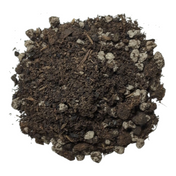
Your foundation, and the layer that decides your heavy metal ceiling before you do anything else. Ultra Clean is our lowest heavy metal living soil, built from a short list of standardized, clean-sourced ingredients so every batch starts you in the same place. Over 25 percent biodynamic Malibu Compost makes it a true no-till base right out of the tote. For commercial scale, run it by the yard.
Layer 2: Feed the soil
Top dress with Pro Blend
Pro Blend is our commercial top-dress amendment, and it is the cheapest nutrition in the program by a wide margin. It holds your soil in range through the whole cycle with a steady now-and-later nutrient curve, clean inputs and low heavy metals. Approximate NPK 3-2-1 with 4 percent calcium.
It goes down at transplant, on a repeating interval through the cycle, and again at the flip. This is what keeps the base soil producing without leaning hard on bottles.
Layer 3: Run the biology
Rootwise is what turns the soil into plant food
Here is the part most programs skip. Pro Blend in your soil is not plant food yet. It is a deposit. In living soil, nutrition is released by biology, at biology's pace, and that release rate decides how much of what you already paid for the plant ever actually sees.
Rootwise is how you raise that rate. Three products, each with one job and one window, from a system designed to be used together rather than stacked on top of each other.
Mycrobe Complete
Builds the network
Twenty species of beneficial bacteria, mycorrhizae and fungi. The mycorrhizae form a direct relationship with the roots and extend outward, which enlarges the volume of soil the plant can reach for water and nutrition. That takes time to build, so it goes in early and at every transplant.
Bio-Catalyst
Drives the breakdown
Not an inoculant. Ten enzymes, including cellulase, protease, phosphatase and phytase, exuded by beneficial cultures and then concentrated. Enzymes are the actual tools that break organic matter into forms a root can take up. This one matters more the longer you run the soil.
Bio-Phos
Unlocks the phosphorus
Sixteen species of beneficial bacteria, weighted hard toward the organisms that mobilize phosphorus. It does not add phosphorus. It frees up what your soil already holds and cannot hand over fast enough. It replaces Mycrobe Complete at the flip rather than running alongside it.
Layer 4: Feed the plant
Cover the peaks with BuildAVeg and BuildABloom
Even a well-run soil has a ceiling on how fast it can release. When demand climbs past that ceiling, and in a commercial room under hard light it will, you need something already available. These two are dry, amino chelated powders you water in. Amino acid chelation wraps the mineral in an organic molecule the root already takes in, which is why the rates are small and why growers see the response in days rather than weeks.
Dry concentrate also means you are not paying freight on water or storing totes of liquid in a room you would rather use for something else. You mix on site.
BuildAVeg
Veg, weighted to nitrogen
Freeze-dried fish hydrolysate aminos, non-GMO soy protein aminos, soluble humic acid, Diamond K gypsum and horticultural Epsom in one bag. Runs through veg, then cuts back at the flip.
BuildABloom
Flower, weighted to phosphorus and calcium
Guaranteed 2-10-5 with 10 percent calcium. Micronized rock phosphate, gypsum, potassium sulfate and Epsom, chelated with OMRI Listed vegan soy aminos. No bone meal, no guano, no phosphoric acid. Starts at the flip, not partway through flower.
The whole protocol on one screen
What runs when, start to finish.
Print this and put it on the wall of the mix room. Anchor everything to the flip, not to a calendar week, because veg length is your call and flower runs eight to twelve weeks depending on variety.
Color intensity shows relative rate, not an amount. Two notes worth catching: Bio-Catalyst is the only thing that runs the entire cycle, and the flip is the week where four of the seven change at once.
The flip is the week that decides your run. The most common mistake with any bloom input is waiting until week four or five, when the plant has already set its structure and decided how many sites it is building. Feeding it then is feeding a decision that has already been made. Start BuildABloom and Bio-Phos at the flip, cut BuildAVeg back, and take your last Mycrobe Complete dose in the same move.
The commercial calculator does the math for your facility.
Built for this protocol and sized for rooms, not tents. Give it your beds or containers, your plant count and your run length, and it builds the week-by-week schedule for all four layers, works out your soil by the yard, and hands you the order list.
Open the commercial calculatorThe part that makes it work
Why the biology decides what you actually get.
A soil test tells you what is in your soil. It does not tell you what your plant can reach this week, and those are different numbers. Everything in a living soil is held in organic matter and mineral form, and none of it moves into a root until biology converts it. The size of the deposit does not set the withdrawal rate.
That gap is where most commercial living soil programs quietly lose production. The grower tops dress on schedule, the soil test comes back fine, and the plants still finish light. The nutrition was there. The release rate was not.
A rate problem has exactly two solutions
Solution one
Add availability
Put something in the tank that is already in a form the root takes up, and skip the wait entirely. That is what the amino chelated feeds do. It works immediately and it costs more per unit of nutrition.
Solution two
Speed the soil up
Raise the rate at which your soil hands over what it already holds. That is what the biology does. It is slower to establish and it makes every pound of Pro Blend you already bought worth more.
Most programs pick one and live with the consequences. Run them both and they cover each other: the biology lifts your baseline release rate, and the chelated feeds cover the peaks the biology cannot reach in time. That is the whole reason this protocol has four layers instead of two.
Why this matters more at commercial scale
Three reasons, and all of them get worse the bigger you run.
You reuse the soil. No-till means organic matter accumulates cycle after cycle. Without strong enzymatic activity, that material just sits there as a growing pile of nutrition nobody can spend. The longer your soil has been in service, the more of your fertility program is locked in last cycle's residue, and the more the biology is doing the real work.
Containers compress the timeline. In a field, soil biology stabilizes over years. In a container on a fourteen week cycle, there is no time for that to happen on its own, so you reinforce it on purpose.
Phosphorus is the stubborn one. Rock phosphate in soil locks up with calcium and iron and waits on biology for months or years. Flower is exactly when you cannot wait. That is the specific job Bio-Phos exists to do.
The inconvenient part: most microbial products do not do this. A meta-analysis of more than 250 commercial mycorrhizal product trials found root colonization usually came in under 10 percent, and roughly 84 percent of the products showed little to no meaningful fungal activity. About one in nine delivered both real plant growth and real colonization. When a grower tells us they tried microbes and saw nothing, we believe them.
Viability is the whole game, and a spore count on a label does not prove it. Rootwise is developed with a family-run microbiology lab in the United States, each batch is produced under controlled conditions and independently tested for counts and contaminants before it ships, and we only hold a 30 to 60 day supply at a time so it moves instead of sitting on our shelf. That is not a performance claim. It is just the part of the category nobody else wants to talk about.
More is not better
The instinct at scale is to buy three brands and run everything every week. That costs real money and it works against you. Microbial products overlap heavily on species, so stacking brands usually means paying two or three times for the same function. Microbes also compete for space and food, and an aggressive organism can take over and crowd out the rest of the biology you were paying for.
Rootwise was built as one system with three non-overlapping jobs, which is the reason it is the only biology in this protocol.
Before you commit a room
The part you have to plan for.
We would rather you hear this from us than find it out on a Tuesday with 400 plants waiting.
The plant feeds are suspensions, not true solutions. Getting organic phosphate this available means grinding minerals extremely fine, and extremely fine minerals stay in suspension rather than dissolving. Agitate the tank, and keep agitating while you feed. If it sits, it settles out, and the last plant on the line gets a different feed than the first.
Best watered in by hand
Hand watering is the method every rate assumes, and it is the one that gets you an even feed across the room. These are not suitable for Blumats. Some growers do run them through drip tape and the particle size is fine enough, but organics through drip is a project. Go in expecting to flush lines on a schedule and budget the labor for it.
Build a real mix station
A tank with a working agitator and a repeatable fill procedure is the difference between a protocol and a guess. This is the single piece of infrastructure that decides whether your rooms run consistently.
Biology goes in with the feed
Add the biology right along with everything else, in the same water. No separate pass.
If you want to stretch the product as far as it will go, do the opposite: finish all your watering and feeding first, then come back and put the biology straight into the root zone of each plant. That is where it works, so placing it there means you use less of it. Either way, do not store mixed solution.
Storage is dry, sealed and cool
The dry powders are shelf stable for years sealed and out of the sun, but soluble salts cake if they take on moisture. The Bio-Catalyst enzymes are the exception, with a dated shelf life, so rotate that one and keep it cool.
Third-party testing
What the lab actually found.
Every analysis below was run by an independent agricultural lab. We publish them in full rather than summarizing them, because in a market where your flower gets tested at the far end, what goes in the pot is your problem too.
BuildABloom against its guarantee
| Analysis | We guarantee | Aug 2024 | Oct 2022 |
|---|---|---|---|
| Total nitrogen | 2% | 2.37% | 3.31% |
| Available phosphate | 10% | 14.18% | 11.13% |
| Soluble potash | 5% | 5.12% | 5.60% |
| Calcium | 10% | not run | 16.84% |
| Magnesium | 1% | not run | 1.55% |
Both tests beat every guaranteed number. We label low on purpose, because mined and biological inputs move batch to batch and we would rather the number on the bag be one we can always hit than one that flatters us. Note the calcium, higher than the phosphate, which is unusual for a bloom product and a large part of why it performs.
Heavy metals, against the AAPFCO limit
Fertilizers carrying a phosphate guarantee are regulated for heavy metals under AAPFCO SUIP #25, the standard most states use to decide whether a fertilizer is adulterated. Limits scale with guaranteed phosphate, so BuildABloom is measured against its 10 percent P2O5 guarantee.
| Metal | Result | Limit | Of limit |
|---|---|---|---|
| Arsenic | 0.41 | 130 | 0.3% |
| Cadmium | 0.27 | 100 | 0.3% |
| Cobalt | 0.35 | 1,360 | 0.03% |
| Lead | 8.2 | 610 | 1.3% |
| Mercury | <0.2 | 10 | <2% |
| Molybdenum | 1.36 | 420 | 0.3% |
| Nickel | 2.5 | 2,500 | 0.1% |
| Selenium | 0.18 | 260 | 0.07% |
| Zinc | 200 | 4,200 | 4.8% |
All values in mg/kg. Zinc is a plant nutrient here rather than a contaminant. Lead is the highest true contaminant at roughly 1 percent of the allowable level. Ultra Clean batch results and the BuildAVeg panel are linked below.
Why commercial growers run BuildASoil
Four reasons, all of them checkable.
Proven at scale
Over 1000 yards of this system are in real commercial production right now, with clean testing and nothing but praise from the growers running it.
We make it ourselves
The soil and the amendments are manufactured in-house in Montrose, Colorado. We control the inputs and the process, which is how we keep it clean and consistent batch after batch.
We publish the testing
We do not ask you to take our word for it. Batch testing and lab panels are public, so you can see the numbers before you commit a single room.
13-plus years, and we grow too
Over a decade in living soil, with a free education library on YouTube. Our whole team grows. When you call, you talk to people who actually run soil.
Documentation
Everything we have, in one place.
Need something for a compliance file or a certifier that is not listed here? Get in touch and we will send what we have so you can check it against your requirements.
What facilities ask us
The questions that come up first.
How much of each do I actually need?
That depends on your beds or containers, your plant count and how long you run, which is why there are no rates on this page. The commercial calculator sizes every layer for your facility and gives you the order list. For full truckload volume, talk to us and we will build the quote around your rooms.
Can I run this through my existing fertigation setup?
Partly, and this is worth sorting out before you order. Pro Blend is a topdress and never goes in a tank. The biology goes in the same water as the feeds, so it does not cost you a separate pass. BuildAVeg and BuildABloom are dry powders that suspend rather than dissolve, so they need continuous agitation and they are not suitable for Blumats. Growers do push them through drip tape successfully, but plan on a line flushing routine and the labor to run it. If your facility is built entirely around unattended injection, call us first and we will talk through what will and will not work in your setup.
Do I need all three Rootwise products?
No. If you are only going to run one, run Mycrobe Complete. It is the foundation inoculant and it works from first root emergence through flower. Bio-Catalyst and Bio-Phos build it into a complete biological program, and the Combo Pack prices the three together at a discount. What we would not do is substitute another brand into the middle of it, because the three are designed around each other rather than stacked.
Is the finished product certified organic?
The soy amino acid input that does the chelating in BuildABloom is OMRI Listed for organic use, and the chelated materials built from it are registered as Organic Input Materials with CDFA, registered with the Washington State Department of Agriculture, and compliant with the USDA National Organic Program. The finished blend itself carries no organic listing because we have not paid for one. Every input is eligible. If you run a certified operation, talk to us before you buy and we will send the paperwork we have so you can check it against your certifier's requirements.
Do you quote full truckloads?
Yes. Full truckload orders are quoted on your location, volume, and how the truck gets unloaded. Tell us whether you have a dock, a forklift, or need liftgate and manual unload, and we will build the quote around it.
A real room
Winning results, not just clean numbers
High Ledges in Massachusetts runs Ultra Clean and they are selling out. Their fresh pressed live rosin took First Place Non-Solvent and Best Overall Product at the 2024 NECANN Cup of Champions. Clean soil, clean feed, top shelf output. That is what this protocol is built to produce.
Get started
Start with your numbers, not a shopping list.
Put your rooms into the commercial calculator and it builds the whole program for you: how many yards of soil, the top dress schedule, the biology timing and the plant feeds, week by week, with the order list and a printable feed chart at the end.
Build your commercial schedule Browse bulk and commercial
Planning a full truckload or want commercial account pricing? Get in touch and we will build a quote around your facility, volume and dock setup. Support@BuildASoil.com reaches the same team.