Free guides, no signup
Your soil test, start to finish
Five steps, six guides, all free to download. Written for living soil in beds and containers, not for a field. The guides are yours whether you bought your test from us or not.
Start with the right panel
Everything on this page assumes a BuildASoil Complete Soil Test. If you already have one on the way, skip to step two.
The package is the standard Mehlich 3, the extras panel, the saturated paste, and the AA 8.2. That last one is the reason your calcium and exchange capacity numbers come back right, and it is why we sell one package rather than letting you assemble a cheaper one that gives you wrong math on a potting soil. Prepaid postage to the lab is included and the submission form arrives already filled out.
These guides work on any Logan Labs report, so if you tested elsewhere they are still yours to use. You will just be missing the AA 8.2 column, and the interpretation tool will tell you what that costs you in accuracy.
Getting the sample right
Your report can only describe the soil you put in the bag. Almost every bad result traces back to this step rather than to the lab.
How to take a soil sample
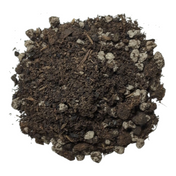
Where to pull from in a bed versus a run of containers, how much to send, when not to sample at all, and how to pack and ship it. Logan publishes their own version written for field agriculture, with advice about barns and livestock gates. This one is written for your bed.
Download the guideLogan Labs submission worksheet
The form that goes in the box with your sample. The tests, the account details and the depth are already filled in, so there are only three things for you to write. Print it, fill it in, put it in the box.
Download the worksheetThe mistake that costs people the most
Get your sample in the mail within a day or two of pulling it. Your mineral numbers are stable and do not care how long it takes. Your nitrogen numbers do, because a bagged sample keeps living. If it has to sit longer than that, spread it out to dry first so it stops changing while it waits.
Reading the report
A lab report is a page of numbers with almost no explanation attached. That is normal. Labs measure, they do not teach.
Reading your Logan Labs report
Every line on both reports in plain language, with the units marked so you always know whether a number is ppm or pounds per acre. Start with the four traps at the front. The first catches almost everybody: your soil report and your paste report each carry a block of percentages, and they mean completely different things.
Download the guideWhat good looks like
Our target ranges for living soil in containers and beds, with an ideal and an acceptable band for every line. Where our numbers differ from the ones printed on your report we explain why, and two of them differ a lot. Logan's ranges come from field agriculture. A peat and compost mix is a different system.
Download the targetsLet the tool do the math
This is the shortcut. If you only do one thing on this page, do this one.
Free, no account, nothing uploaded
Drop your report in, get an amendment plan back
It reads your Logan Labs PDF, corrects your calcium off the AA 8.2, recalculates your exchange capacity and base saturation, grades the soil, and sizes the amendments to your actual container. Same math we run internally, and your files never leave your browser.
Turning the plan into a shopping trip
Knowing a line is short is half of it. Knowing what fixes it, what else that material brings with it, and how much to put down is the other half.
What corrects what
Every material behind every line on your report, what each actually contains, and how to put it down. The thing to understand before buying anything: nothing carries only one nutrient. Fish bone meal is the densest phosphorus source there is and it is also 8 percent sodium. Most of what is in here we do not sell, and we say so.
Download the mapCups, ounces and grams
Converting a plan in grams into something you can measure without a scale. Thirty two materials in all three units, split between the minerals, which are consistent, and the meals, which are not. Alfalfa is the reason it exists: pelleted runs about twice the weight per cup of a fluffed meal, under the same name.
Download the conversionsWant a person to read it instead?
The free tool is honest about what it can see, and what it cannot see is you. It cannot ask what you are growing, how long the run is, or what went wrong last cycle. Those answers change the recommendation, sometimes a lot. We sell written interpretations separately and work with more than one reader, so pricing and turnaround depend on who reads it.
These guides get updated. If a number does not match what you have found in your own beds, or the tool misread your PDF, or something here is unclear, email support@buildasoil.com and tell us. That feedback is most of how these have gotten better.