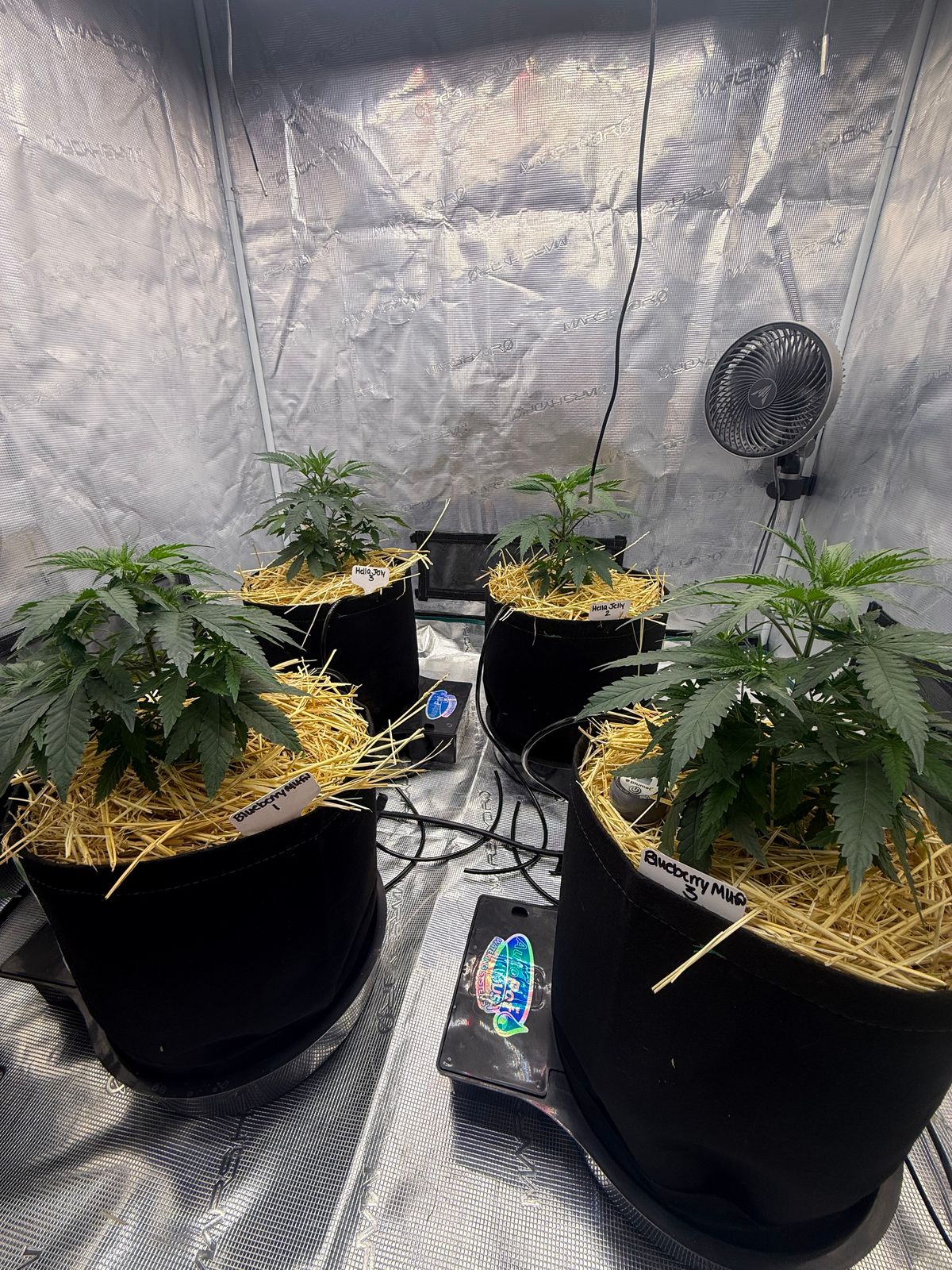
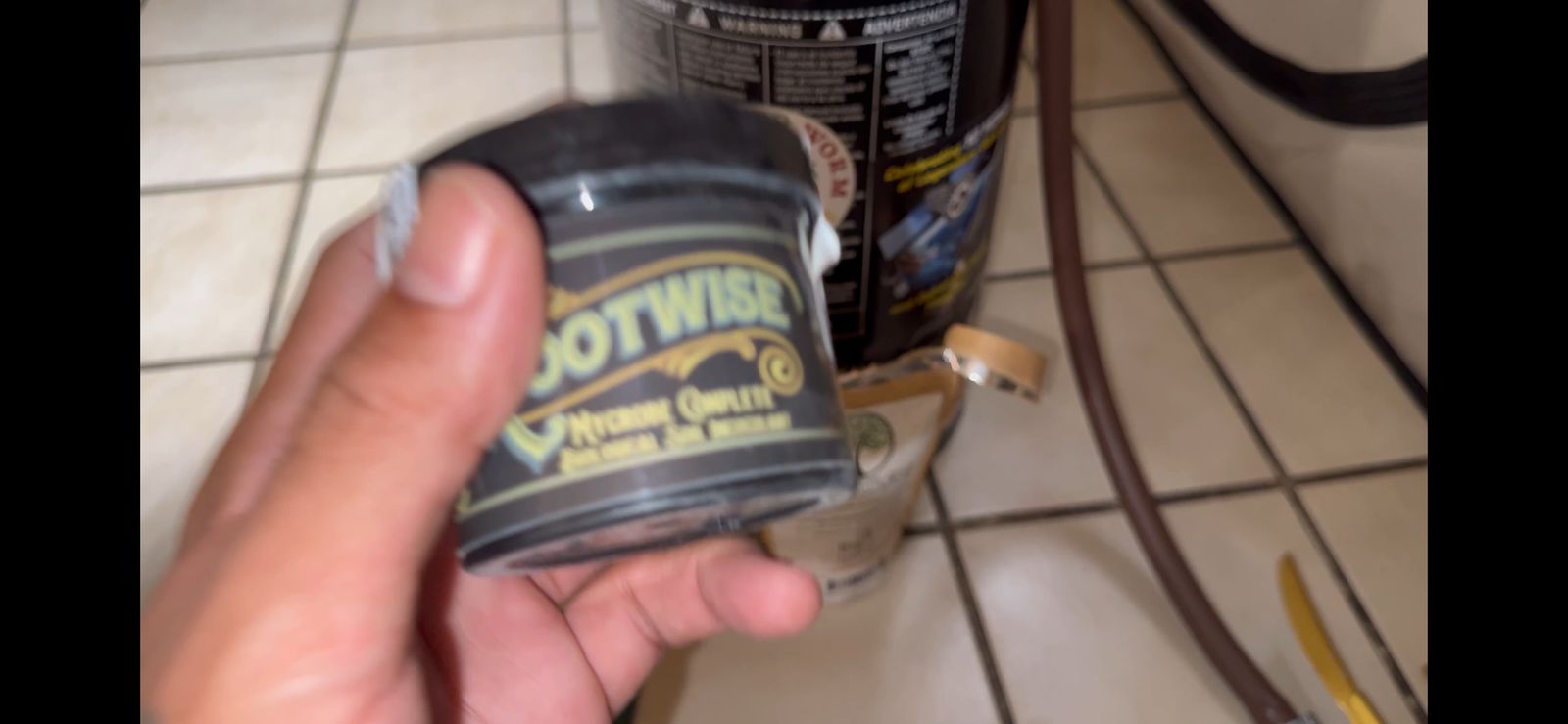
Reviewed by Joe Y.
Verified Buyer
I recommend this product
Enzyme elixir
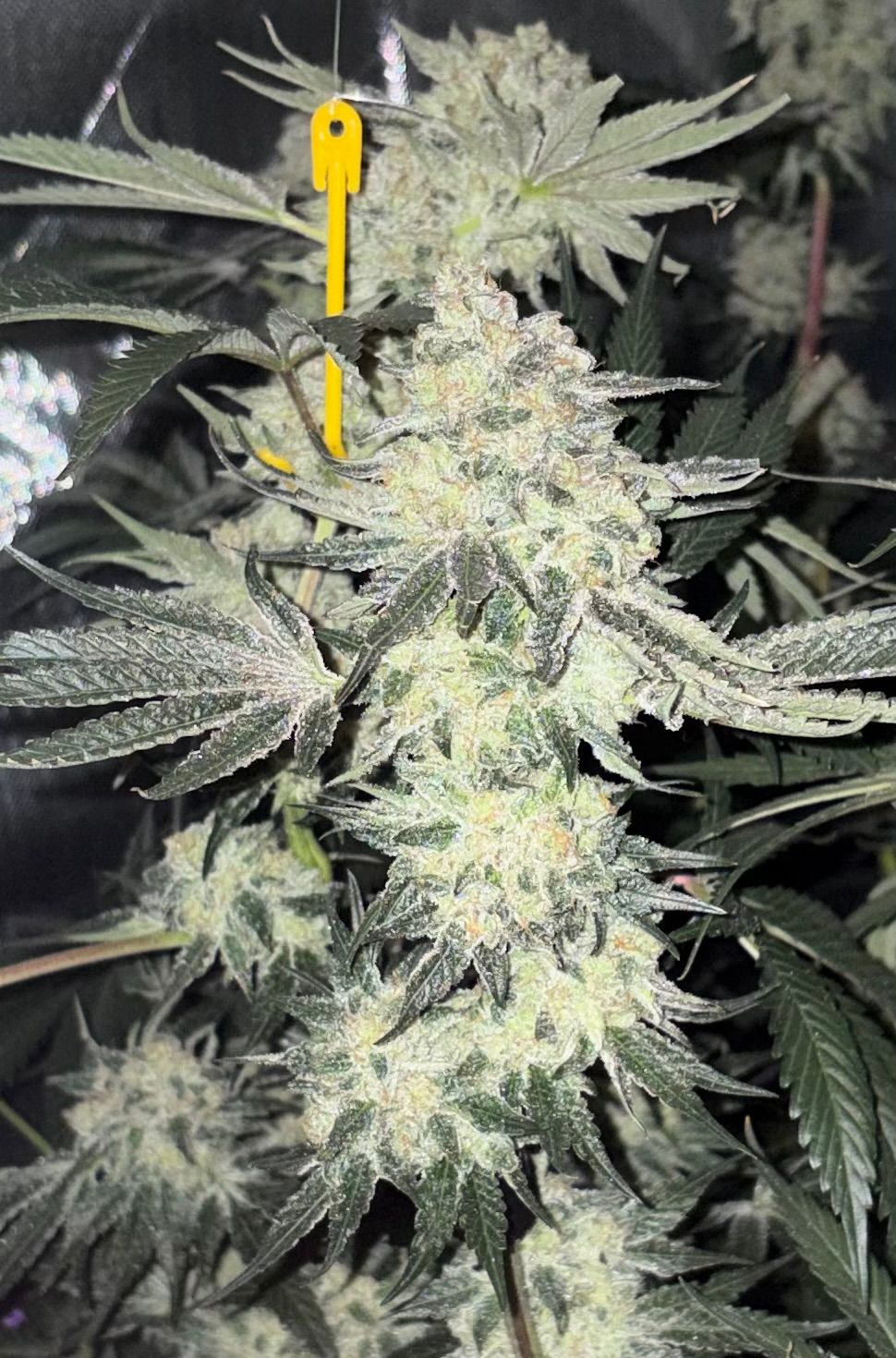
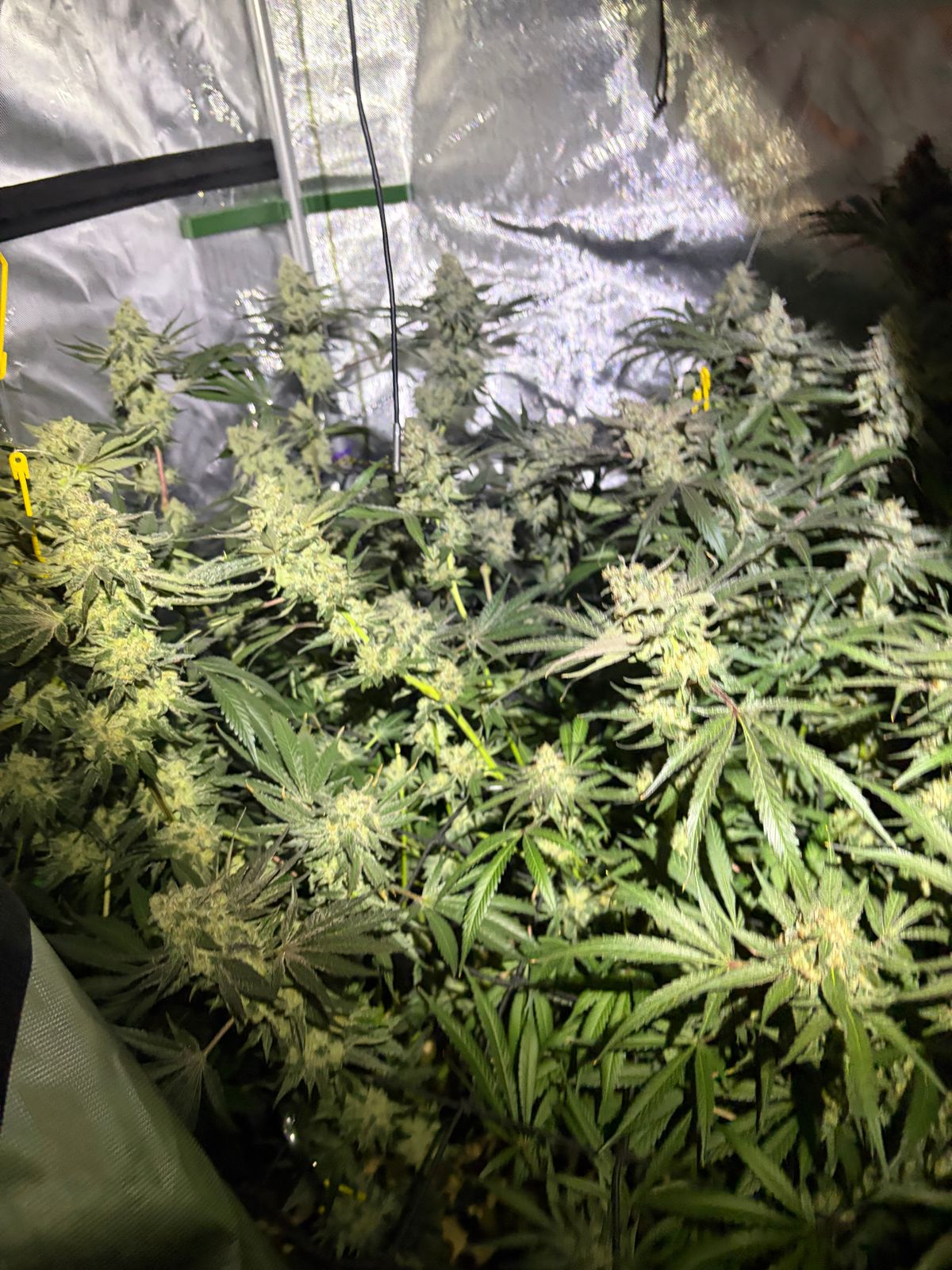
One of my go to products every run. Great stuff , makes a world of difference..
Loading...
Was this helpful?
Free shipping on any 2+ items - Excludes Bulk


Rootwise Bio-Catalyst Enzyme Elixer - Pint is backordered and will ship as soon as it is back in stock.
BuildASoil is committed to sourcing the highest quality ingredients you can trust. over 10,000 Five Star Reviews and over a decade in business
Shipping is expensive, and it gets more expensive almost every year. We are not going to pretend otherwise. What we can tell you is that we work hard to find the most reliable and affordable way to get your order to you, and we pass along free shipping wherever it makes sense.
Free shipping on any order with two or more items. The one exception is bulk items, meaning the large or heavy products that have to move by freight or oversized parcel. If your cart qualifies, free shipping is applied automatically at checkout.
Most stores set free shipping at a dollar threshold. That works when you sell light things like clothing. We don't. We ship soil, amendments, and heavy real goods that are expensive and awkward to move, so a dollar minimum doesn't reflect what shipping actually costs us.
We are a small business with no outside financial backing, and we are not Amazon. We manufacture, pack, and ship everything in house so we can control quality, which means real people picking, boxing, taping, and labeling every order, and that means real jobs. When we ship a single item for free, the only way to cover it is to raise prices across the board, and we would rather not do that. Asking for two or more items on free orders lets us keep prices lower for everyone and keep shipping sustainable. We hate high shipping costs as much as you do, and this is the fairest way we have found to keep them down.
Every product page shows an estimated delivery window based on current fulfillment and carrier schedules, so you know what to expect before you buy.
Free on eligible orders with two or more items. We select the carrier and method.
Standard ground service.
Same standard transit, but we push it out the door the same day when we can.
Prioritized fulfillment with faster transit.
The fastest option we offer.
Bring your order confirmation and a valid ID.
For large or heavy orders.
For large or heavy orders, faster transit.
We ship with FedEx, UPS, and USPS, and we pick the carrier that gets your order to you reliably at the best cost. We cannot guarantee a specific carrier unless you arrange it with us ahead of time.
Orders to PO Boxes often cost more and usually do not qualify for free shipping. Use a physical address to avoid delays and added fees.
We ship to Alaska, Hawaii, Puerto Rico, Guam, the Northern Mariana Islands, and the US Virgin Islands. Free shipping generally does not apply to large or bulky items going to these destinations, though Hawaii and Alaska have more flexibility depending on carrier policy. Rates are quoted at checkout or on request.
We ship select items to Canada. Canadian customers need to choose "UPS Standard Shipping to Canada" at checkout so your order clears customs cleanly and you avoid surprise brokerage fees. Orders placed with other methods can be delayed or rejected at the border.
Some products ship directly from our vendor partners and show their own estimated ship dates on the product page. Questions about these go to support@buildasoil.com.
Freight orders arrive on pallets by box truck or semi. We assume you need liftgate service unless you tell us otherwise.
Inspect every freight shipment before you sign. Count the packages and check for damage. Signing the delivery receipt confirms the order arrived complete and undamaged, so note any problem on the receipt before you sign it.
Full truckload (FTL) orders are custom quoted after checkout based on your location, order volume, and how the truck will be unloaded.
We email tracking as soon as your order ships. If it does not arrive, check buildasoil.aftership.com with your order details, or email support@buildasoil.com.
This optional add-on at checkout covers your shipment against loss, theft, and damage, and we fast-track those claims for replacement or resolution. Even with protection, photos and documentation help us move carrier claims along faster.
Send all claims to support@buildasoil.com. We do not process claims by phone.
Include:
Hold onto the packaging and any damaged items until the claim is resolved, since carriers may require an inspection.
We help with every carrier claim we can. But once an order is in the carrier's hands, we cannot control delays, damage, or misdelivery, and the carrier makes the final call on claims.

Rootwise Bio-Catalyst Enzyme Elixer - Pint is backordered and will ship as soon as it is back in stock.
Bio-Catalyst is not an inoculant, and that is the point. You are not buying it for a population of organisms. You are buying it for the enzymes: ten of them, exuded by non-GMO beneficial bacteria, yeast, and fungi cultures, then concentrated into a liquid.
Microbes cannot eat organic matter directly. They secrete enzymes that break it apart outside the cell, then absorb what comes loose. The enzyme is the tool that does the actual work. This bottle hands your soil the tools ready made instead of making the biology build them from scratch.
The enzymes in here are cultured specifically to work with the organisms in Mycrobe Complete, and it is the one Rootwise product that runs the entire cycle, veg through flower.
3 to 5 ml per gallon of water. A shot glass with ml markings is the easy way. If you would rather use a spoon, a level teaspoon is 4.9 ml, which lands at the top of the range.
Label says every 2 weeks, in any growing system. We run it with every Rootwise powder application, which means weekly through early flower.
Pour it over your mulch and chop-and-drop layer. This is where growers notice it most.
Depends entirely on your watering volume, not your plant count. See the sizing section. This one carries a 6 month freshness window, so buy what you will use in that time.
Cool and dark, below 100°F. The fridge is a good home for it.
The Rootwise Combo Pack bundles this with Mycrobe Complete and Bio-Phos at a discount.
How much you go through depends on how much water you put down, not how many plants you have. Unlike the powders, this one is worth spreading through your full watering volume rather than targeting the root zone, so a grower watering 10 gallons at a time uses ten times what a small tent does.
| Use | Rate | Notes |
|---|---|---|
| Standard drench | 3 to 5 ml per galabout 1 tsp per gal | Mixed into the same water as your Rootwise powder |
| Mulch and top dress | 3 to 5 ml per gal | Same rate, poured over the layer instead of into the root zone |
| Field and acreage | 1 pint per acre | Of soil |
| 2.5 gallon concentrate | 1 ml per gal | Four times the strength. Makes 10 gallons of standard. |
On frequency
The label calls for every two weeks in any cultivation system. That is the floor, and it works.
What we recommend is simpler to remember and gets more out of it: put the enzymes in every time you mix a Rootwise powder. Through veg that lands on the same every-two-weeks rhythm anyway. Through early flower, when Bio-Phos goes weekly, the enzymes come along with it.
On the mulch layer
This is the use case growers write to us about unprompted. If you are running no-till, top dressing, or doing a chop and drop, you have a pile of organic matter sitting on the surface that has to be taken apart before any of it becomes food.
That teardown is enzymatic, and two of the ten enzymes in here, cellulase and hemicellulase, exist specifically to dismantle plant cell walls. Watering them directly over that layer puts the right tools exactly where the work is.
Targeted, mixed with your powder drench. Water first, then put your Rootwise powder and the enzymes into one small batch and drench the root zone. This is the efficient version and it is how the powders should always be applied.
Through your full watering volume. Mix the enzymes into everything you are putting down that day. This uses more product, and it is a completely legitimate way to run it.
Why the enzymes are different from the powders
The powders should be targeted because they contain organisms that need to reach roots and colonize them. Concentrating them at the root zone is what makes a small bag last years.
Enzymes have no colonization step. They act on organic matter wherever they touch it, and a lot of your organic matter is nowhere near the root zone. It is your mulch layer, your top dress, spent roots, and material spread through the whole container. Putting enzymes across your full watering volume puts them where that work actually is.
So spreading these broadly is not waste the way it would be with an inoculant. It is a different job being done properly. Just size your bottle for it.
The rate is a range because it does not need to be precise. Anywhere in the 3 to 5 ml window works, and so does a teaspoon, and so does a slightly heavy one. This is not a nutrient and there is no burn risk, so if you are eyeballing it, err generous and move on with your day.
Most enzyme products in this category tell you there are enzymes in the bottle and stop there. Rootwise names all ten, so here is what each of them actually takes apart.
| Job | Enzyme | What it breaks down |
|---|---|---|
| Dismantling plant material | Cellulase | Cellulose, the main structural fiber in mulch, straw, leaves, and spent roots |
| Hemicellulase | Hemicellulose, the other half of plant cell wall structure | |
| Starches and sugars | Amylase | Starch, the stored carbohydrate in roots, seeds, and grains |
| Invertase / Sucrase | Sucrose, the sugar plants move around in sap | |
| Galactosidase | Complex galactose sugars bound up in plant residue | |
| Protein into nitrogen | Protease | Whole proteins, broken into peptides |
| Peptidase | Those peptides, broken the rest of the way into amino acids | |
| Freeing phosphorus | Phosphatase | Organic phosphorus compounds, releasing phosphate a root can take up |
| Phytase | Phytate, which is the single largest locked organic phosphorus pool in most soils | |
| Fats and oils | Lipase | Lipids from seed meals, oil cakes, and plant residue |
Two things worth noticing
Protease and peptidase are a relay. Protease cuts proteins into peptides, peptidase finishes them into amino acids. One without the other stalls halfway. That is the kind of pairing you only get when the blend is designed rather than assembled.
Two of the ten are phosphorus specific. Phosphatase and phytase both exist to release phosphate that is chemically locked in organic matter, and phytate in particular is a pool most growers never touch. That is a direct mechanical reason these enzymes pair so well with Bio-Phos through flower, when phosphorus demand peaks.
These are exuded by non-GMO beneficial bacteria, yeast, and fungi cultures, then concentrated into the liquid you are buying. The organisms do not come with it. What ends up in the bottle is the output, not the producers.
The label is direct about the intent: these enzymes are cultured to function symbiotically with the biology in Mycrobe Complete. You are not hoping two products from two companies happen to be compatible.
A bacterium has no mouth. It cannot engulf a piece of leaf litter or a chunk of compost. What it does instead is secrete enzymes out through its cell wall into the surrounding soil. Those enzymes are proteins built to break one specific kind of chemical bond, and they go to work on whatever organic matter is nearby, taking it apart into pieces small enough to absorb.
So the microbe is the factory and the enzyme is the tool. Every bit of nutrient cycling happening in your soil, every gram of organic matter turning into something a root can use, is happening because an enzyme broke a bond.
Because building them costs the organism time and energy it could be spending on growing and colonizing instead. A freshly applied inoculant lands in your soil and has to tool up before it can do anything useful.
Handing the system a supply of ready made enzymes shortens that gap. The biology gets to work sooner and spends its own energy on establishing rather than on manufacturing.
Why this matters more the longer you run your soil
In a no-till bed you keep adding organic matter on top, season after season. Top dress, mulch, chop and drop, spent root mass. All of it has to be dismantled before any of it counts as fertility.
If the enzymatic side of your system is weak, that material just sits there. You have the nutrition, it is right on the surface, and none of it is reaching the plant. A soil that cycles well is one where that breakdown never stops.
The clearest signal is decomposition. Your mulch layer darkens and thins faster. Top dress disappears into the soil instead of sitting there as a crust. Spent roots break down between runs instead of persisting as a mat.
The second signal is that your other inputs go further. Amendments you already added get taken apart and released rather than sitting locked in the organic fraction. That is the same story the whole Rootwise system tells: get more out of what you already own instead of buying more.
Read this before you pick a size
The label states 6 months from purchase date. Enzymes are proteins and they lose activity over time, so unlike the dry powders, this one is on a clock. Buy what you will use inside that window rather than stockpiling.
This is the part that trips people up. Your plant count barely matters here. What matters is the volume of water you are treating, because the rate is per gallon and because this is a product worth spreading through your whole watering rather than concentrating in the root zone.
| Water per application | Per full run | Runs from a pint | Runs from a quart |
|---|---|---|---|
| 1 gallontargeted root zone drench | ~48 ml4 ml per app | ~10 | ~20 |
| 3 gallons | ~144 ml12 ml per app | ~3 | ~7 |
| 5 gallons | ~240 ml20 ml per app | ~2 | ~4 |
| 10 gallons | ~480 ml40 ml per app | ~1 | ~2 |
| 25 gallons | ~1,200 ml100 ml per app | under 1 | under 1 |
A full run assumes about twelve applications, since this one goes in every time rather than trading off at the flip.
| Size | Volume | Right for |
|---|---|---|
| Pint | 473 ml | Targeted root zone application, or full volume watering up to about 5 gallons at a time |
| Quart | 946 ml | Full volume watering in the 5 to 10 gallon range, or anyone treating a mulch layer across real square footage |
| Gallon | 3,785 ml | Large gardens, greenhouses, outdoor acreage, light commercial |
| 2.5 gal concentrate | 9,464 ml | Commercial only. Ships direct from Rootwise. |
The honest rule: figure out roughly what you will use in six months, then buy the bottle that covers it without a lot left over. If you are running targeted drenches on a tent or two, that is the pint. If you are dosing your full watering volume, which many of us do, the quart is often the better call.
About the concentrate
The 2.5 gallon runs at four times the strength of the standard elixir, so it goes in at 1 ml per gallon instead of 3 to 5, and those 2.5 gallons make 10 gallons of standard product. It ships directly from the Rootwise facility rather than from our warehouse. If you need more than the site shows in stock, email support@buildasoil.com.
Rootwise makes three products. The two powders trade off at the flip. This one never stops.
| Stage | Mycrobe Complete | Bio-Phos | Bio-Catalyst |
|---|---|---|---|
| Transplant | Every transplant | Not yet | Yes |
| Root development and veg | Every 2 weeks | Not yet | Every 2 weeks |
| About 1 week before the flip | One last dose | First dose | Yes |
| Early flower first few weeks |
Done for the run | Weekly | Weekly |
| Mid to late flower | Done for the run | Every 2 weeks | Every 2 weeks |
| About 2 weeks before harvest | Done for the run | Final application | Final application |
Look down the right hand column. There is no stage where the answer is no. That is what makes this the one to add first if you are building the system up a piece at a time.
Full guide
The complete stage-by-stage breakdown, including why the timing works the way it does and how to avoid wasting product, is in the Rootwise Deep Dive: How to Use It and When to Apply It in Living Soil.
| Product | Form | What it brings |
|---|---|---|
| Mycrobe Complete | Dry powder | The foundation. Twenty species including four endomycorrhizae that build the root network during veg. |
| Bio-Phos | Dry powder | Sixteen bacteria weighted hard toward phosphorus mobilization, for flower. |
|
Bio-Catalyst Enzyme Elixir You are here |
Liquid | Ten digestive enzymes produced by beneficial cultures, concentrated. Runs the entire cycle. |
The powders are dry, dormant, and forgiving. This is a liquid protein concentrate with a stated freshness window, so it wants more care and it wants to get used.
Below 100°F
Straight off the label. Enzymes are proteins and heat is what damages proteins. That is a lower ceiling than the 120°F on the powders.
Cool and dark
Out of direct sun. A cabinet works. The refrigerator is better, especially for a bottle you will be working through slowly.
6 months
The label states 6 months from purchase date. Buy what you will use inside that window rather than stockpiling.
Do not leave mixed solution sitting either. Mix what you will use that day and apply it.
Caution, straight off the label: keep away from children and animals. Not for human consumption.
Buy all three
All three products in matched sizes at a discount over buying them separately. If you already know you want the full veg-through-flower system, this is the cheaper way to get it.
See the Combo Pack and saveNo. It is an enzyme product, and the enzymes are what it is sold and rated for. There is no CFU count on the label and no microbial population it is meant to deliver. If what you want is to add biology to your soil, that is what Mycrobe Complete and Bio-Phos are for.
That is also why it behaves differently from the powders. Enzymes go to work on contact rather than needing to establish and colonize first.
Work out what you will actually use in six months and buy that, rather than buying the biggest bottle that seems like a deal.
The number that decides it is your watering volume, not your plant count. Running targeted root zone drenches on a tent or two, a pint lasts a long time. Mixing the enzymes into your full watering volume, which is a perfectly good way to run this product, a quart is often the better fit. Anyone treating a mulch layer across real square footage should be looking at the quart or gallon.
Keep it cool and dark, use it on schedule, and buy fresh when you run out.
You can, and you will get something out of it, particularly on a mulch or top dress layer where there is a lot of raw material to break down.
But understand what you are and are not doing. Enzymes get used up as they work. Without a healthy microbial population continuing to produce more, you are topping up a system rather than building one. The enzymes make your biology more effective. They are not a replacement for having biology.
Because producing them costs the organism time and energy. A fresh inoculant has to tool up before it accomplishes anything, and every bit of energy spent building enzymes is energy not spent growing and colonizing.
Supplying them ready made shortens that gap. It matters most right after you apply an inoculant, and in soils carrying a lot of undigested organic matter where demand outruns what the population can produce on its own.
Yes, and that is exactly how it is meant to be used. One bucket, one watering. Whichever powder you are on that week, add the enzymes to the same mix.
Keep it separate from concentrated mineral salts. Enzymes are proteins and harsh chemistry damages them.
Apply your Rootwise dose as its own watering rather than adding it to a full strength feed. Use clean equipment too.
Yes, and the label is explicit about it, calling for 3 to 5 ml per gallon in all cultivation systems. That is more permissive than the powders, whose rates are written for soil.
It makes sense when you think about what it is. You are not asking an organism to find a home and colonize. Enzymes go to work on whatever organic matter they meet, in whatever medium you are running.
Yes, and a lot of growers say this is where they notice it most. Chop and drop material, straw, spent leaves and top dress all have to be broken down before any of it becomes fertility, and that teardown is enzymatic.
Cellulase and hemicellulase, two of the ten enzymes in here, exist specifically to take apart plant cell walls. Same rate, just water it over the surface layer. You can do both in the same watering.
Yes, and this one is more forgiving than the powders. There is no carefully balanced ratio of organisms here for a brew cycle to distort, so you can add it whenever you like.
If anything, enzymes early in a brew can help break down your food source so the organisms multiplying in there have an easier time of it.
Still not sure which size or which product you need? Our whole staff grows, so reach out by chat, email, or phone and we will point you at the right thing even if it is the cheaper one.
Questions?
We are here to help and our entire staff knows how to grow. Just reach out via chat, email or even phone. We are passionate about growing and want you to succeed.
Payment methods
Your payment information is processed securely. We do not store credit card details nor have access to your credit card information.
One of my go to products every run. Great stuff , makes a world of difference..
Build A Soil has the best products. Don’t know which one is responsible for what but there are great. Makes my growing so much easier than it used to be with incredible results.
Elixir of the grow gods.
Best products on the market

Great product straight up

Bio-Catalyst is not an inoculant, and that is the point. You are not buying it for a population of organisms. You are buying it for the enzymes: ten of them, exuded by non-GMO beneficial bacteria, yeast, and fungi cultures, then concentrated into a liquid.
Microbes cannot eat organic matter directly. They secrete enzymes that break it apart outside the cell, then absorb what comes loose. The enzyme is the tool that does the actual work. This bottle hands your soil the tools ready made instead of making the biology build them from scratch.
The enzymes in here are cultured specifically to work with the organisms in Mycrobe Complete, and it is the one Rootwise product that runs the entire cycle, veg through flower.
3 to 5 ml per gallon of water. A shot glass with ml markings is the easy way. If you would rather use a spoon, a level teaspoon is 4.9 ml, which lands at the top of the range.
Label says every 2 weeks, in any growing system. We run it with every Rootwise powder application, which means weekly through early flower.
Pour it over your mulch and chop-and-drop layer. This is where growers notice it most.
Depends entirely on your watering volume, not your plant count. See the sizing section. This one carries a 6 month freshness window, so buy what you will use in that time.
Cool and dark, below 100°F. The fridge is a good home for it.
The Rootwise Combo Pack bundles this with Mycrobe Complete and Bio-Phos at a discount.
How much you go through depends on how much water you put down, not how many plants you have. Unlike the powders, this one is worth spreading through your full watering volume rather than targeting the root zone, so a grower watering 10 gallons at a time uses ten times what a small tent does.
| Use | Rate | Notes |
|---|---|---|
| Standard drench | 3 to 5 ml per galabout 1 tsp per gal | Mixed into the same water as your Rootwise powder |
| Mulch and top dress | 3 to 5 ml per gal | Same rate, poured over the layer instead of into the root zone |
| Field and acreage | 1 pint per acre | Of soil |
| 2.5 gallon concentrate | 1 ml per gal | Four times the strength. Makes 10 gallons of standard. |
On frequency
The label calls for every two weeks in any cultivation system. That is the floor, and it works.
What we recommend is simpler to remember and gets more out of it: put the enzymes in every time you mix a Rootwise powder. Through veg that lands on the same every-two-weeks rhythm anyway. Through early flower, when Bio-Phos goes weekly, the enzymes come along with it.
On the mulch layer
This is the use case growers write to us about unprompted. If you are running no-till, top dressing, or doing a chop and drop, you have a pile of organic matter sitting on the surface that has to be taken apart before any of it becomes food.
That teardown is enzymatic, and two of the ten enzymes in here, cellulase and hemicellulase, exist specifically to dismantle plant cell walls. Watering them directly over that layer puts the right tools exactly where the work is.
Targeted, mixed with your powder drench. Water first, then put your Rootwise powder and the enzymes into one small batch and drench the root zone. This is the efficient version and it is how the powders should always be applied.
Through your full watering volume. Mix the enzymes into everything you are putting down that day. This uses more product, and it is a completely legitimate way to run it.
Why the enzymes are different from the powders
The powders should be targeted because they contain organisms that need to reach roots and colonize them. Concentrating them at the root zone is what makes a small bag last years.
Enzymes have no colonization step. They act on organic matter wherever they touch it, and a lot of your organic matter is nowhere near the root zone. It is your mulch layer, your top dress, spent roots, and material spread through the whole container. Putting enzymes across your full watering volume puts them where that work actually is.
So spreading these broadly is not waste the way it would be with an inoculant. It is a different job being done properly. Just size your bottle for it.
The rate is a range because it does not need to be precise. Anywhere in the 3 to 5 ml window works, and so does a teaspoon, and so does a slightly heavy one. This is not a nutrient and there is no burn risk, so if you are eyeballing it, err generous and move on with your day.
Most enzyme products in this category tell you there are enzymes in the bottle and stop there. Rootwise names all ten, so here is what each of them actually takes apart.
| Job | Enzyme | What it breaks down |
|---|---|---|
| Dismantling plant material | Cellulase | Cellulose, the main structural fiber in mulch, straw, leaves, and spent roots |
| Hemicellulase | Hemicellulose, the other half of plant cell wall structure | |
| Starches and sugars | Amylase | Starch, the stored carbohydrate in roots, seeds, and grains |
| Invertase / Sucrase | Sucrose, the sugar plants move around in sap | |
| Galactosidase | Complex galactose sugars bound up in plant residue | |
| Protein into nitrogen | Protease | Whole proteins, broken into peptides |
| Peptidase | Those peptides, broken the rest of the way into amino acids | |
| Freeing phosphorus | Phosphatase | Organic phosphorus compounds, releasing phosphate a root can take up |
| Phytase | Phytate, which is the single largest locked organic phosphorus pool in most soils | |
| Fats and oils | Lipase | Lipids from seed meals, oil cakes, and plant residue |
Two things worth noticing
Protease and peptidase are a relay. Protease cuts proteins into peptides, peptidase finishes them into amino acids. One without the other stalls halfway. That is the kind of pairing you only get when the blend is designed rather than assembled.
Two of the ten are phosphorus specific. Phosphatase and phytase both exist to release phosphate that is chemically locked in organic matter, and phytate in particular is a pool most growers never touch. That is a direct mechanical reason these enzymes pair so well with Bio-Phos through flower, when phosphorus demand peaks.
These are exuded by non-GMO beneficial bacteria, yeast, and fungi cultures, then concentrated into the liquid you are buying. The organisms do not come with it. What ends up in the bottle is the output, not the producers.
The label is direct about the intent: these enzymes are cultured to function symbiotically with the biology in Mycrobe Complete. You are not hoping two products from two companies happen to be compatible.
A bacterium has no mouth. It cannot engulf a piece of leaf litter or a chunk of compost. What it does instead is secrete enzymes out through its cell wall into the surrounding soil. Those enzymes are proteins built to break one specific kind of chemical bond, and they go to work on whatever organic matter is nearby, taking it apart into pieces small enough to absorb.
So the microbe is the factory and the enzyme is the tool. Every bit of nutrient cycling happening in your soil, every gram of organic matter turning into something a root can use, is happening because an enzyme broke a bond.
Because building them costs the organism time and energy it could be spending on growing and colonizing instead. A freshly applied inoculant lands in your soil and has to tool up before it can do anything useful.
Handing the system a supply of ready made enzymes shortens that gap. The biology gets to work sooner and spends its own energy on establishing rather than on manufacturing.
Why this matters more the longer you run your soil
In a no-till bed you keep adding organic matter on top, season after season. Top dress, mulch, chop and drop, spent root mass. All of it has to be dismantled before any of it counts as fertility.
If the enzymatic side of your system is weak, that material just sits there. You have the nutrition, it is right on the surface, and none of it is reaching the plant. A soil that cycles well is one where that breakdown never stops.
The clearest signal is decomposition. Your mulch layer darkens and thins faster. Top dress disappears into the soil instead of sitting there as a crust. Spent roots break down between runs instead of persisting as a mat.
The second signal is that your other inputs go further. Amendments you already added get taken apart and released rather than sitting locked in the organic fraction. That is the same story the whole Rootwise system tells: get more out of what you already own instead of buying more.
Read this before you pick a size
The label states 6 months from purchase date. Enzymes are proteins and they lose activity over time, so unlike the dry powders, this one is on a clock. Buy what you will use inside that window rather than stockpiling.
This is the part that trips people up. Your plant count barely matters here. What matters is the volume of water you are treating, because the rate is per gallon and because this is a product worth spreading through your whole watering rather than concentrating in the root zone.
| Water per application | Per full run | Runs from a pint | Runs from a quart |
|---|---|---|---|
| 1 gallontargeted root zone drench | ~48 ml4 ml per app | ~10 | ~20 |
| 3 gallons | ~144 ml12 ml per app | ~3 | ~7 |
| 5 gallons | ~240 ml20 ml per app | ~2 | ~4 |
| 10 gallons | ~480 ml40 ml per app | ~1 | ~2 |
| 25 gallons | ~1,200 ml100 ml per app | under 1 | under 1 |
A full run assumes about twelve applications, since this one goes in every time rather than trading off at the flip.
| Size | Volume | Right for |
|---|---|---|
| Pint | 473 ml | Targeted root zone application, or full volume watering up to about 5 gallons at a time |
| Quart | 946 ml | Full volume watering in the 5 to 10 gallon range, or anyone treating a mulch layer across real square footage |
| Gallon | 3,785 ml | Large gardens, greenhouses, outdoor acreage, light commercial |
| 2.5 gal concentrate | 9,464 ml | Commercial only. Ships direct from Rootwise. |
The honest rule: figure out roughly what you will use in six months, then buy the bottle that covers it without a lot left over. If you are running targeted drenches on a tent or two, that is the pint. If you are dosing your full watering volume, which many of us do, the quart is often the better call.
About the concentrate
The 2.5 gallon runs at four times the strength of the standard elixir, so it goes in at 1 ml per gallon instead of 3 to 5, and those 2.5 gallons make 10 gallons of standard product. It ships directly from the Rootwise facility rather than from our warehouse. If you need more than the site shows in stock, email support@buildasoil.com.
Rootwise makes three products. The two powders trade off at the flip. This one never stops.
| Stage | Mycrobe Complete | Bio-Phos | Bio-Catalyst |
|---|---|---|---|
| Transplant | Every transplant | Not yet | Yes |
| Root development and veg | Every 2 weeks | Not yet | Every 2 weeks |
| About 1 week before the flip | One last dose | First dose | Yes |
| Early flower first few weeks |
Done for the run | Weekly | Weekly |
| Mid to late flower | Done for the run | Every 2 weeks | Every 2 weeks |
| About 2 weeks before harvest | Done for the run | Final application | Final application |
Look down the right hand column. There is no stage where the answer is no. That is what makes this the one to add first if you are building the system up a piece at a time.
Full guide
The complete stage-by-stage breakdown, including why the timing works the way it does and how to avoid wasting product, is in the Rootwise Deep Dive: How to Use It and When to Apply It in Living Soil.
| Product | Form | What it brings |
|---|---|---|
| Mycrobe Complete | Dry powder | The foundation. Twenty species including four endomycorrhizae that build the root network during veg. |
| Bio-Phos | Dry powder | Sixteen bacteria weighted hard toward phosphorus mobilization, for flower. |
|
Bio-Catalyst Enzyme Elixir You are here |
Liquid | Ten digestive enzymes produced by beneficial cultures, concentrated. Runs the entire cycle. |
The powders are dry, dormant, and forgiving. This is a liquid protein concentrate with a stated freshness window, so it wants more care and it wants to get used.
Below 100°F
Straight off the label. Enzymes are proteins and heat is what damages proteins. That is a lower ceiling than the 120°F on the powders.
Cool and dark
Out of direct sun. A cabinet works. The refrigerator is better, especially for a bottle you will be working through slowly.
6 months
The label states 6 months from purchase date. Buy what you will use inside that window rather than stockpiling.
Do not leave mixed solution sitting either. Mix what you will use that day and apply it.
Caution, straight off the label: keep away from children and animals. Not for human consumption.
Buy all three
All three products in matched sizes at a discount over buying them separately. If you already know you want the full veg-through-flower system, this is the cheaper way to get it.
See the Combo Pack and saveNo. It is an enzyme product, and the enzymes are what it is sold and rated for. There is no CFU count on the label and no microbial population it is meant to deliver. If what you want is to add biology to your soil, that is what Mycrobe Complete and Bio-Phos are for.
That is also why it behaves differently from the powders. Enzymes go to work on contact rather than needing to establish and colonize first.
Work out what you will actually use in six months and buy that, rather than buying the biggest bottle that seems like a deal.
The number that decides it is your watering volume, not your plant count. Running targeted root zone drenches on a tent or two, a pint lasts a long time. Mixing the enzymes into your full watering volume, which is a perfectly good way to run this product, a quart is often the better fit. Anyone treating a mulch layer across real square footage should be looking at the quart or gallon.
Keep it cool and dark, use it on schedule, and buy fresh when you run out.
You can, and you will get something out of it, particularly on a mulch or top dress layer where there is a lot of raw material to break down.
But understand what you are and are not doing. Enzymes get used up as they work. Without a healthy microbial population continuing to produce more, you are topping up a system rather than building one. The enzymes make your biology more effective. They are not a replacement for having biology.
Because producing them costs the organism time and energy. A fresh inoculant has to tool up before it accomplishes anything, and every bit of energy spent building enzymes is energy not spent growing and colonizing.
Supplying them ready made shortens that gap. It matters most right after you apply an inoculant, and in soils carrying a lot of undigested organic matter where demand outruns what the population can produce on its own.
Yes, and that is exactly how it is meant to be used. One bucket, one watering. Whichever powder you are on that week, add the enzymes to the same mix.
Keep it separate from concentrated mineral salts. Enzymes are proteins and harsh chemistry damages them.
Apply your Rootwise dose as its own watering rather than adding it to a full strength feed. Use clean equipment too.
Yes, and the label is explicit about it, calling for 3 to 5 ml per gallon in all cultivation systems. That is more permissive than the powders, whose rates are written for soil.
It makes sense when you think about what it is. You are not asking an organism to find a home and colonize. Enzymes go to work on whatever organic matter they meet, in whatever medium you are running.
Yes, and a lot of growers say this is where they notice it most. Chop and drop material, straw, spent leaves and top dress all have to be broken down before any of it becomes fertility, and that teardown is enzymatic.
Cellulase and hemicellulase, two of the ten enzymes in here, exist specifically to take apart plant cell walls. Same rate, just water it over the surface layer. You can do both in the same watering.
Yes, and this one is more forgiving than the powders. There is no carefully balanced ratio of organisms here for a brew cycle to distort, so you can add it whenever you like.
If anything, enzymes early in a brew can help break down your food source so the organisms multiplying in there have an easier time of it.
Still not sure which size or which product you need? Our whole staff grows, so reach out by chat, email, or phone and we will point you at the right thing even if it is the cheaper one.
Size