The 5 Things You Actually Need to Grow Top-Shelf
Walk into any grow shop and you'll get handed a wall of bottles. Grow, Micro, Bloom, a cal-mag, a PK booster, a silica, and something purple that promises "explosive yields." Fifteen bottles, a feeding chart that looks like a chemistry final, and a real good chance you burn or stunt your plant along the way.
Here's the part the bottle companies would rather you not think about: none of it grows better plants than living soil. Nature grew the best plants on earth for a few million years before anyone bottled anything. Your job isn't to feed the plant. It's to build soil that feeds itself, and then mostly get out of the way.
Do that and you get cleaner smoke, better flavor, and soil that's alive. Plants grown in living soil naturally push higher terpenes than hydro, and because the biology feeds them steadily instead of in spikes, you can hit that on your very first grow. Consistency plus real biology is the whole reason this works for beginners. And your garden? You water it with, well, water. No mixing, no pH pens, no burning a plant you love.
You need five things. That's it. Here they are.
Real living soil
(not a bag of dirt)
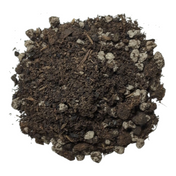
This is the whole game. Living soil is a full ecosystem in a bag: minerals, organic matter, and billions of microbes already working together. The microbes break down the inputs and hand the plant exactly what it needs, exactly when it needs it. That is what replaces your base nutrients. Not one bottle. The whole soil.
The catch is that most bagged "soil" is dead. Peat, a pinch of synthetic fertilizer, done. Living soil is alive on day one and gets better every round you run it. Get this one right and about 80% of your job is finished before you ever plant a seed.
You can build your own from scratch if you want to learn the craft. The real recipe is a base of peat, compost, and aeration, plus organic amendments and minerals, all mixed together and left to cook. It's genuinely rewarding, and we teach the whole thing for free. But it takes time to source everything and weeks to cycle before it's ready. When you'd rather plant this weekend, our living soil comes alive and batch-tested in the bag, so you skip the cook and start growing.
Independently ranked #1 of 26 bagged soils, and we didn't pay for it. See the proof →
Go deeper: What is living organic soil? · Should you build your own or buy bagged? · Build a soil from scratch in 2 simple steps
A container that holds moisture in
Living soil is a living thing, and living things don't like drying out. This is where most growers get steered wrong. The standard advice is "use fabric pots, they breathe." And they do, from every side, which means your soil dries out from the outside in. That's fine for a hydro-style grow where the roots don't care. It's rough on a living-soil ecosystem, where the microbes near the edges are the first to die every time the pot dries down.
Growers figured this out the hard way. Some started wrapping their fabric pots in plastic wrap to trap the moisture, and their plants raged. The ecosystem stayed happy, the roots stayed active, the whole pot came alive.
That's the idea behind the two containers we build our kits around. The Earthbox is a sub-irrigated planter made of food-grade plastic with a built-in 3-gallon reservoir. It waters the soil from below, so you just keep the reservoir topped off and the plant drinks what it needs, no guessing, no daily hand-watering. The Grassroots living-soil pots and beds take a different route: a moisture-locking liner holds the soil evenly damp from the outside, so instead of drying from the sides, the roots dive straight down and air-prune at the bottom. Either way you get even moisture, happy microbes, and a root system that fills the whole container instead of just the middle.
This is also the biggest fork in the road for a new grower, so decide it early: do you want the most hands-off, self-watering setup, or the classic pot-and-bed feel? Pick the vessel and half your setup decisions are already made.
Go deeper: Choosing container sizes in living soil
A layer of mulch on top
Cheapest thing on this list, and almost everybody skips it. Bare soil dries out, crusts over, and cooks the life in the top few inches, which happens to be where most of the good biology lives. A layer of mulch keeps the moisture in and keeps the microbes working right up at the surface. Look at a forest floor. Nature never leaves soil bare, and neither should you.
The good news is mulch is the easiest thing to get for free. Straw or bark is often available locally. Better yet, grow your own: plant a cover crop and chop-and-drop it right onto the bed, or cut up any straw-like plant material off your own property. Living soil loves being fed with what you grew.
When you'd rather just buy it clean, that's where we come in. The catch with local straw is you don't always know what's in it, weed seeds, spray residue, who knows. We carry certified organic straw that's clean and consistent, so you're mulching your beds instead of accidentally planting someone's field in them.
A simple top dress to re-feed the soil
Here's where the bottle crowd loses their minds. In living soil you don't feed the plant every watering. You feed the soil, once, with a dry amendment you sprinkle on top and tuck under the mulch. The microbes do the rest over the following few weeks.
That one handful of top dress replaces your entire bloom lineup, PK boosters and all. And because you're re-amending the same soil instead of tossing it and buying more, it gets cheaper and better with every grow. That's what "no-till" really means: build it once, feed it lightly, run the same soil for years.
You need two things here: a good all-purpose organic amendment to feed the soil, and a quality clean compost or worm casting to keep the biology thriving. Some growers make their own compost and vermicompost, and if you've got that dialed, you're set. It's one of the most satisfying parts of this whole thing.
But here's the honest truth: sourcing this well is sometimes easy and sometimes really hard, and it mostly depends on where you live. A lot of "compost" on the market is junk, and a lot of amendment blends are guesswork in a bag. This is the part we've obsessed over for 13 years. We batch-test our inputs, we source the best compost and castings in the country, and we blend amendments that actually balance a soil instead of just adding numbers to it. If clean, tested, no-guesswork inputs are hard to find where you are, that's exactly the problem we exist to solve.
Go deeper: Top dressing living soil, where it all comes together
Water. Just water.
This is the punchline. When the first four are handled, the fifth thing is plain water. No mixing, no measuring, no pH meter clipped to your belt. The soil holds the nutrients, the microbes deliver them on schedule, and you show up with a watering can.
You can add a few living inputs over time, some aloe, a little extra biology, to keep things humming. Plenty of this you can make or grow yourself: filet an aloe leaf off a houseplant, brew a simple compost tea. And when you want the shelf-stable, ready-to-use versions that just work, we keep those around too. But make no mistake, none of it is required. You don't need a shelf of bottles to grow top-shelf. You need water and a little patience.
So how do you get all five?
You can absolutely source these one piece at a time. Half the fun is learning the craft, and everything above is real. No gatekeeping, no secret sauce we left out.
But if you'd rather skip the guesswork on your first run, that's exactly why we build Starter Kits. We put the living soil, the container, the mulch, and the top dress in one box, all matched to work together, so your first grow starts on third base instead of at square one.
You bring the water.
Find Our Store
- List
- Map