Table of Contents
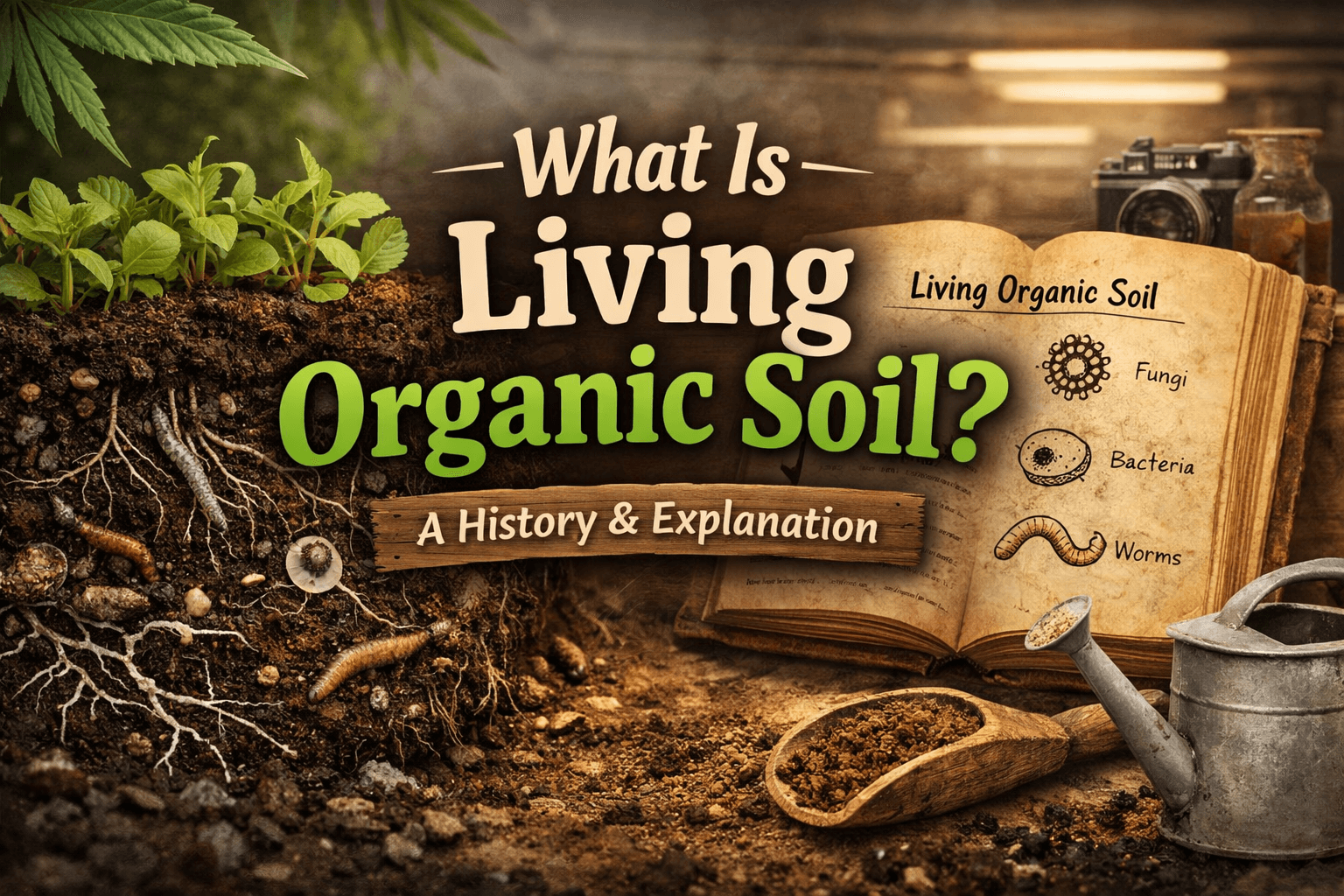
What Is Living Organic Soil?
A clearer explanation of where the term came from and what it actually means. The term Living Organic Soil didn’t come from marketing.
It came from growers trying to explain something new that didn’t fit the old categories.
When people used to say they grew in organic soil, what most growers heard was:
potting soil plus bottled nutrients.
That distinction matters, because the way organic growing was practiced at the time looked very different from what later became Living Organic Soil.
This explanation closely follows Chapter 1 of my book, which I was reading from in the video, and adds a bit of structure to make the ideas easier to follow.
The Context That Created the Confusion
To understand why the term even exists, you have to understand the time period.
Back then:
- Overgrow forums had been shut down
- There were raids on hydro shops
- Customer lists were being seized
- Seedbanks overseas were being scrutinized
Growers couldn’t openly ask questions or share information. Cannabis growers were a captive audience, and that created the perfect environment for selling products without much explanation.
The standard “organic” method at the time was:
- Buy premium potting soil
- Use expensive organic bottled nutrients
- Grow one cycle
- Throw everything away at harvest
- That was considered normal. Soil was disposable.
Early Alternatives and the First Soil Recipes
As communication slowly opened up, growers started sharing different approaches.
You began seeing methods like:
Subcool’s Super Soil
The Rev’s True Living Organics
Tom Hill’s Grow Big Trees recipe
These recipes were important. They shifted the conversation toward:
Building soil instead of just feeding plants
Using dry amendments
Thinking longer-term
Some companies tried to commercialize “super soil,” but in practice, it worked best when made at home. Even then, most growers still dumped their soil after harvest and started over.
Because of that, only the most dedicated soil growers kept pushing the method run after run.
Where “Living Organic Soil” Came From
As growers kept talking to each other, it became clear this wasn’t just another recipe, it was a different system.
Explaining all the differences out loud was a mouthful.
So the community started using a new term: Living Organic Soil.
That phrase really took hold after a forum thread titled “Living Organic Soil from Start Through Recycling” appeared. The thread was started by Gascanastan, and Clackamas Coot jumped in right away with his recipe on page one.
Those early posts, and the growers contributing to them, played a major role in shaping what became the Living Soil movement.
From Recycling Soil to No-Till
At first, the process still looked like this:
Grow in a small container (often 5 gallons)
Harvest
Dump the soil
Re-amend it outside the container
Reuse it
Over time, growers began moving into larger containers to support bigger plants and better yields. That’s when something important clicked.
Recycling soil outside the container was:
Extra work
Potentially damaging to the soil ecosystem
Growers realized the soil didn’t need to be disturbed at all.
That realization led to the first no-till grows.
The Shift to Beds and Long-Term Soil
Once no-till caught on, things escalated quickly.
Growers moved to:
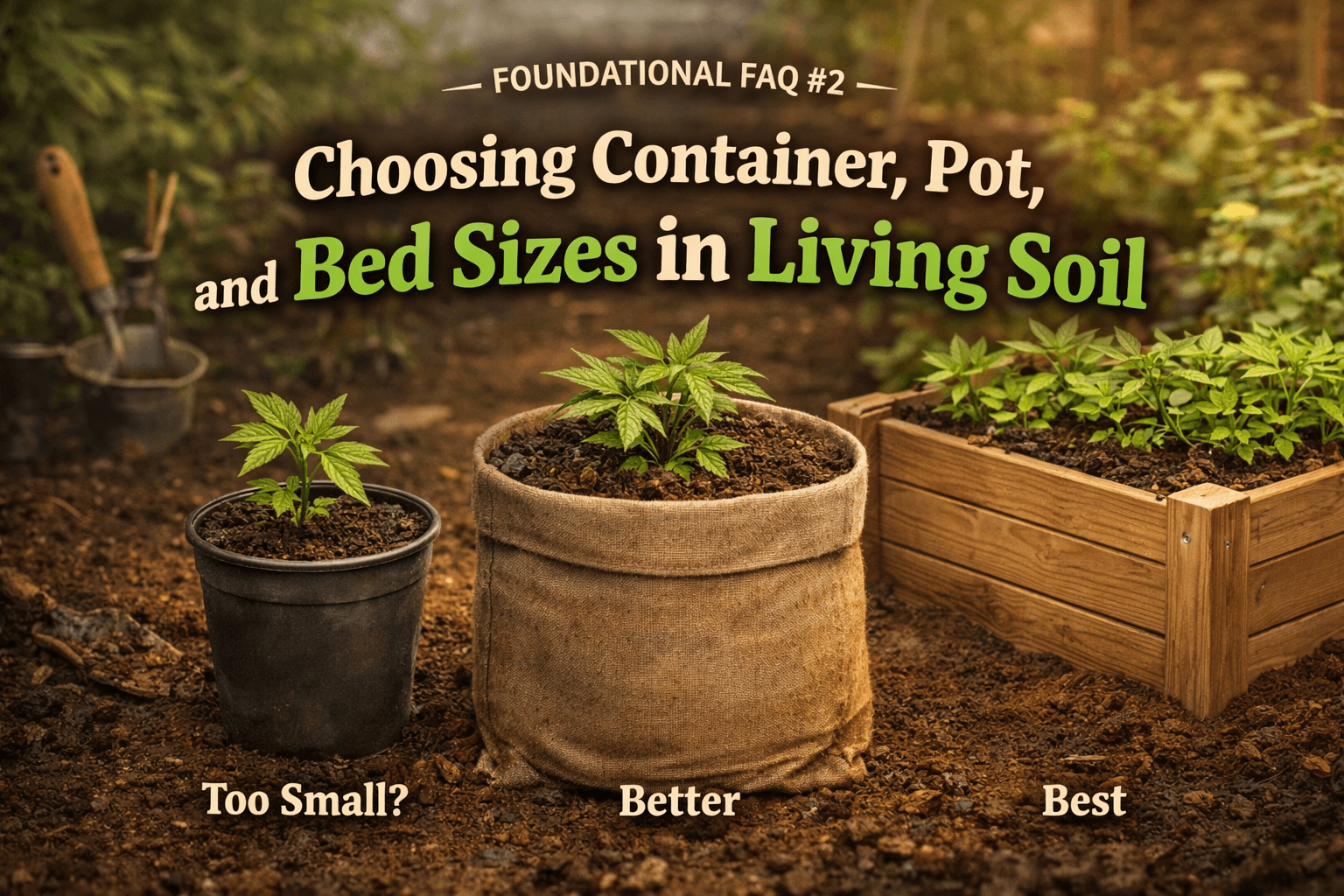
100-gallon outdoor pots
4x4 raised beds
Indoor and outdoor living soil systems
Instead of resetting every cycle, growers were maintaining and improving the same soil over time. The results spoke for themselves.
That was the moment when Living Organic Soil truly came into its own, not as a recipe, but as a system built around continuity, biology, and reuse.
The Key Idea Behind Living Organic Soil
Living Organic Soil isn’t about:
One product
One amendment
One grow cycle
It’s about building a soil ecosystem that improves over time instead of being thrown away.
That’s why the term exists, to separate this approach from older ideas of organic growing that still treated soil as disposable.
Want more information on the system? Check out this page on "The Complete System"
BuildASoil Potting Soil Recipe 3.0
$55.00
Made with the water-only grower in mind. No bottled liquid nutrients. Give it enough pot and the soil carries the plant. Composted 10–30 days and twice-mixed before it's bagged. Reusable. Reamend between runs and it gets better every cycle. Independent… read more

FAQs
What does “Living Organic Soil” mean?
What does “Living Organic Soil” mean?
Short Answer:
Living Organic Soil refers to a style of growing focused on building and reusing soil as a living ecosystem over multiple cycles.
Expanded Answer:
The term was created to distinguish this method from older organic practices that relied on bottled nutrients and disposable soil. It emphasizes continuity, soil biology, and reuse.
Why wasn’t organic soil always considered “living”?
Short Answer:
Because most organic growing used bottled nutrients and disposable soil.
Expanded Answer:
Historically, organic soil often meant premium potting soil paired with bottled nutrients, with the soil being thrown away after harvest. There was little focus on maintaining a living ecosystem.
What early methods influenced Living Organic Soil?
Short Answer:
Super Soil and early organic soil recipes helped shape the movement.
Expanded Answer:
Methods like Subcool’s Super Soil, The Rev’s True Living Organics, and Tom Hill’s recipes shifted growers toward soil building, even though many still discarded soil after harvest.
Where did the term Living Organic Soil come from?
Short Answer:
It emerged from grower discussions on online forums.
Expanded Answer:
The term gained traction after a forum thread titled Living Organic Soil from Start Through Recycling, started by Gascanastan, with early contributions from Clackamas Coot and others.
What led to no-till living soil systems?
Short Answer:
Growers realized disturbing soil between cycles was unnecessary and harmful.
Expanded Answer:
As container sizes increased, growers found that re-amending soil outside the container was extra work and disrupted the soil ecosystem, leading to no-till practices. I think the first person to try was BlueJayWay
What changed when growers moved to large beds?
Short Answer:
Living soil systems became long-term and self-improving.
Expanded Answer:
Using large pots and raised beds allowed growers to maintain the same soil over many cycles, marking a major shift in how living soil was practiced.
What is the core idea behind Living Organic Soil?
Short Answer:
Soil is reused and improved, not discarded.
Expanded Answer:
Living Organic Soil focuses on maintaining and building a soil ecosystem over time using premium ingredients rather than treating soil as a single-use input