Table of Contents
- Living Soil Compaction Is Not What Most People Think
- Where the Idea of Living Soil Compaction Comes From
- Why Living Soil Starts With an Advantage
- What Living Soil Is Actually Mimicking
- Why Soil Structure Prevents Living Soil Compaction
- What Actually Causes Living Soil Compaction
- Improper Top Dressing and Surface Crusting
- Overwatering and Living Soil Compaction
- Sub Irrigation and Hidden Compaction
- Root Issues in Living Soil Are Usually Oxygen Issues
- How to Prevent Living Soil Compaction Long Term
- Reusing Soil Without Running Into Compaction
- Living Soil Compaction Is Preventable
- FAQs
Living Soil Compaction Is Not What Most People Think
This is something that comes up all the time, especially when people are first learning about living soil or considering reusing their soil long term. You will hear things like peat breaks down, potting soil cannot be reused forever, and eventually everything turns into a compacted mess. This would be called, living soil compaction. The thing is, this is mostly just a fear and not reality.
But, to be fair, there is some truth in that. Living soil compaction is absolutely something that can happen over time.
But it is not something that has to happen.
Most of the time when people run into living soil compaction or root issues, it is not because the system itself failed. It is usually a result of how the soil was managed over time. That is an important distinction, because once you understand that, you can avoid almost all of these problems.
Where the Idea of Living Soil Compaction Comes From
A lot of the concern around living soil compaction comes from people thinking about farming or lawns, where these problems are very real and very common. The issue is that those systems are often already compromised before you even start.
Lawns are typically built on fill dirt with very little structure or organic matter. Farms are often over tilled for years, which breaks down soil structure and leaves it prone to compaction, poor drainage, and low oxygen levels... not to mention driving heavy equipment on the soil.
So yes, those problems are real. But they are coming from systems that are already degraded.
When people carry that same thinking into living soil, they are starting from the wrong reference point. Living soil is not trying to fix broken ground, it is starting with something that is already built correctly.
Why Living Soil Starts With an Advantage
When you build a proper living soil, you are stacking the deck in your favor from the beginning. Instead of trying to rebuild structure and fertility, you are maintaining something that is already working.
A well built living soil mix already includes everything you need for long term success:
- Organic matter
- Aeration
- Mineral content
- Active biology
That combination creates a system that is stable and resilient. Living soil compaction becomes much less likely when you begin with structure already built into the mix, instead of trying to add it later.
What Living Soil Is Actually Mimicking
What we are really doing with living soil is mimicking the top few inches of a fertile field. That top layer is where most of the biological activity happens, and it has a very specific balance.
It is rich in organic matter, but it is not just organic matter. It also has mineral content, aggregation, and plenty of air space. That balance is what allows water to move properly, roots to thrive, and biology to stay active.
When that balance is in place, living soil compaction is much less of a concern.
Why Soil Structure Prevents Living Soil Compaction
A good living soil is not just compost and peat. Structure is what holds everything together over time.
That is why we include things like pumice at around 20 to 30 percent of the mix. It does not break down, and it creates long term air space in the soil. That alone goes a long way in preventing living soil compaction. Pumice only holds 20-30% water by weight where as organic matter can hold 50% or more! Pumice will keep air in the soil and add structure that won't float to the top like perlite.
We also add a wide range of minerals through rock dusts. This gives the soil texture and density so it does not collapse into fine organic material over time. Without that mineral component, everything can break down into smaller and smaller organic particles, and that is where compaction starts to show up... because organic matter holds so much moisture.
What Actually Causes Living Soil Compaction
Living soil compaction is rarely random. It usually comes from a few consistent management patterns that slowly shift the soil over time.
On the structural side, problems show up when there is not enough aeration in the original mix, not enough mineral content, or everything is allowed to break down into fine material without being rebuilt. Many times this is because a home made living soil might start with bagged potting soil instead of being made from scratch like we teach.
On the surface level, issues come from not maintaining a mulch layer, not top dressing regularly, or letting worms process everything into very fine castings without reintroducing structure.
Over time, these factors lead to soil that is too fine. When that happens, water movement slows down, air movement decreases, and living soil compaction starts to take hold.
Improper Top Dressing and Surface Crusting
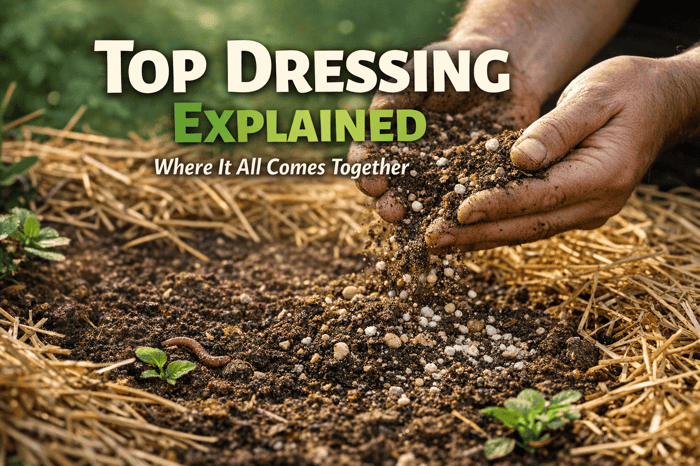
Top dressing is one of the most powerful tools you have, but it has to be done with intention. If you continuously add material to the surface and never lightly work it into that top layer, you can end up creating a dense crust.
That crust can prevent water from penetrating evenly, which leads to dry pockets and uneven moisture. Over time, that surface layer becomes one of the first places where living soil compaction shows up, and that is also where most of your active roots are located.
Overwatering and Living Soil Compaction
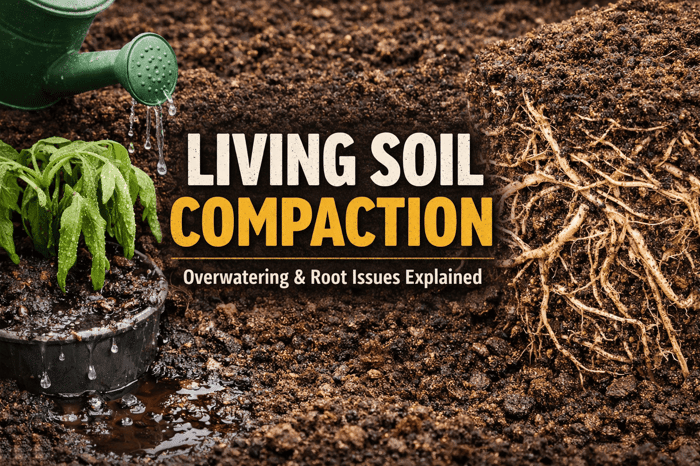
Overwatering is one of the fastest ways to create living soil compaction and root issues, and it is almost never a one time mistake. It usually comes from repeatedly keeping the soil too wet.
When the soil stays saturated, oxygen gets pushed out of the root zone. Once oxygen levels drop, roots begin to struggle and biological activity shifts. Growth slows down, and the system starts to lose balance.
What looks like a watering issue is almost always an oxygen issue, and that is directly tied to living soil compaction.
Sub Irrigation and Hidden Compaction
Sub irrigation or bottom watering can work really well, but it comes with its own risks if it is not managed carefully. If the soil stays constantly saturated from the bottom, you can create the same low oxygen environment, just from a different direction.
Living soil compaction can develop from the bottom up, and roots will often avoid those saturated zones. When that happens, the plant is no longer using the full volume of soil, even though it is available.
Root Issues in Living Soil Are Usually Oxygen Issues
When growers see root problems, the instinct is often to add more water. In reality, roots need oxygen just as much as they need moisture.
Most of the active root zone lives in the top layer of soil. If that layer becomes compacted, crusted, or waterlogged, you are cutting off access to oxygen where it matters most.
This is why living soil compaction often shows up as slow growth, weak plants, or plants that never fully take off.
How to Prevent Living Soil Compaction Long Term
The good news is that all of this stuff is very preventable if you stay consistent with a few key practices.
You want to focus on maintaining both structure and biology over time, not just feeding the plant. That means keeping a mulch layer on the surface, top dressing regularly and lightly incorporating it, and making sure your soil mix always has enough aeration and mineral content.
Once the soil has roots in it, and worms working it, there will be pathways for air. That's why we add worms and sometimes grow cover crops and then we don't till the soil up.
Watering is also a big part of this. You want to avoid keeping the soil constantly saturated and instead allow it to cycle so oxygen can re enter the root zone.
These are simple habits, but they make a big difference in keeping your soil healthy long term.
Reusing Soil Without Running Into Compaction
Yes, soil can break down over time, but it does not have to fail. When you build it correctly and manage it with intention, you can reuse living soil for years without running into any of these issues.
Most growers will never reach the limits of their soil if they stay on top of structure and watering. The system is designed to last, it just needs to be maintained.
Living Soil Compaction Is Preventable
This fear of long term compaction is not inevitable, and it is not something built into the system. It is something that shows up when structure is ignored and watering is off.
Once you understand that, everything changes. You stop blaming the soil and start managing it in a way that keeps it working.
That is the goal. Build it right, stay consistent, and your soil will keep producing for you year after year.
If you really want to make your own soil, this older blog post shows you how to do it with 3 recipes: https://buildasoil.com/blogs/news/17627464-build-a-soil-from-scratch-in-2-simple-steps
FAQs
What causes living soil compaction?
Living soil compaction is usually caused by poor soil structure, lack of aeration, overwatering, and not maintaining the soil with mulch and top dressing over time. Many times this is because growers convert a bagged soil with perlite into a living soil without properly addressing pumice and rock dusts.
Can living soil be reused without compaction?
Yes, living soil can be reused for many years without compaction if it is built with proper aeration and minerals and managed with good watering and top dressing practices.
Does overwatering cause root problems in living soil?
Yes, overwatering reduces oxygen in the soil, which leads to root stress and poor plant growth. Most root issues are actually oxygen issues, not lack of water.
How do you fix living soil compaction?
You can always dump it on a tarp and then add in your pumice and minerals and make your soil volume much larger. You can fix living soil compaction by improving aeration, adding structure like pumice, lightly breaking up the top layer, adjusting watering practices, and reintroducing mulch and biology.
Is no till soil prone to compaction?
No till soil is not inherently prone to compaction. Most issues come from improper management, especially overwatering and lack of starting structure.
Why is the top layer of soil so important?
The top layer is where most active roots and biology live. If this layer becomes compacted or crusted, it can limit oxygen and water movement, leading to plant stress.
Small Black Lava Rock

$27.00
Ever noticed how perlite seems to float to the top of your containers, leaving your soil uneven and your plants struggling? It can be frustrating watching your soil shift instead of staying exactly where you want it. 🌱 That's where… read more
Pumice

$31.00
BuildASoil Pumice Horticultural Grade: Very porous for holding air. Approximately 50% will float and 50% will sink which is ideal for soil building. Some pumice mines are also full of obsidian which is what perlite is made from and 100% will… read more
Bulk Pumice

$210.00
Bulk Pumice By The Yard Horticultural Grade: Very porous for holding air. Approximately 50% will float and 50% will sink which is ideal for soil building. Some pumice mines are also full of obsidian which is what perlite is made… read more