| Component |
Percent |
What it is doing |
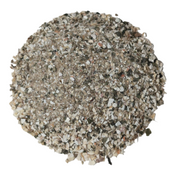
| Diatomaceous earth |
85% |
The carrier, and a clean one. Not talc. Keeps the organisms dry, dormant, and evenly dispersed. |
| Live beneficial microbes |
10% |
The 20 species listed below, at the CFU counts shown. |
| Humates |
3% |
From fresh water humic deposits. Food and habitat for the biology once it lands. |
| Kelp extract |
2% |
Trace minerals and plant compounds to support the handoff. |
Why only 10% microbes, and why the carrier matters
The carrier is not filler. It is a design decision, and it is one worth checking on any biological product you buy.
Start with why a carrier has to exist. This inoculant is potent enough that a real dose for a home grower is under a single gram, and the living fraction of that is so small you could not portion it out if you tried. Without something to carry it you would be asked to measure a millionth of a teaspoon and then somehow distribute that evenly through a gallon of water. Nobody can do that. The carrier is what makes a dose measurable with a kitchen spoon, holds the organisms dry and dormant on the shelf for the life of the product, and disperses them through your water instead of letting them clump in one corner of the bucket.
So the real question is not how much carrier. It is which carrier. Plenty of products in this category use talc, because it is cheap and it flows well. Talc is also a mined mineral whose purity depends entirely on the deposit it came out of, and it carries a long, well documented history of contamination problems. Diatomaceous earth costs more and it is clean.
That is the trade Rootwise made and we think it is the right one. When you are putting something into the root zone of a plant you intend to consume, the inert ingredient deserves as much scrutiny as the active one.
The 20 organisms
Arthrobacter globiformis 1x10⁵
Azospirillum brasilense 1x10⁵
Azospirillum lipoferum 1x10⁵
Azotobacter chroococcum 1x10⁵
Azotobacter vinelandii 1x10⁵
Bacillus licheniformis 1x10⁵
Bacillus megaterium 1x10⁵
Bacillus pumilus 1x10⁵
Bacillus subtilis 1x10⁵
Pseudomonas fluorescens 1x10⁵
Pseudomonas putida 1x10⁵
Rhodopseudomonas palustris 1x10⁵
Rhodobacter sphaeroides 1x10⁵
Streptomyces griseoflavus 1x10⁵
Streptomyces griseus 1x10⁵
Glomus intraradices 1x10²
Glomus aggregatum 1x10²
Glomus mosseae 1x10²
Glomus etunicatum 1x10²
Trichoderma harzianum 1x10²
CFU per gram. Four species of endomycorrhizae plus Trichoderma on the fungal side, fifteen bacteria across the nitrogen fixing, phosphorus solubilizing, and organic matter decomposing groups.
The ratio is the product
That list matters less than the proportions between the things on it. Twenty organisms held in the right balance behave like a functioning soil community. The same twenty at random ratios behave like a fight. The formulation is the work, not the roster.
Do not stack inoculants
This is why we never recommend buying several microbe products and mixing them together. It feels like more biology for your money, and it is one of the most common mistakes we see growers make.
What you are actually doing is layering unknown ratios on top of a formulation somebody spent years balancing. You end up heavily overweighted on whichever species happen to overlap between the products, and you have no way of knowing what community you just built. Loading up on any one organism throws the system sideways the same way loading up on any one mineral does.
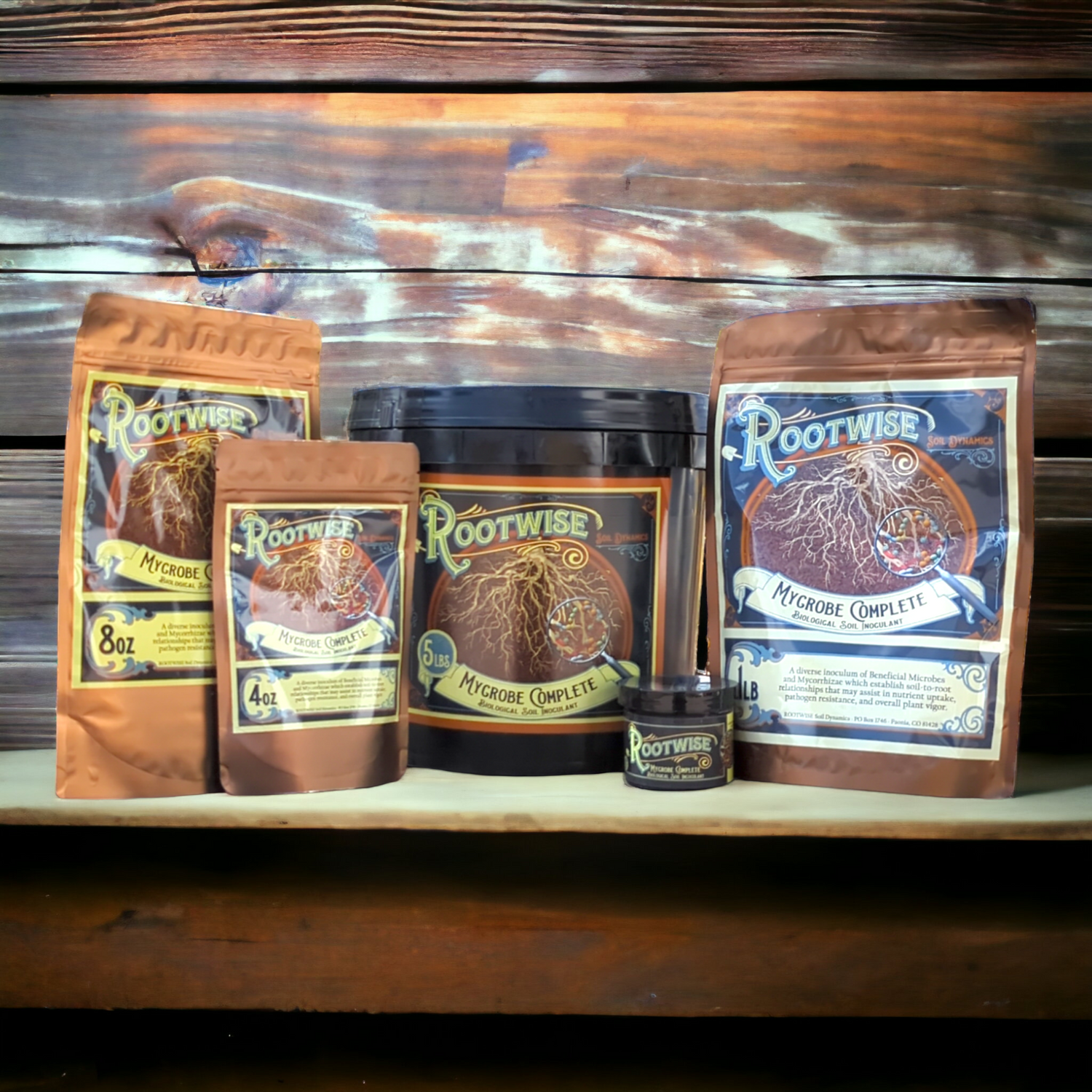
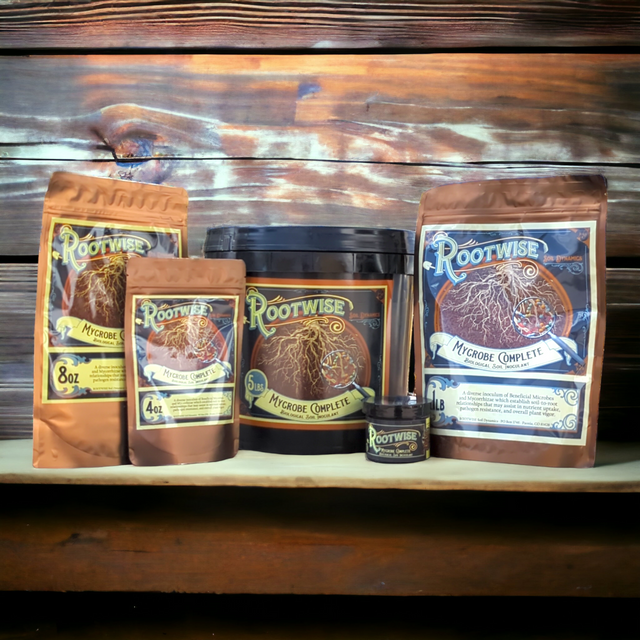
Mycrobe Complete is already balanced. You do not need to supplement it with another inoculant, and we would rather you did not.
What it does pair with is the rest of its own system. Rootwise is the only line we know of where the phosphorus product and the enzymes were formulated against this exact blend. Bio-Phos carries the same balanced approach weighted toward flower, and Bio-Catalyst is the enzyme output of these same organisms. That is what makes this a complete program rather than a shelf full of guesses.
Why who grows them matters
Here is the uncomfortable part of this category. A species list on a bag is just text. Printing twenty organisms and a CFU count next to each one costs nothing, and independent testing of commercial microbial products has turned up plenty of bags that did not contain what the label claimed, at counts nowhere near what was promised, and in some cases nothing viable at all.
A lot of that traces straight back to sourcing. It is common in this industry to buy microbial powder from an overseas broker, print a label, and sell it. If nobody along that chain ever tested anything, the company selling it does not know what is in the bag either. They are repeating a number somebody handed them.
And you cannot check their work. Culturing and identifying twenty different organisms is slow, expensive lab work, nowhere near anything a grower is going to do before buying a bag of inoculant. So what you are really buying is the credibility of whoever grew the biology. That is the honest state of this category.
Why we have stayed with Rootwise
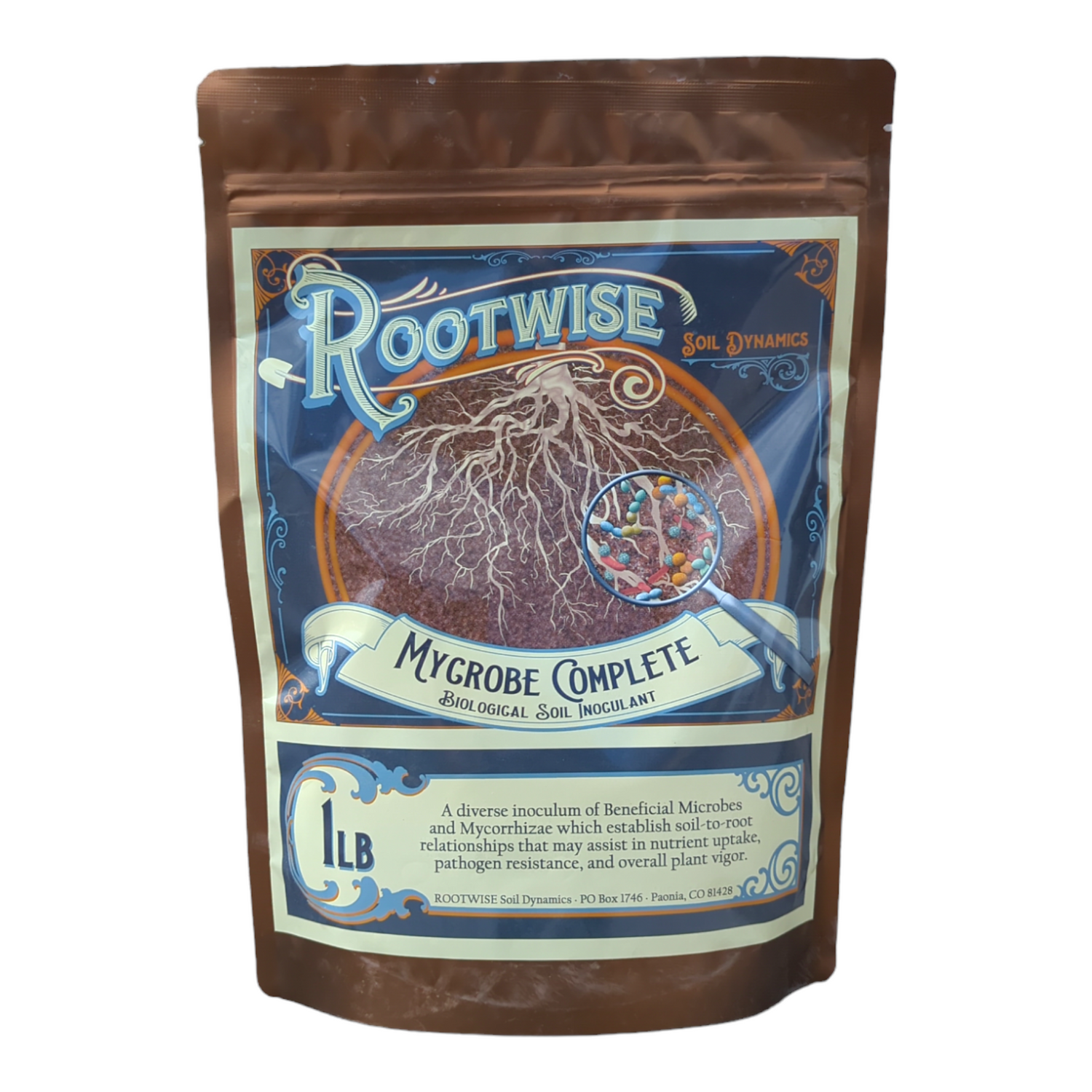
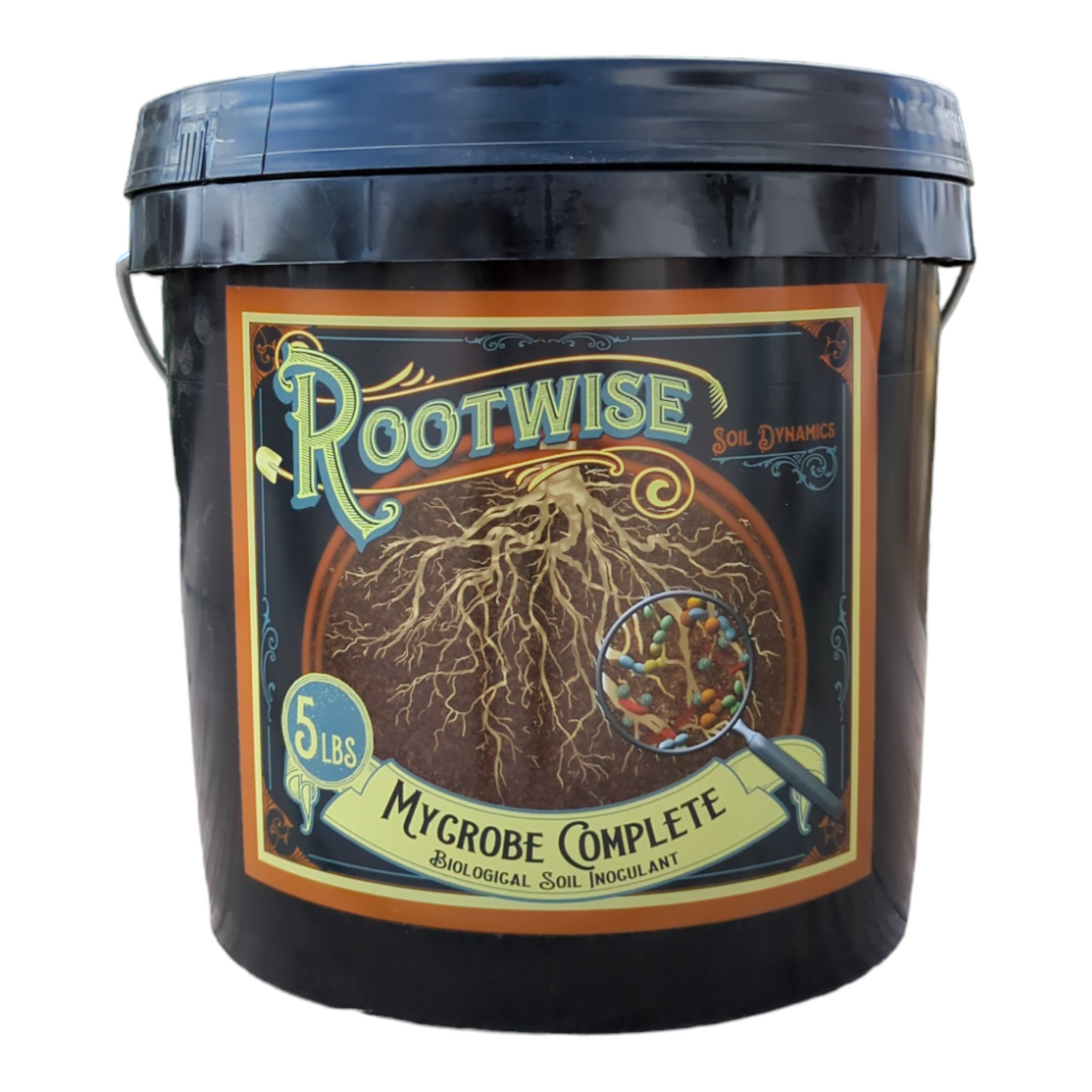
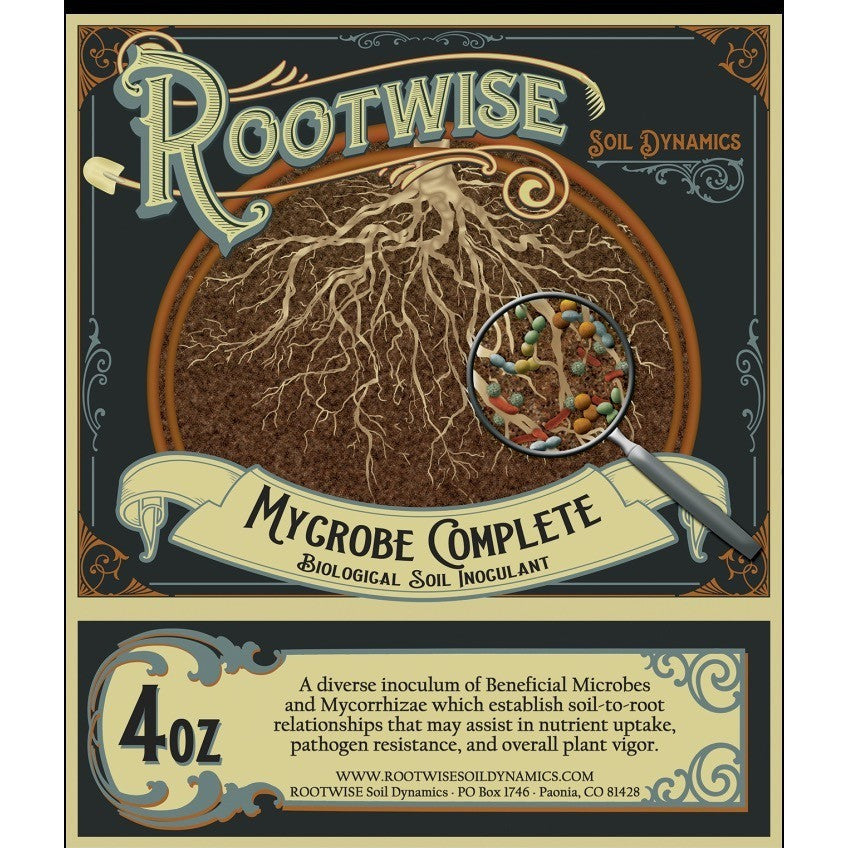
These organisms are grown in the United States by a well regarded lab that uses DNA sequencing in its own process. Not brokered, not imported by the drum from a supplier nobody has ever met. That is unusual in this category, it costs more, and it is the single biggest reason we have worked with Rootwise for over a decade instead of chasing a cheaper inoculant.
When you cannot see, taste, or count what you are buying, the thing protecting you is who made it.