The BuildASoil Earthbox Setup Guide
The simplest way to grow in living soil. Set it up once, and let the soil do the work.
If you’re new to living soil, or you just want the easiest possible way to grow great plants, the Earthbox is where we’d start you. It takes the hardest part of growing, watering, mostly off your plate, so your first round comes out right while you learn the rest at your own pace.
This is our way of running an Earthbox, and it’s different from the manual that comes in the box. The official instructions use a peat-and-perlite mix with a trough of synthetic fertilizer. We don’t do that. We use living soil and let the biology feed the plant, which means better flavor, better resilience, and a lot less fuss. Here’s everything you need and exactly how to do it.
What You’ll Need
- An Earthbox (or compatible sub-irrigated planter)
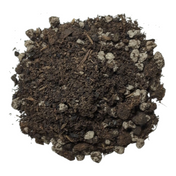
- About 10 gallons (~1.25 cu ft) of BuildASoil 3.0 living soil. (Our Light Mix works great too, but 3.0 keeps it simple.)
- Craft Blend — ¼ cup per plant
- BuildAFlower Compost — about 1 gallon
- Your plant (or seedling)
- The plastic mulch cover that comes with the Earthbox
Setting It Up

- Fill it with living soil. Set the soil screen and water tube in place first, then add about 10 gallons (~1.25 cu ft) of BuildASoil 3.0, filling the Earthbox to the top. The most important part: pack the wicking corners firmly. Those two corners drop down into the reservoir and pull water up into the root zone, so press soil into them tight and pre-moisten them. Loose corners are the number one reason an Earthbox won’t wick.
- Transplant your plant. Settle your plant or seedling into the soil first, before topdressing.
- Add Craft Blend on top. Sprinkle ¼ cup of Craft Blend per plant across the surface around your plant. No trough, no mixing in, just lay it on top.
- Mound on the compost. Add about 1 gallon of BuildAFlower Compost on top of the Craft Blend. This becomes the living, biologically active layer your plant will feed from.
- Cover with the mulch cover. Put the plastic mulch cover over the top. That’s it, you’re set up.
That’s the whole build. No fertilizer trough, no special mix, no guesswork. Living soil and compost mounded on top, and the biology takes it from there.
Starting from seed instead of transplanting?
Hold off on the heavy topdressing at first. Wait until your seedling comes up through the hole in the mulch cover before you add the Craft Blend and BuildAFlower, or at least leave plenty of open space right around the seed. The goal is to not smother it. A tiny seed buried under a mound of compost has a hard time reaching the surface, so give it room to break through first, then topdress around it once it’s up and growing.
Tip: Keep your topdressing moist.
Your topdress layer (the Craft Blend and compost on top) should never dry out, dry topdressing doesn’t feed the plant, because the biology needs moisture to work. Give it a good moistening with a sprayer right after you add it the first time, and check on it from time to time. Any time the mound looks dry, mist it back to nice and moist.
The Watering Method (This Is the Important Part)
This is where the BuildASoil way is different from a normal Earthbox, and it’s the one thing to get right. Read this part twice.
Weeks 1–2: Top-water only.
When you first transplant, your plant’s roots are too small to reach the reservoir below. So for the first week or two, water gently from the top, right around the base of the plant, to keep the root zone moist while the roots establish. Don’t rely on the reservoir yet.
After roots establish: Use the reservoir, but let it run empty.
Once the plant has rooted in (usually 1–2 weeks), you can start filling the reservoir through the fill tube. Here’s the key, and it’s the opposite of what the manual tells you:
Do NOT keep the reservoir topped off all the time. Fill it once, then let it run completely empty before you fill it again.
Living soil wants a natural wet-and-dry cycle. The biology thrives on it. Keeping the reservoir constantly full keeps the soil too saturated, which works against the soil life. So the rhythm is simple: fill it, let it empty, wait, fill it again.
How to tell if the reservoir is empty.
Peek down the fill tube. If you see a reflection of water at the bottom, there’s still water in the reservoir, leave it alone. If you don’t see a reflection, it’s empty and ready for a refill.
Can’t see well down the tube? Here’s a simple trick growers use: make a float. Take a cork and a colored straw, cut the straw so that when the reservoir is empty the straw sits flush with the top of the fill tube. When there’s water in the reservoir, the float rises and the colored straw pokes up, easy to see at a glance. When the straw drops back flush, you know it’s time to refill.
Keeping Up As It Grows
Here’s the one thing new growers underestimate: an Earthbox grows big plants. Often much bigger than you expect. The most common stumble isn’t watering, it’s under-feeding a plant that took off faster than you planned for. So as it grows, you’ll want to stay ahead of it.
Reapply at least one more time.
As the plant gets bigger, add another round of topdressing: the same as before, ¼ cup of Craft Blend per plant followed by about a gallon of BuildAFlower Compost on top. Keep doing this as needed (same amounts) until the mound simply gets too large to add any more. A good time to plan for this is right at the start of flower, but the plant will also tell you when it’s hungry, here’s how to read it.
Watch for feeder roots (the plant’s hunger signal).
Gently pull back the mulch cover and take a peek underneath. If you see feeder roots busting up through the soil surface under the cover, that’s your signal that it’s time to topdress again. As long as you stay ahead of this, your plant will grow massive and healthy.
If it gets really big (the easy backup).
Sometimes a plant gets so large that topdressing alone is hard to keep up with. No problem. Once the plant is bigger and well established, you can add some Organics Alive down the reservoir fill tube about once a week. It’s a water-soluble, carbon-based organic powder made from fermentation byproduct, so it dissolves easily and feeds the soil life right at the root zone. It’s an easy, forgiving way to keep a big, hungry plant happy when it’s really cranking.
Bottom line: stay ahead of the feeder roots, keep topdressing as it grows, and you’re golden.
Why This Works So Well
The Earthbox solves the single biggest learning curve in growing: watering. Once your plant is established and pulling from the reservoir, the soil keeps itself at a consistent moisture level, and the living soil feeds the plant on demand. You’re not mixing nutrients, you’re not pH-ing water, and you’re not babysitting it every day. You top off the reservoir when it runs dry, usually about once a week, and watch it grow.
It’s the cleanest way to prove to yourself that living soil works, before you scale up to bigger beds and containers down the road.
One thing to know: refreshing your soil.
The Earthbox lets you grow great living soil in less volume, which is exactly why it’s such an easy entry point. The one tradeoff versus a big fabric pot or bed is that it’s harder to keep in true no-till forever. Every other round or so, it’s best to refresh it: dump the soil onto a tarp or into a tub, mix it all back together, and replant with some fresh soil into a clean Earthbox. It’s quick and easy, and your soil keeps getting better over time. When you’re ready to keep planting into the same soil indefinitely, that’s when a 15-gallon Grassroots pot (our Classic setup) is a great next step.
Questions about your setup? We’re here to help, just reach out. A grower on our team is always happy to point you the right way.
Get Your Earthbox Kit →