The BuildASoil Classic Setup Guide
Living soil in a 15-gallon Grassroots fabric pot. The classic way to grow, with room to go as deep as you want.
This is the classic BuildASoil setup: living soil in a 15-gallon Grassroots fabric pot. It gives you a big, healthy soil volume to work with, which means bigger yields, a bigger buffer against mistakes, and the freedom to grow your soil into a true living ecosystem over time. It’s simple to start, and it rewards you the more you put into it.
The build is a lot like our Earthbox method, with one signature difference: instead of a plastic mulch cover, you’ll use a living straw mulch layer, and if you want, grow a cover crop right through it. More on that below, it’s where the magic happens.
Why 15 Gallons (and Where to Go From There)
People always ask what size to start with. My honest answer: 15 gallons is the sweet spot, and it’s a great starting size for no-till, where you keep planting back into the same living soil round after round instead of starting over. I’m not sure exactly why, but at 15 gallons something unlocks. The soil hits a critical mass where the biology really takes over and it becomes genuinely powerful. That’s why it’s our recommended starting point.
You can go down to 10 gallons and still do great, you may just need to supplement a bit more along the way, and some growers go even smaller. On the other end, here’s what usually happens: once people go all in and learn the method, they go bigger. Many move up to 20- or 30-gallon pots, 4x4 beds, or larger. The payoff is real, growers swear by it, but be honest with yourself up front: bigger means more commitment, more cost, and a lot more soil to move. There’s no rush. You can always scale up once you’re hooked.
The one way to grow great living soil in less volume is the Earthbox, which is why it’s such a good entry point. The only real tradeoff is that an Earthbox is harder to keep in true no-till forever. Every other round or so, it’s best to refresh it: dump the soil onto a tarp or into a tub, mix it all back together, and replant with some fresh soil into a clean Earthbox. It’s quick and easy, just a different rhythm than the keep-planting-forever approach a bigger pot allows.
What You’ll Need
- A 15-gallon Grassroots living soil fabric pot
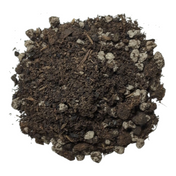
- BuildASoil 3.0 living soil to fill the pot
- Craft Blend — ¼ cup per plant
- BuildAFlower Compost — about 1 gallon
- Mulch — 1–2″ of organic straw (or other natural mulch, see below)
- Optional, for the advanced setup: our 12-Seed Clover & Cover Crop Blend
- Your plant (or seedling)
Setting It Up
- Fill the pot with living soil. Fill your 15-gallon Grassroots pot with BuildASoil 3.0.
- Transplant your plant. Settle your plant or seedling into the soil first, before topdressing.
- Add Craft Blend on top. Sprinkle ¼ cup of Craft Blend per plant across the surface around your plant. No mixing in, just lay it on top.
- Add the compost layer. Add about 1 gallon of BuildAFlower Compost on top of the Craft Blend.
- Add your straw mulch layer. Cover the surface with 1–2″ of organic straw. This is your living mulch layer, it holds moisture, feeds the soil life, and protects the surface roots.
- Water it in. Give everything a good watering to settle it and wake up the biology. Keep that top layer moist, never let your topdressing or mulch dry out, since the biology needs moisture to work.
Choosing Your Mulch
We recommend organic straw whenever possible. We offer it at BuildASoil, but truthfully you can often find good mulch locally, that’s perfectly fine. Good straw works, and so does leaf material or wood chips. The most important rule:
Avoid “weed-free” straw. “Weed-free” usually means it’s been chemically sprayed, and those chemicals can carry right into your living soil and harm the biology you’re working so hard to build. Organic is always the safer choice.
One more thing if you plan to grow a cover crop (next section): don’t lay your mulch too thick. You’ll be growing “live mulch” up through it, so a lighter 1″ layer lets the cover crop sprout through. Save the thicker mulch for setups where you’re not running a cover crop.
Advanced: Grow a Cover Crop (The Living Mulch)
This is where the Classic setup really shines, and it’s optional, so don’t feel like you have to. But if you want to take your soil to the next level, this is the move.
After your straw layer is down, sow our 12-Seed Clover & Cover Crop Blend across the surface and let it grow up through the straw. Here’s what that does for you:
- Puts more living roots into your soil, which builds structure and biology
- Moves and holds moisture through the root zone
- Feeds the soil with root exudates, the sugars that drive the whole soil food web
Then comes the fun part: “chop and drop.” As the cover crop grows, chop the young, fresh greens and drop them right onto the straw layer. They break down into food for your soil and your plant. It works incredibly well, and it gets even better over time as worms show up from the compost, or you can add your own red wigglers (easy to source locally) to speed it along. Now your container isn’t just holding soil, it’s a living, self-feeding ecosystem.
How to Water
Unlike an Earthbox, a fabric pot is hand-watered, so there’s a simple rule that keeps you out of trouble. Watering is the one real skill in living soil, and this rule makes it easy. If you want to go deeper, we’ve got a full Watering Protocol for the BuildASoil Way that walks through it in detail.
The 5–10% rule.
Water no more than 5–10% of your soil volume at a time, keeping the soil evenly moist rather than soaking it all at once. For a 15-gallon pot, that’s roughly 0.75 to 1.5 gallons. Start on the lower end and adjust. Living soil wants to stay consistently moist, not drenched and not bone dry.
Match watering to plant size vs. container size.
A small seedling in a big 15-gallon pot needs very little water and not very often, that big soil volume is a huge reservoir. As the plant grows and fills the container, it drinks more, more often. By the time you’ve got a big plant in that pot, you may be watering daily. Read the plant and the soil rather than following a rigid schedule: warm and dry, growing fast = more water; cool and humid = less.
Want to automate it?
If you’d rather not hand-water, you’ve got easy options.
- BluMat systems will automate watering on any size container, reading the soil’s actual moisture and releasing water exactly when it’s needed. Dial it in once and it holds the perfect moisture level for you.
- AutoPot XXL: our 10-gallon Grassroots fabric pots fit perfectly into the AutoPot XXL reservoir, giving you clean, gravity-fed automatic watering with no timers and nothing to plug in.
Keeping Up As It Grows
As your plant gets bigger, it’ll want more food. Staying ahead of it is what produces a big, healthy plant. A good time to plan a topdress is right at the start of flower, but the plant will also tell you when it’s hungry, watch for feeder roots reaching up into the mulch layer.
How to topdress over a straw layer.
Topdressing with a straw mulch layer is a little different than bare soil. The amounts are the same, ¼ cup Craft Blend per plant and about a gallon of BuildAFlower compost, but here’s the method:
- Premix the Craft Blend and compost together first.
- Topdress onto the straw layer, spreading it across the surface.
- Wiggle it through the straw with your hands so it settles down into the mulch and onto the soil surface.
- Water it in. Moisten everything so the biology gets right to work.
Stay ahead of the feeder roots, keep that mulch layer alive and moist, and your plant will reward you.
Why This Setup Is So Powerful
The 15-gallon Classic gives you everything living soil is capable of: a big soil volume that buffers your mistakes and pushes yield, a living mulch layer that feeds the surface, and, if you run the cover crop, a self-sustaining ecosystem that gets richer every single round. Start simple if you want, just soil, topdress, and straw, and add the cover crop and worms whenever you’re ready to go deeper. There’s no ceiling on how good this can get.
Questions about your setup? We’re here to help, just reach out. A grower on our team is always happy to point you the right way.
Get Your Grassroots Pot →