Table of Contents
- Why Watering Living Soil Is So Important
- Water Is Only One Part of the System
- Why There Is No Fixed Watering Schedule
- Learning How to Water Properly Comes First
- The 5–10% Rule for Watering Living Soil
- The 5–10% Rule Is a Guideline, Not a Formula
- Understanding the Relationship Between Plant Size and Container Size
- Container Size Has a Major Impact
- Plant Size and Root Development Over Time
- Environmental Conditions Influence Watering
- Creating Balance in Living Soil
- Common Watering Mistakes to Avoid
- Watering Protocol - How To Water Living Soil
- FAQs
Why Watering Living Soil Is So Important
One of the most common questions people ask is how to water living soil. Watering sounds simple, but it is one of the biggest factors that determines success or failure in a living soil grow.
When you water living soil, you are not just watering the plant. You are watering the entire soil system. That includes microbes, fungi, bacteria, and all of the biology working together below the surface. If watering is off, everything slows down, and the plant reflects that.
This is why learning how to water properly is such an important foundation.
Guide as mentioned in the video: Watering Protocol - How To Water Living Soil
Water Is Only One Part of the System
Water is only one piece of the living soil system. It interacts with soil structure, oxygen, roots, container size, and environmental conditions.
If any of those pieces are out of balance, watering becomes harder. When they work together, watering becomes much more forgiving and predictable.
Understanding this relationship makes living soil easier to manage over time.
Why There Is No Fixed Watering Schedule
There is no universal watering schedule for living soil. How often you water depends on several variables that are always changing.
These include container size, plant size, root development, temperature, humidity, and airflow. Because these factors change as the plant grows and as the environment changes, watering has to remain flexible.
This is why observation is more important than following a strict calendar.
Learning How to Water Properly Comes First
Before focusing on how often to water, it is more important to understand how to water properly.
Water should be applied slowly and evenly across the soil surface. The goal is to allow water to soak in naturally rather than rushing through channels or running out the sides of the container. Even distribution helps maintain consistent moisture throughout the soil.
Living soil performs best when moisture levels stay balanced rather than swinging between very wet and very dry.
The 5–10% Rule for Watering Living Soil
A simple guideline that helps people understand how to water living soil is the 5–10% rule.
This means that when you water, you are generally applying about 5–10% of the container’s total volume in water. This is not a strict rule, but it gives a helpful reference point, especially for beginners.
Using a 10-gallon container makes the math easy. Five to ten percent of a 10-gallon pot means you are typically watering with about half a gallon to one gallon of water, depending on the situation.
This approach encourages slow, intentional watering and helps prevent flooding the soil or overwatering.
Below is a simple reference table to help visualize what the 5–10% rule looks like at different container sizes. This is a guideline for scale, not a watering schedule.
| Container Size | 5% Water Amount | 10% Water Amount |
|---|---|---|
| 5 gallons | 0.25 gallons | 0.5 gallons |
| 10 gallons | 0.5 gallons | 1 gallon |
| 20 gallons | 1 gallon | 2 gallons |
| 30 gallons | 1.5 gallons | 3 gallons |
| 50 gallons | 2.5 gallons | 5 gallons |
| 65 gallons | 3.25 gallons | 6.5 gallons |
| 100 gallons | 5 gallons | 10 gallons |
| 150 gallons | 7.5 gallons | 15 gallons |
| 200 gallons | 10 gallons | 20 gallons |
Actual watering amounts and frequency will change based on plant size, root development, and environmental conditions. Always observe the soil and plant rather than following a fixed number.
The 5–10% Rule Is a Guideline, Not a Formula
The 5–10% rule is meant to help with scale and proportion, not to replace observation.
As plants grow and root systems develop, water usage increases. As environmental conditions change, water demand changes. The percentage helps you understand what makes sense, but the soil and plant still need to be observed.
Living soil responds best when watering decisions are based on feedback, not just numbers.
Understanding the Relationship Between Plant Size and Container Size
One of the most important concepts in watering living soil is the relationship between plant size and container size.
Smaller plants in larger containers are often easier to overwater because the root system is not using much water yet. Larger plants in smaller containers use water much more quickly and can dry out faster.
Big and small are always relative. A four-foot-tall plant might be considered small in a 400-gallon container, but that same plant would be extremely large in a one-gallon pot.
Understanding this relationship helps explain why watering practices must change depending on the situation.
Container Size Has a Major Impact
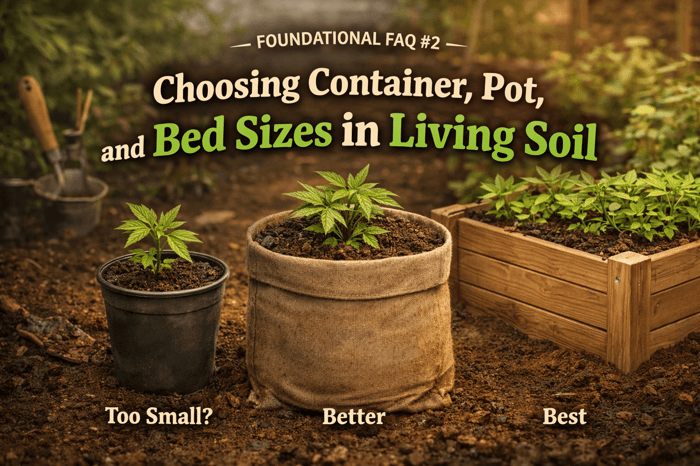
Container size plays a major role in how forgiving watering can be.
Smaller containers dry out faster and leave less room for error. Larger containers hold moisture longer and create a more stable environment for soil biology. This stability helps buffer mistakes and makes living soil easier to manage.
This is one reason larger containers are often recommended for living soil systems.
Plant Size and Root Development Over Time
As plants grow, their water needs naturally increase. Small plants with limited roots use very little water. As roots fill the container, water usage increases and watering frequency changes.
This progression is normal and expected. Watering should adjust as the plant develops rather than staying the same throughout the grow.
Environmental Conditions Influence Watering
Environmental conditions strongly affect how often living soil needs water.
Higher temperatures, lower humidity, and increased airflow cause soil to dry out faster. Cooler temperatures and higher humidity slow water loss.
Because the environment is always changing, watering living soil requires awareness and adjustment.
Creating Balance in Living Soil
How to water living soil is ultimately about balance.
When moisture levels are in the right range, microbial life stays active, roots have access to oxygen, nutrients cycle properly, and plants grow healthier and more resilient.
Instead of chasing a perfect schedule, the goal is to maintain consistent conditions that support the soil ecosystem.
Common Watering Mistakes to Avoid
Some common mistakes when watering living soil include watering on a rigid schedule, overwatering out of fear, letting soil dry out completely, and watering too quickly, which causes runoff.
Learning to observe the soil and make small adjustments over time leads to better results.
Common "How To Water Living Soil" Watering Mistakes
Watering on a strict schedule instead of observing the soil
Overwatering small plants in large containers
Letting living soil dry out completely
Watering too quickly and causing runoff or channeling
Ignoring changes in environment or plant growth
Watering Protocol - How To Water Living Soil
Blumat Digital Moisture Meter - Tensiometer

$87.00
Say goodbye to the guesswork in plant watering. The Blumat Digital Moisture Meter is your ultimate companion, providing precise digital readings of your plant's moisture levels. Perfect for both novice gardeners and experienced horticulturists, this tool helps ensure your plants… read more
FAQs
How often should I water living soil?
There is no fixed watering schedule for living soil. How often you water depends on container size, plant size, root development, and environmental conditions like temperature, humidity, and airflow. Observation is more important than a calendar.
What is the 5–10% rule for watering living soil?
The 5–10% rule is a guideline that suggests watering with about 5 to 10 percent of the container’s total volume at a time. It helps provide a sense of scale and proportion but is not meant to be followed as a strict rule or schedule.
Does the 5–10% rule mean I should water the same amount every time?
No. The 5–10% rule is not a formula. Watering amounts and frequency change as plants grow, roots develop, and environmental conditions change. It is a reference point, not a requirement.
Why is it easier to overwater small plants in large containers?
Small plants have limited root systems and use very little water. In a large container, excess moisture can remain in the soil longer, making it easier to overwater if watering is not adjusted for plant size.
How does container size affect watering living soil?
Container size has a major impact on watering. Smaller containers dry out faster and leave less margin for error. Larger containers hold moisture longer and create a more stable environment for soil biology, making watering more forgiving. Biggest challenge is if you accidentally overwater a larger container with a very small plant, it can take a long time to dry-back to proper a range.
Why does plant size matter when watering living soil?
As plants grow and root systems expand, water usage increases. Watering needs change over time, even if the container stays the same. Understanding plant size in relation to the container helps prevent both overwatering and underwatering.
Should living soil dry out completely between waterings?
No. Living soil performs best when moisture levels remain consistent. Extreme wet and dry cycles can slow microbial activity and negatively impact soil biology.
How do environmental conditions affect watering living soil?
Higher temperatures, lower humidity, and increased airflow cause soil to dry out faster. Cooler temperatures and higher humidity slow water loss. Watering should always be adjusted based on current conditions.
What are the most common watering mistakes in living soil?
Common mistakes include watering on a rigid schedule, overwatering out of fear, letting soil dry out completely, and watering too quickly, which causes runoff and channeling.
What does “balance” mean when watering living soil?
Balance means maintaining consistent moisture levels that support soil biology. When moisture is balanced, microbes stay active, roots have access to oxygen, nutrients cycle properly, and plants grow more resilient.