The BuildASoil Way: Environmental Protocol
Dialing in your indoor grow space, stage by stage.
Great soil is half the equation. The other half is your environment. Indoors, you control the light, temperature, humidity, and airflow, and getting these in the right range for each stage of growth is what lets your living soil and your genetics reach their full potential.
This is one of the fundamentals of the BuildASoil way. The chart below gives you target ranges by growth stage. Don’t try to hit every number perfectly, instead, find your weakest link and fix that first. These are guidelines, not commandments. (The numbers below are tuned for fast-growing annuals like cannabis.)
Want the printable version for your grow room wall? Download the Environmental Protocol chart →
| Stage | Weeks | Light On Hrs |
Light Off Hrs |
PPFD Low |
PPFD High |
DLI Low |
DLI High |
Temp Day |
RH Day |
VPD Day |
Temp Night |
RH Night |
VPD Night |
|---|---|---|---|---|---|---|---|---|---|---|---|---|---|
| Seedling | Week 1 | 20 | 4 | 200 | 300 | 15 | 20 | 85 | 85 | 0.6 | 70 | 65 | 0.9 |
| Vegetative | Week 2+ | 18 | 6 | 300 | 600 | 20 | 40 | 85 | 80 | 0.8 | 70 | 65 | 0.9 |
| Pre-Bloom | 1 Wk prior | 16 | 8 | 550 | 700 | 30 | 40 | 80 | 65 | 1.2 | 70 | 60 | 1 |
| Bloom Stretch | Weeks 1-4 | 12 | 12 | 700 | 1000 | 40 | 44 | 80 | 65 | 1.2 | 65 | 40 | 1.2 |
| Full Bloom | Week 5-8 | 11 | 13 | 700 | 1000 | 35 | 40 | 75 | 50 | 1.5 | 60 | 30 | 1.2 |
| Ripening | Week 9+ | 11 | 13 | 600 | 900 | 25 | 35 | 70 | 40 | 1.8 | 60 | 30 | 1.2 |
Tip: on mobile, scroll the table sideways to see all columns. Temps in °F, RH (relative humidity) in %, VPD in kPa. These are target ranges, not hard rules.
What These Mean
Airflow & CFM
Fresh air intake brings in fresh CO2, which your plants breathe. To size your fan, measure your tent in feet (L x W x H = cubic feet of grow space) and multiply by 2 to allow enough power for your filter and ducting.
Example: A 4x4 tent at 6.7 ft tall = 4 x 4 x 6.7 = ~107 cubic feet. Then 107 x 1.5 = ~160, so a 4 inch fan at 205 CFM or a 6 inch fan at 351 CFM works. You can add intake and exhaust for larger tents to hit your target CFM.
Ideally, cycle the air in the tent constantly, or many times per hour. You can run intake constantly with the exhaust on a temperature trigger. If you can’t control VPD directly, just cycle the air every 30 to 60 minutes.
PAR
Photosynthetically Active Radiation: a measurement of your grow light’s usable output, ideally measured as close to the plant as possible. This is light in the plant-usable spectrum range of 400–700 nm. Good grow lights also add some UVA (315–400 nm) and UVB (280–315 nm).
PPFD
Photosynthetic Photon Flux Density: the measurement of how much PAR actually hits your plant’s leaves at a given distance. In other words, how many photons are instantly available to the plant.
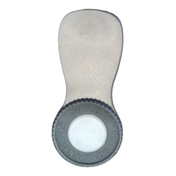
Want to measure your own PPFD and DLI instead of trusting the manufacturer’s specs? You used to need a $500–$600 meter to do it right. The Lightray Diffuser & Cosine Corrector clips onto your phone and turns it into an accurate light meter, we use it at BuildASoil and find it comparable to our $500+ Apogee device.
DLI
Daily Light Integral: the total amount of PAR delivered to a given area over a 24-hour period. It’s essentially light intensity multiplied by the number of hours your lights are on. Each type of plant has different requirements, the numbers in the chart above are for fast-growing annuals like cannabis.
Here’s the honest take for indoor growers: tracking DLI indoors is kind of pointless on its own, because there are no clouds or weather blocking your light the way there are outdoors. Indoors, you control the light directly. But DLI is still worth understanding, because it makes one key relationship obvious: both the intensity of your light (PPFD) and the number of hours per day matter, a lot. A little less intensity over more hours, or a little more intensity over fewer hours, can land you in the same place. Understanding DLI is what helps that relationship click, so you can dial intensity and photoperiod together instead of fixating on just one.
VPD
Vapor Pressure Deficit: a measurement of the difference between how much moisture is in the air and how much the air could hold. It’s based on temperature and humidity, and using it properly can dramatically speed up vegetative growth. For best accuracy, use leaf-surface temperatures when you can.
Tips: Focus on the Weakest Link
Do your best and focus on your weakest link. Don’t complicate things trying to be perfect, these are guidelines, not mandatory rules.
- Temps: generally stay above 40 and below 100°F. In a greenhouse you can exceed these from time to time, it’s not ideal, but it happens. Don’t obsess over hitting temps exactly.
- Humidity: you can always adjust humidity based on the temps you’re able to control. Like children, plants prefer consistency over perfection. Note that we move away from ideal VPD in flower, because the weakest link there is mold in the dense flowers.
- Night-time VPD: when the lights are off there’s no real pressure on the plants, so VPD matters less. But that doesn’t mean ignore lights-off, it’s still important to keep airflow up and humidity down, especially in flower.
- Light-on hours reduction: the gradual reduction in light hours through the stages is based on bio-mimicry of nature. You can skip this part of the schedule, but in our opinion it does help.
Remember: your environment and your soil work together. Get your weakest link handled, keep things consistent, and let your living soil do the rest. New here? Start with The BuildASoil Way.