Table of Contents
- Understanding Vegetative Growth in Living Soil
- Why Vegetative Growth in Living Soil Is Easier Than You Think
- Nitrogen and Vegetative Growth in Living Soil
- The Nitrogen Cycle in Living Soil
- What Controls Nitrogen Cycling in Living Soil
- When Living Soil Goes Anerobic In Storage
- Grow Big Plants Outdoors and The High Nitrogen Tom Hill Mix.
- Why More N in Living Soil Is Not Always Better
- Skip Veg
- Do You Need to Add Nitrogen all the time?
- Using Amino Acids to Support Vegetative Growth
- Skip Veg, Transplant On Time and Supply Foliar If Needed
- FAQs
Understanding Vegetative Growth in Living Soil
Vegetative growth in living soil is one of the most misunderstood parts of growing, especially for people coming from bottled nutrients or systems where you are used to pushing plants as hard as possible. In living soil, veg does not need to be forced, and in most cases it works better when you stop trying to push it. Veg is simply the phase where the plant builds its structure. Roots expand into the soil, branches form, leaves stack, and the plant prepares itself to hold weight later in flower. That is the job. Veg sets the frame, and flower builds the yield. Once you understand vegetative growth in living soil from that perspective, everything starts to simplify. Also, it's important to know... You can just skip veg with more plants.
Why Vegetative Growth in Living Soil Is Easier Than You Think
One of the biggest advantages of vegging living soil is that the biology is already doing most of the work for you. Nutrients are present, they are cycling, and the plant can access what it needs when it needs it... So long as you are maintaining proper environment and watering the right way... That's really it! If you need to hold plants back in a smaller container longer we recommend supplementing with BuildAVeg or Organics Alive VN. Most problems during vegetative growth in living soil do not come from underfeeding. They come from waiting to long to transplant. The good news is, you can correct most issues quickly when you know what to look for. Other common problems would be, overwatering, over-amending, and constantly trying to “fix” things usually creates more problems than it solves. When you step back and allow the system to function, veg becomes very simple and very consistent.
Nitrogen and Vegetative Growth in Living Soil
Nitrogen plays a major role in vegetative growth in living soil, but it is often misunderstood. A simple way to think about it is that nitrogen to plants is similar to protein for humans. It is what helps build the body. It is tied into chlorophyll, and it is a key part of amino acids, which then become proteins inside the plant. It is important to understand that nitrogen is not protein itself. It is the building block the plant uses to create proteins. During veg, nitrogen supports leaf development, branch growth, and overall plant vigor. However, just like protein in a human diet, more is not always better. You can push veg too hard with excess nitrogen, and when that happens the plant may grow quickly but lack the structure needed to perform well in flower. What you are really after is balanced vegetative growth in living soil, not maximum speed at all costs.
The Nitrogen Cycle in Living Soil
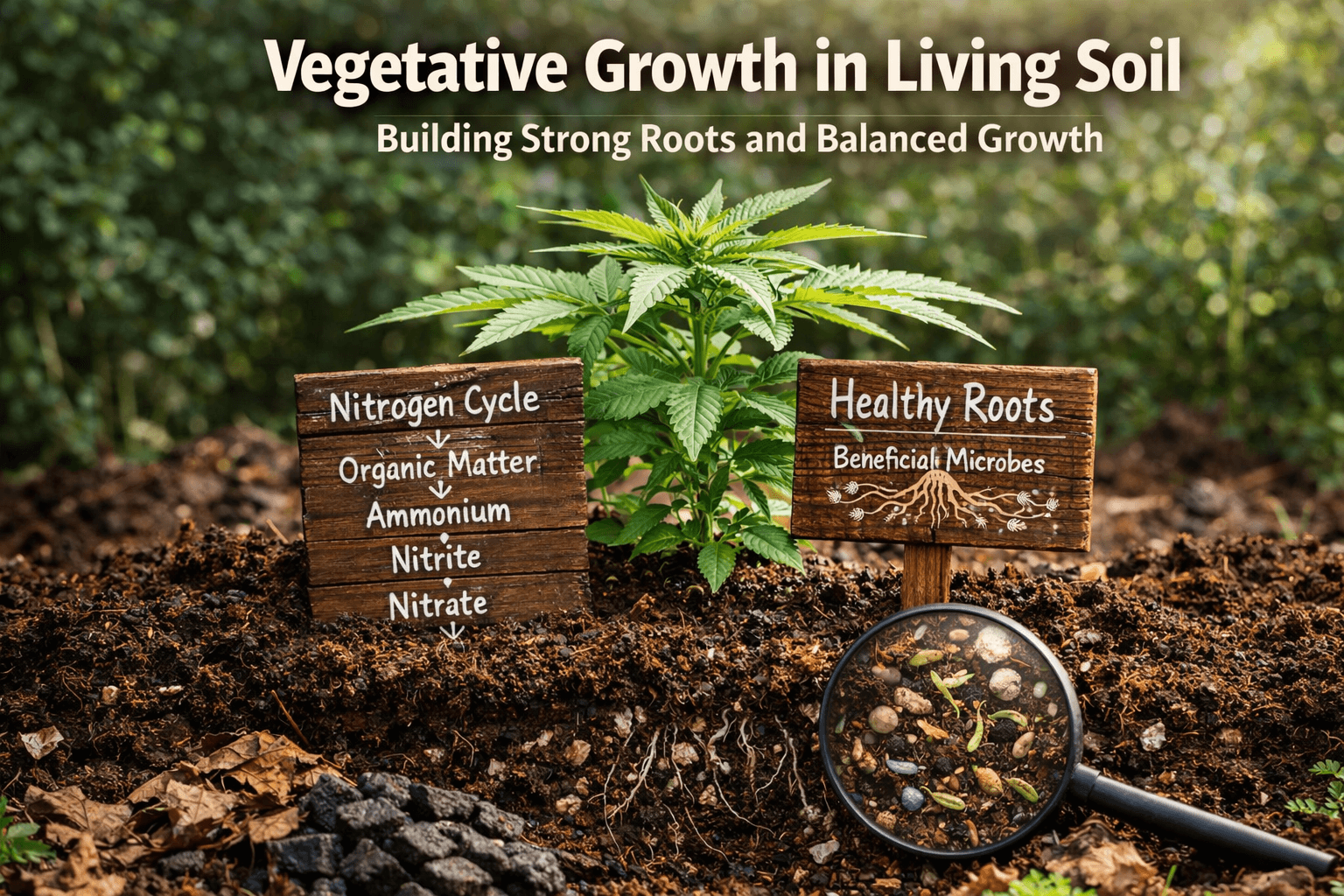
One of the key reasons vegetative growth in living soil works differently is because nitrogen is always in motion. Unlike more stable elements, nitrogen is constantly being transformed through biological processes. The nitrogen cycle in soil follows a basic path:
- Organic nitrogen from compost, plant matter, and amendments
- Broken down by microbes into ammonium
- Converted into nitrite
- Then into nitrate, which is the primary form plants use
This entire process is driven by microbes. During veg, you are not directly feeding the plant, you are supporting a system that cycles nutrients continuously. This is also why nitrogen is always in flux. It is constantly being used by the plant, processed by microbes, tied up in microbial biomass, and released again.
What Controls Nitrogen Cycling in Living Soil
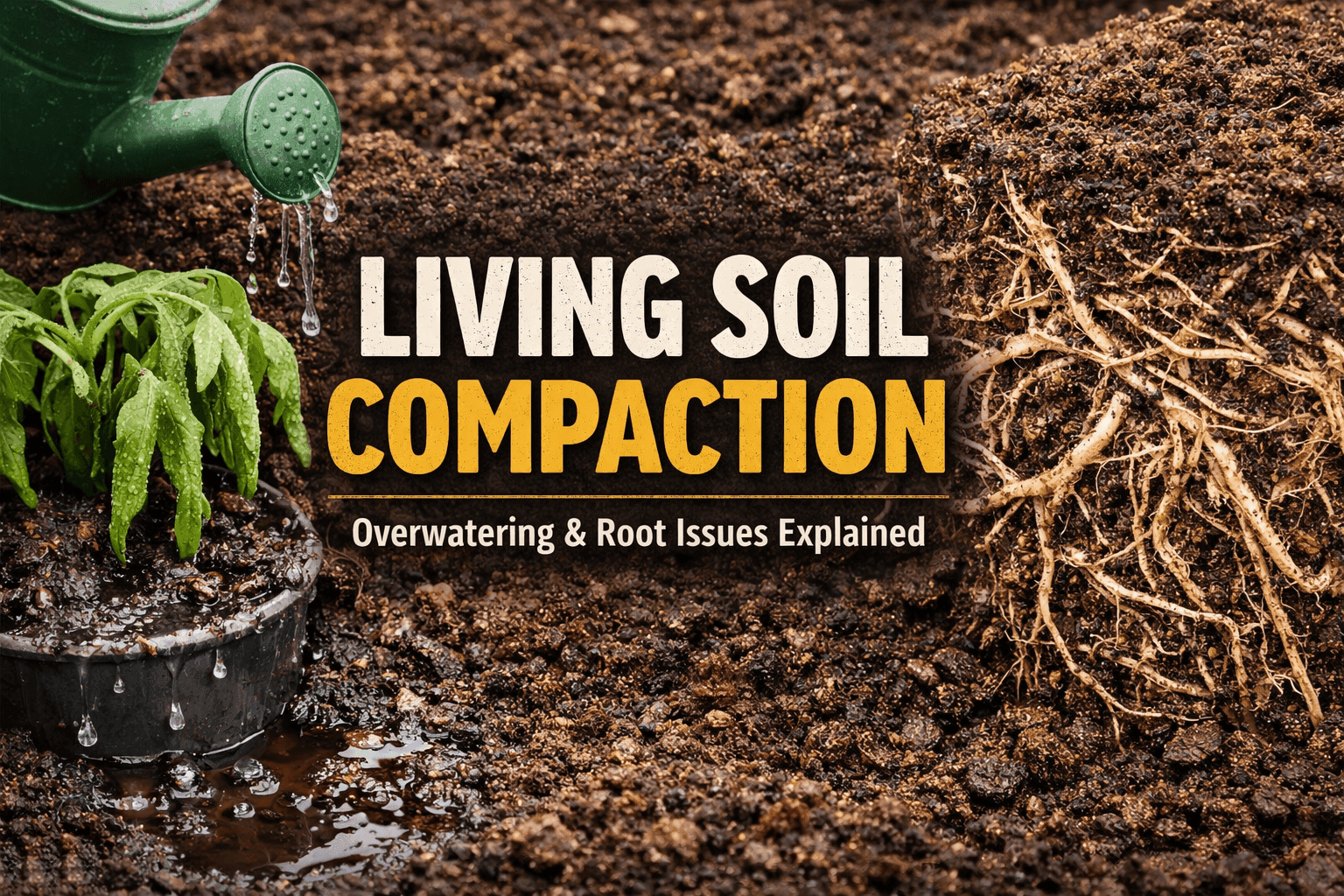
Vegetative growth in living soil depends heavily on how well nitrogen cycles, and that comes down to environmental conditions more than anything else. Temperature plays a major role because microbial activity increases when conditions are in the optimal range. If the soil is too cold, cycling slows down and growth can stall. If conditions are right, nitrogen becomes available more consistently. Moisture is just as important. The soil needs to stay in that target zone where it is moist but still has air. Too much water reduces oxygen and slows the nitrogen cycle. Too little water slows microbial activity. Oxygen is critical because the nitrogen cycle depends on aerobic biology. Compaction or overwatering can create anaerobic conditions, which disrupt cycling and can lead to imbalances. Biology ties all of this together. Adding biology like Rootwise helps support vegetative growth in living soil by introducing beneficial microbes, including nitrogen cyclers and nitrogen fixers like Azos. These microbes help move nitrogen through the cycle and can even contribute small amounts of nitrogen over time. The goal is not to force nitrogen into the system. The goal is to create the conditions where nitrogen cycles naturally and consistently.
When Living Soil Goes Anerobic In Storage
Most living soil recipes are not overly high in nitrates. They rely on compost and organic matter that release nutrients over time, which helps keep vegetative growth in living soil balanced. There is one main exception, and it comes down to how soil is handled after mixing. If a fresh soil mix is sealed, stored without airflow, and allowed to heat up, it can go anaerobic and begin to ferment instead of cycling properly. When this happens, nitrogen can spike and pH can drop, creating a situation where Nitrogen and Ph and lack of oxygen becomes too aggressive and the soil becomes too hot for plants. This is not how vegetative growth in living soil is meant to function. It is more a result of poor handling or storage conditions. One thing you can do, if you store your soil air tight and it gets funky, is to air it out on a tarp and get the oxygen back in and get the moisture right and the soil should be much better.
Grow Big Plants Outdoors and The High Nitrogen Tom Hill Mix.
There are growing strategies that intentionally push nitrogen levels higher during do grow the largest plants possible. Now these recipes call for more calcium and balance in other ways, but most growers are not going to veg nearly as long, so just understand that different goals require different tactics. Some traditional approaches used heavy amounts of inputs like chicken manure to drive aggressive vegetative growth and build large plant structure before flower. This can be effective when you are limited on plant count and need to maximize the size of each plant. However, this is just one approach. When I teach newer growers starting out on their first grow, I always recommend they plant later in July with a smaller plant. This allows them to use a reasonable size container, get luxurious health and a quick transition into flower leaving the perfect size plant. Most new growers put plants out far too early in too small of containers and are blown away with how big the plants get... and then they become very difficult to support and feed during flowering.
Why More N in Living Soil Is Not Always Better
One of the biggest misconceptions is that faster vegetative growth in living soil always leads to better results. In reality, you can push a plant faster than it can build strong structure. They will be hollow stemmed and if only given nitrogen and not a balanced diet, not as nutrient dense. The other challenge you will come across is that some genetics just don't like higher nitrogen and some will be fine with it. So it's best to keep low in the soil mix and supplement if needed. What you are really aiming for is healthy growth that is balanced with the plant’s genetics. Some plants just grow slower. Either way we still want strong branches, healthy leaves, and a structure that can support weight. Fast is fine, but it should not come at the expense of strength.
Skip Veg
Another important shift is understanding that vegetative growth in living soil does not always need to be long. Indoors, many growers can dramatically shorten veg by using clones, planting densely, and flipping to flower immediately or after a short veg period of around 7 to 14 days. Instead of growing large plants, you fill the canopy with more plants. Outdoors, a similar concept applies. Instead of growing one large plant over a long season, you can plant more plants later and still achieve strong results. The reason many growers extend vegetative growth in living soil is due to plant count limits. Fewer plants require longer veg to fill the space. More plants allow shorter veg and a more efficient cycle.
Do You Need to Add Nitrogen all the time?
In most cases, a well built living soil will supply enough nitrogen through natural cycling to support vegetative growth in living soil. The Biggest caveat is the plant/container size relationship. If you outgrow the container or have the lights to bright while in a smaller container, it causes watering to be inconsistent and problematic. If you notice slightly pale leaves, or slower than expected growth, that is your signal that the plant may benefit from additional nitrogen support. The advantage of vegetative growth in living soil is that nitrogen is one of the easiest things to adjust. You do not need to get it perfect upfront because you can respond as the plant grows.
Using Amino Acids to Support Vegetative Growth
Amino acids are one of the most efficient ways to support vegetative growth in living soil when additional nitrogen is needed. When you apply amino acids, you are essentially skipping part of the nitrogen cycle. Instead of waiting for organic nitrogen to be broken down into amino acids, you are providing those building blocks directly. This reduces the energy the plant has to use on that process and allows it to focus on growth and development. This can act like a short term boost that supports the plant without forcing the system. Because amino acids are small and readily usable, they work especially well as a foliar spray. They can be absorbed quickly and provide a fast response. Many growers will use inputs like BuildAVeg, Organics Alive, or liquid fish either as a foliar, a drench, or both. The key is that you are supplementing vegetative growth in living soil, not trying to override the system.
Skip Veg, Transplant On Time and Supply Foliar If Needed
Vegetative growth in living soil does not need to be complicated. With proper planning you can almost skip it. Just make sure you have good genetics. You are not trying to hit perfect numbers, you are building a system that functions. When temperature, moisture, oxygen, and biology are in place, nitrogen will cycle and vegetative growth in living soil will take care of itself. From there, it becomes about observation and small adjustments. Focus on healthy soil, balanced growth, and proper plant spacing and timing. Let the soil do the work, and step in only when the plant asks for it. That is where vegetative growth in living soil really shines.
If you want to see how to grow without using anything but clean water, be sure to checkout the BuildASoil Classic method. BuildASoil Classic (Water Only) Protocol: PDF Download
You can check out all of the feeding styles here.
BuildAVeg: Vegetative Plant Booster by BuildASoil
$28.00
BuildAVeg: Premium Veg Booster 5 of our favorite products in 1 bag which saves time and money After years of requests, we finally created a product for veg that we could get excited about! Designed from our using all of… read more

Organics Alive V-N Dry Soluble Vegetative Formula
$12.00
$28.00
BuildASoil is permanently discontinuing the Organics Alive line. ALL SALES FINAL 60lb Bags are paid shipping Clearance. Independent lab testing returned inconsistent results, and many numbers did not meet the guaranteed analysis on the label. We commissioned independent laboratory testing… read more

Rootwise Mycrobe Complete
$30.00
Mycrobe Complete is a dry, full-spectrum soil inoculant. Twenty species of beneficial bacteria, mycorrhizae, and fungi in one bag. You mix a very small dose into water and drench the root zone, whether you are firing up a brand new… read more

FAQs
What is vegetative growth in living soil?
Vegetative growth in living soil is the stage where the plant focuses on building roots, branches, and leaves before flowering. In a living soil system, this phase is supported by microbial activity that cycles nutrients naturally, allowing the plant to grow without needing constant feeding.
How does nitrogen affect vegetative growth in living soil?
Nitrogen plays a key role in vegetative growth in living soil because it helps the plant build chlorophyll and amino acids, which are essential for growth. A balanced nitrogen supply supports strong, healthy development, while too much nitrogen can lead to fast but weak growth. Biology also needs nitrogen and that is part of why adding lot's of carbon can steal Nitrogen temporarily.
What is the nitrogen cycle in living soil?
The nitrogen cycle in living soil is the process where microbes break down organic matter into plant available forms. Organic nitrogen is converted into ammonium, then into nitrite, and finally into nitrate, which plants primarily use. This cycle is ongoing and depends on temperature, moisture, oxygen, and microbial activity.
Why is nitrogen always changing in living soil?
Nitrogen is always in flux in living soil because it is constantly being cycled by microbes, used by plants, and sometimes tied up in microbial biomass. Environmental conditions like temperature and moisture can also affect how quickly nitrogen becomes available.
Can you have too much nitrogen in living soil?
Yes, vegetative growth in living soil can be negatively affected by too much nitrogen. Excess nitrogen can cause overly fast growth, weaker plant structure, and potential issues later in flowering. Balanced nutrient cycling is more important than pushing maximum nitrogen levels.
Do you need to add nitrogen during vegetative growth in living soil?
In most cases, a properly built living soil provides enough nitrogen through natural cycling. If plants show signs like pale leaves or slow growth, nitrogen can be supplemented, but it is usually not necessary to add large amounts upfront. The main problem is when people wait to transplant and the plant becomes larger than the container. This puts stress on the biological system to keep up.
What is the fastest way to add nitrogen in living soil?
The fastest way to support nitrogen needs during vegetative growth in living soil is through foliar sprays with amino acids. These provide a readily available form of nitrogen that the plant can use quickly without relying entirely on the soil to break it down. We recommend our blend BuildAVeg or Organics Alive VN
How do amino acids help vegetative growth in living soil?
Amino acids help vegetative growth in living soil by providing organic pre-processed nitrogen that the plant can use immediately. This reduces the energy the plant needs to convert nutrients and allows it to focus on growth and development.
Can you skip the vegetative stage in living soil?
You cannot completely skip vegetative growth in living soil, but you can shorten it significantly. By using clones, planting densely, and flipping to flower early, growers can reduce veg time and still achieve strong yields.
Why do some growers veg longer in living soil?
Many growers extend vegetative growth in living soil due to plant count limits. When fewer plants are allowed, they are grown larger to fill the space. If more plants are allowed, veg time can be shortened and the canopy can be filled more quickly.
Does adding microbes help nitrogen cycling in living soil?
Yes, adding microbes can improve nitrogen cycling in living soil. Products that contain beneficial microbes, including nitrogen-fixing bacteria, help break down organic matter and make nitrogen more available to the plant over time.
Does biochar or carbon affect nitrogen in living soil?
Adding high carbon inputs like biochar can temporarily tie up nitrogen in living soil because microbes use nitrogen to process carbon. This is a temporary effect, and the nitrogen is released back into the system as microbial activity continues.